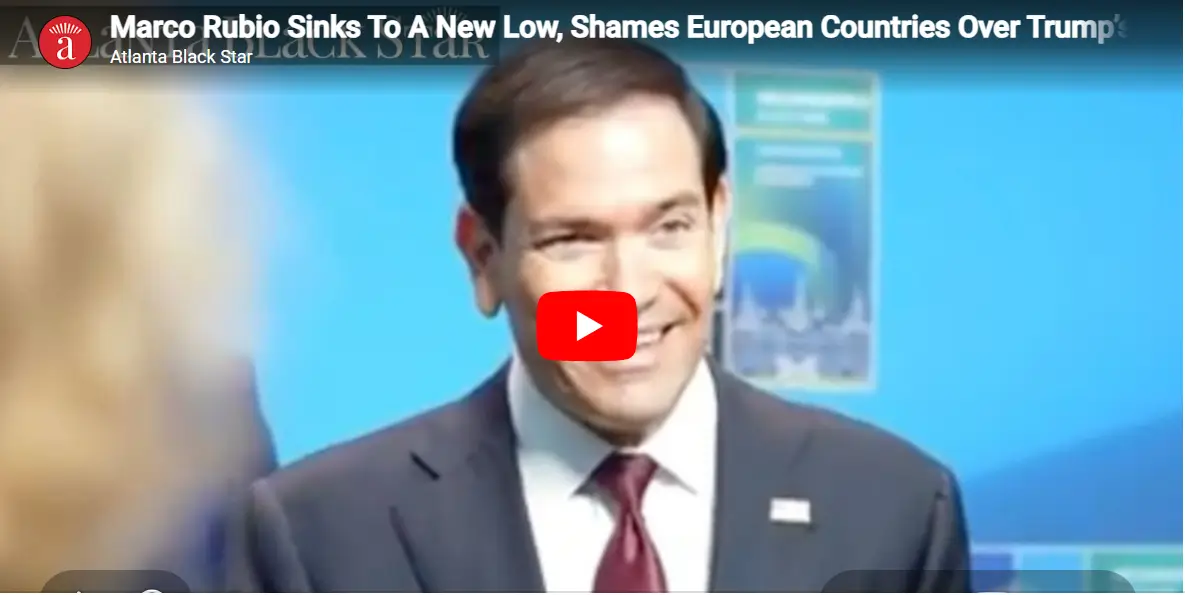
Secretary of State Marco Rubio traveled to Sweden for a NATO defense meeting and used the news conference afterward to do what the Trump administration does best: lecture American allies while simultaneously undermining the alliance holding them together.
Rubio opened the presser with a line that set an immediate and uncomfortable tone. “I didn’t even want to talk to you guys,” he told reporters during the May 22 visit. “They told me I had to talk to the press.”
The line fell completely flat, leaving an already tense room even more unsettled about what was coming next.
Rubio defended the administration’s moves to reduce U.S. troop presence in Europe while framing it as routine housekeeping.
“The United States has global commitments for our military, so we are constantly re-evaluating where we’re positioning forces,” Rubio said, adding that allies had been kept in the loop. “I’m not saying they’re going to be thrilled about it, but they certainly are aware of it.”
He then pivoted to a line of argument that has defined Trump’s entire relationship with NATO — that European nations simply aren’t pulling their weight, and that America’s continued commitment is conditional on whether the alliance proves its value to Washington.
“There’s never been a time in which there hasn’t been a debate in American politics about what our presence and our contribution to NATO should be,” he said. “And that is always driven by what is the value of NATO to the United States.”
When pressed on defense spending commitments made at last year’s Hague summit, Rubio acknowledged the uneven progress without hesitation.
“There are some countries that have doubled their defense spending over the last few years,” he said flatly. “There are others that are still lagging.”
On the increasingly volatile situation in the Strait of Hormuz, Rubio acknowledged the stakes while floating a blunt “plan B” if diplomacy with Iran collapses.
“What if Iran decides we’re going to own the straits and we’re going to charge tolls for it? At that point, something has to be done about it,” he said. “And I would argue that there are countries represented here today that are more deeply impacted by this than even the United States is.”
Rubio moved into territory that carried far weightier implications for the alliance.
Speaking about military bases in the region, he laid out a calculation that suggested America’s commitment was no longer unconditional.
“One of the things I’ve always used … one of the arguments I always made … was that these bases provided us logistical options that we wouldn’t otherwise have,” he said.
“When some of those bases are denied to you during a conflict that we’re involved in, then you question whether that value is still there.” He paused before adding, “So that’s going to have to be discussed. There’s no doubt about it.”