Politics and social media have become a brutal combination where image often matters just as much as policy.
In the era of AI memes, edited videos, and viral screenshots, politicians are increasingly using internet culture as a weapon to embarrass opponents and energize supporters. But the downside of humiliation politics is that the internet rarely lets the mockery stay one-sided for long.
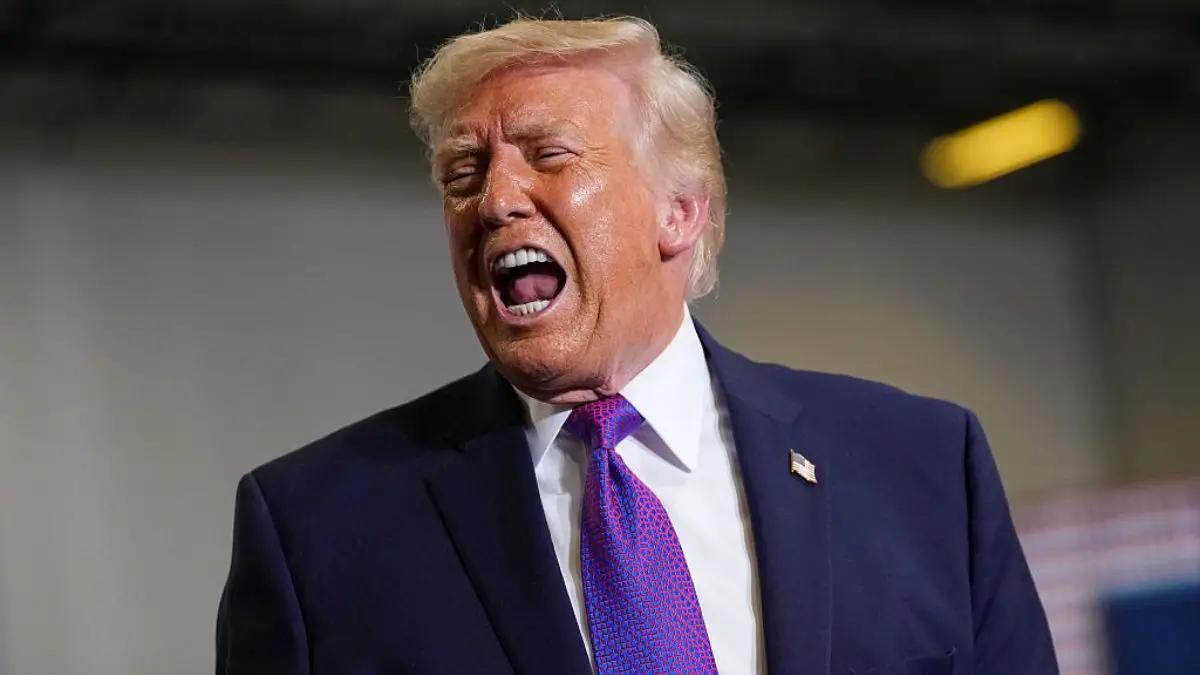
President Donald Trump learned that quickly this week after two separate Truth Social posts targeting President Joe Biden, Illinois Gov. J. B. Pritzker, and Chicago Mayor Brandon Johnson triggered backlash and opened the floodgates for critics to roast Trump himself.
In one Truth Social post, Trump shared a split image designed to contrast his perceived strength with Biden’s weakness.
The top half showed Biden looking confused and disoriented as he walked away from Xi Jinping; the bottom half showed Trump standing firmly beside Xi, shaking his hand. The message was clear: Trump as commanding and in control, Biden as lost.
The problem with the meme was that the image of the Delaware politician was AI-generated.
Trump also posted another Truth Social upload aimed at Illinois Democrats.
This time, he shared an AI-generated parody movie poster inspired by the comedy “Dumb and Dumber,” replacing the actors with exaggerated depictions of Pritzker and Brandon Johnson. The edited image mocked both leaders while framing Chicago and Illinois leadership as incompetent and chaotic.
But while Trump supporters laughed at the AI memes, critics took to Threads with their own photos. One person quickly posted an unflattering candid photo of Trump right before he left China, showing his hair blown up and looking bald as his wispy orange sweep-over revealed his big forehead.
View on Threads
“Buckle up. The sundowning has begun,” the person added, before writing, “Something must have happened to make T feel old, since he just posted numerous pictures of himself in China, along with these three memes claiming that he is younger than ever. Maybe he saw the first picture, taken May 12, as he was departing for China. It would be such a shame if the picture was shared and shared all over.”
Others weighed in, blasting the president just as hard as he came after others.
“Whyyyyy can you see the halves of his brain????…well, ‘brain,’” one posted, someone else added, “It looks like his brain is outside of his skull now.” A third said, “Could be the lack of hair on these pics…or him coming back from China with his tail between his legs.”
“He obviously doesn’t look in the mirror!!! Here’s how he really looks !!” one person wrote, sharing more images of the president.
View on Threads
Someone else queried, “I wonder if sometimes he catches a glimpse of his reflection and mistakenly tries to grab himself by the gash in his neck.”
“This should be his presidential portrait,” one wrote.
The backlash also revived discussions surrounding Trump’s recent comments about health, aging, and stamina — especially after his strange April 2026 rally remarks that many critics viewed as an accidental confession of his own fears.
During that speech, Trump mocked Biden’s physical condition before drifting into an unusual tangent about how difficult the presidency can be on the body. At one point, Trump remarked that “there’s only so much a body can take,” before abruptly attempting to pivot away from the comment moments later.
That same accusation surfaced earlier this year, in January 2026, after Trump slammed Biden with another eyebrow-raising accusation during a televised rant. While criticizing Biden’s leadership, Trump suggested some politicians secretly hide “dark secrets” about their physical or cognitive condition from the public.
The statement backfired almost instantly, with viewers flooding social media claiming Trump sounded less like he was attacking Biden and more like he was describing himself.
Meanwhile, Trump’s return to Truth Social as a weapon against political rivals is nothing new — it’s a comfortable habit he’s leaned on for years. But the internet has grown wise to the game. What once felt like a one-sided ambush now comes with counterpunches, as critics dig through archives, candid shots, and old clips to return fire with interest.
In the age of viral culture, no one is exempt from the scrutiny they invite. For every AI meme Trump deploys, an unfiltered photo circulates twice as fast. For every jab at someone else’s age, a clip of his own stumbles resurfaces.
The rules are simple: if you’re going to throw stones, don’t live in a glass house — and right now, Trump’s walls are looking more transparent by each post.


