The ambitious preliminary racial equity plan for New York City, released by Mayor Zohran Mamdani on April 6, and legally mandated by a public referendum in 2022, has just finished a monthlong public comment period. But the Trump administration’s Department of Justice already has the plan in its anti-DEI crosshairs.
Within hours of its release, Harmeet Dhillon, assistant attorney general for civil rights at the DOJ, wrote on X, “Sounds fishy/illegal. Will review!”
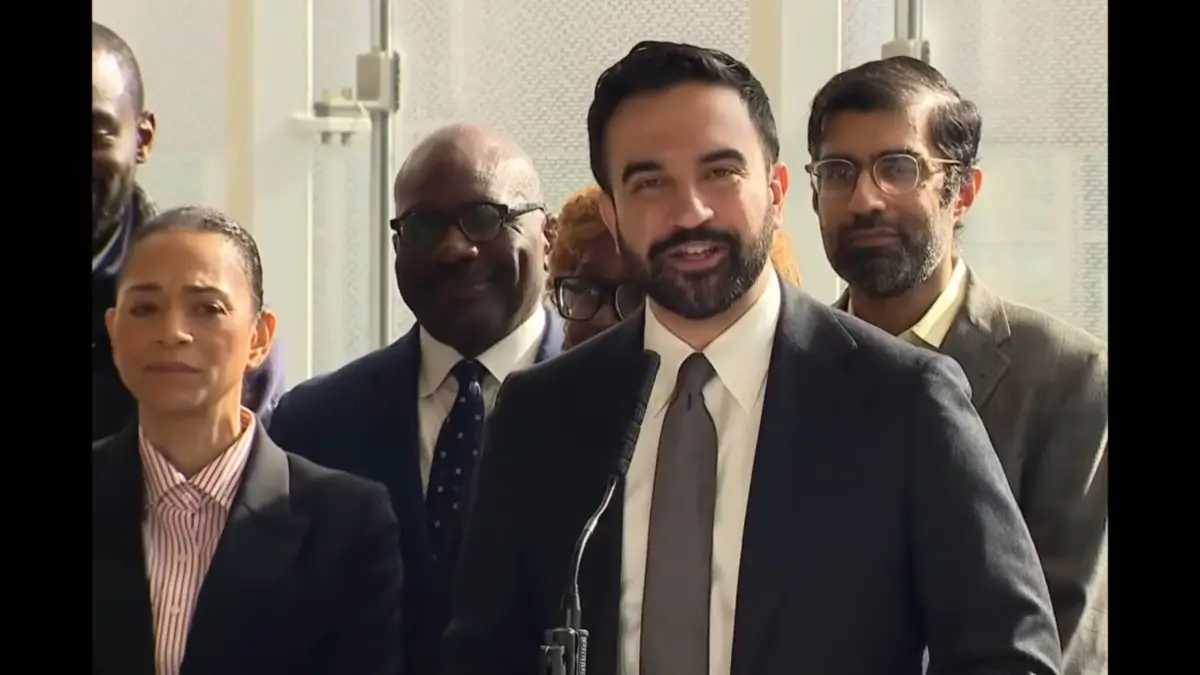
Last month, she weighed in again in a statement provided to WORLD, a Christian news organization:
‘He Had It Pointed Up at Me’: Indiana Teen Accused of Trying to Shoot Cop Walks Free After Body-camera Footage Exposes Officer’s Lie
“The mayor’s plan appears to be another example of divisive, race-based policymaking that the United States Supreme Court has routinely held to be unlawful. Racist and illegal DEI has no place in our society. The Civil Rights Division is reviewing the plan and will bring enforcement actions if necessary.”
DOJ Threatens Legal Action Over NYC Equity Plan
Hoping to ward off legal challenges from the Trump Justice Department, the Mamdani administration worked with the New York City Law Department over several months to eliminate or soften references to DEI (Diversity, Equity and Inclusion) in the 375-page preliminary racial equity plan, reported City & State.
Those changes included stripping entire sections related to the city’s DEI-related goals from the plan, and changing language related to hiring preferences for minority- and women-owned business enterprises (M/WBEs) in city contracting.
Mamdani’s racial equity planning team found that minority- and women-owned businesses take up roughly half of the small business marketplace. But the plan showed they only received about 10% of city contracts.
Instead of setting a goal in the Department of Education to “progressively expand opportunities for M/WBEs with a particular focus on the disparities with certified Black-owned and Hispanic firms,” as a prior draft had it, the Law Department replaced that with language emphasizing the city would comply with federal law: it said the DOE “has had a 30% goal for M/WBE utilization and will continue to implement and evaluate goals going forward to ensure they are consistent with federal, state and local law.”
The Law Department also objected when a city agency listed one of its goals as having a workforce that reflected the population it serves, City & State reported, because that goal “could sound like we are aiming to match the racial demographics in the city,” which could trigger a challenge under Title VII of the Civil Rights Act and the equal protections clause of the 14th Amendment, the department wrote.
That goal was ultimately changed to “an equitable recruitment plan and unconscious-bias free hiring process.”
In discussing the city’s recent history, a reference to the 2020 protests following the police killing of Breonna Taylor in Louisville as “protests against systemic racism” was changed to “protests against excessive force.”
Mamdani Plan Links Affordability Crisis to Racism
But only so much could be reshaped to conform to the Trump administration’s aggressive assault on DEI and aversion to truth-talking about racism. The plan springs from a mandate by New York City voters who, in 2022, passed ballot measures to create an Office of Racial Equity & Justice and a citywide racial equity plan aiming “to dismantle systemic barriers impacting marginalized communities and embed racial equity in government services and systems.”
The plan forthrightly acknowledges that “the city’s current state of persistent racial inequities in housing, education, asset-building, health, safety and governance is rooted in our 400-year history,” starting with the arrival of Dutch colonists in 1624, who claimed the land now making up the five boroughs then populated by Indigenous Lenape people, and drove them out by force. The African slave trade soon emerged on Wall Street, and enslaved people built the colony’s infrastructure.
Though New York abolished slavery in 1827, “the legacy of slavery persisted through Jim Crow laws, segregation and economic disenfranchisement,” including redlining policies denying home loans to people in predominantly Black neighborhoods, the plan says, contributing to cycles of poverty and disinvestment that have continued into the present.
The upshot, Mamdani said at a press conference introducing the plan, is that the city now has stark racial wealth disparities. According to the racial equity plan, that includes a gap of more than $180,000 between white and Black households. White households in New York City hold more than $200,000 in median wealth, compared to less than $20,000 for Black households.
“I ran for mayor on an affordability agenda because we know that we cannot solve this crisis without reckoning with the fact that the neighborhoods hit hardest by rent and the rising nature of it, by child care costs and the suffocating manner of it, are the same ones that have been hit for years by institutional neglect and racism,” the mayor said. “In that way, New York City’s affordability crisis and its history of racial inequity are bound together.”
“Too often, the story of Black and brown New Yorkers is one of being forced to stretch that same dollar that little bit further,” Mamdani said. “Every year, as wages stagnate, an exodus, an exclusion continues to take place. When I say exodus, I refer to the fact that from 2000 to 2020, more than 200,000 Black New Yorkers were pushed out of this city because they could not afford life in the most expensive city in the United States of America because rent was too high, child care was too expensive, and groceries cost too much.”
Report Finds Millions of New Yorkers Cannot Afford Basic Living Costs
Unveiling the True Cost of Living (TCOL) Measure report, also mandated by the 2022 ballot measures, Mamdani noted that 62 percent of New Yorkers — more than 5 million people— don’t meet the financial threshold to live with financial security and dignity. (That figure is distinct from the 18 percent of New Yorkers who live below the federal poverty threshold). While many residents are housed and employed, they cannot afford the cost of health care, childcare, housing, transportation, taxes, savings for emergencies and retirement, and other necessities.
The median TCOL threshold for families with children and with adults under 65 is $159,197, the report said. The average gap between what it costs to live in the city and the resources residents actually have is $39,603. Many people rely on public benefits, support from extended family, reduced consumption and accumulation of debt to bridge that gap and to get by.
Trump’s Unhinged South Lawn Confession Just Torched Every Promise He Ever Made to MAGA, and the Regret Hitting His Own Base Right Now Is Absolutely Savage
The report found that a single adult without children under 65 needed to earn $34 per hour to meet their total cost of living through income alone. The minimum wage in New York is currently $17. At that rate, a single adult would need to work 90 hours per week — the equivalent of two full-time jobs — to meet their true cost of living.
Substantial disparities across racial and ethnic groups exist when it comes to the ability to afford city life — 78 percent of Hispanic, 66 percent of Black, and 63 percent of Asian and Pacific Islander New Yorkers don’t have the resources to meet their true cost of living, while only 44 percent of white New Yorkers struggle to do so.
“While today’s true cost of living measure confirms that the affordability crisis touches every corner of our city,” Mamdani said, “we know that these effects are not applied evenly. So often it is Black and brown New Yorkers who are hit the hardest. This preliminary racial equity plan is the first step in developing a whole-of-government approach to tackling that reality. It is a plan that lays out these first steps to solve decades of neglect and discrimination.”
The preliminary citywide racial equity plan, which includes 200 goals and outcomes and more than 600 indicators to track progress, was developed by 45 agencies. “It addresses the myriad ways public policy, public investment, and agency practice affect New Yorkers differently across race, neighborhood, income, language, disability, and immigration status.”
Conservatives Slam Equity Goals as ‘Race-Based Policymaking’
Among the goals are anti-racism training for city government staff; breaking data down by race, gender and age to identify disparities in service provision and to prioritize investment (including at the sanitation department and the Department of Youth and Community Development); and addressing known inequities in the Department of Health and Mental Hygiene, including ensuring that every New Yorker has access to a primary care doctor by 2034.
The plan also calls for launching school-based early support prevention services that support families and reduce risk of involvement with child protection services and reviewing the impact of fine- and fee-based programs in the transportation department on different communities.
“The people who built this city and who keep it running should be able to afford to live in it,” said Julie Su, deputy mayor for economic justice, at the press conference.
“You know, this is about equity and it’s about economic growth,” she said. “When communities of color are denied investment and stability, it drives up costs and weakens the foundations everyone depends on, including white New Yorkers. This country once embraced public investment — the GI Bill, affordable public college, and housing investments. But when Black Americans fought for access to those programs, backlash politics taught people to resent government programs instead of expanding them. And the result was a worse deal for everyone.”
Among the economic initiatives she said she is working on with the mayor are “protecting tenants, making child care more affordable, strengthening worker and consumer protections, starting an office of community safety, cutting red tape for small businesses, working with organizations led by and for Black and brown New Yorkers to decide what happens in them, and pursuing economic development that serves all of us and economic growth that is shared growth.”
While many New Yorkers, including civil rights, economic justice and housing advocates, have responded positively to the racial equity plan, conservatives have been sharply critical.
“Straight-up racism against White people,” the conservative influencer account Libs of TikTok posted on X.
Howard Husock, a senior fellow at the American Enterprise Institute, wrote that “viewing every single city service … through the lens of racial equity” and then making policy changes “spells trouble.”
Critics Warn Plan Could Reshape Housing and Development
“For example, the report suggests protecting minority-owned businesses from competition by setting aside contracts for them, which isn’t likely to spur the creation of businesses that can grow and innovate. It also proposes to ‘increase the number of teachers who receive professional learning in implicit bias and culturally relevant pedagogy’— a recipe for more woke education in public schools.”
“The gravest damage” from the plan, he said, “will likely involve development decisions that will shape New York’s neighborhoods. The city is in the driver’s seat when deciding whether to permit new residential construction to go forward—and the report makes clear it will micromanage, with race top of mind, what gets built and where.”
The city’s plan to, by the end of 2026, ensure racial equity is considered in evaluating all new development proposals and to focus on projects in limited affordability areas will allow the city to enforce “what seems like backdoor housing discrimination because it inhibits virtually all new construction that does not include ‘affordable’ set-asides,” Husock argued.
Such “drastic, race-related intervention in the city’s housing market is a recipe for suppressing the economic dynamism that is the real triumph of New York City history. In cities that thrive, neighborhoods change as the economy evolves and groups move up and out. East Harlem was once Jewish and Italian. … Blacks have moved from Harlem to Mount Vernon, and from Brooklyn to Long Island. Mamdani’s approach could freeze the city in place and replace mobility with stagnation.”
The preliminary Citywide Racial Equity Plan was open for public feedback for 30 days, through May 6. The Mayor’s Office of Equity & Racial Justice will now collaborate with agencies “to reflect on the insights shared, further refine the plan, finalize and share the final version.”
The mayor’s office may also need to incorporate feedback from the Justice Department and federal courts.


