The GOP-controlled Louisiana Legislature is intent on eliminating the judicial office of a recently elected Black man who was imprisoned for nearly 30 years before being exonerated.
Calvin Duncan won 68 percent of the vote last November to become the Orleans Parish clerk of criminal court after pledging to reform the justice system, his campaign based on his own experience of battling with the courts to obtain records while in prison, AP reported.
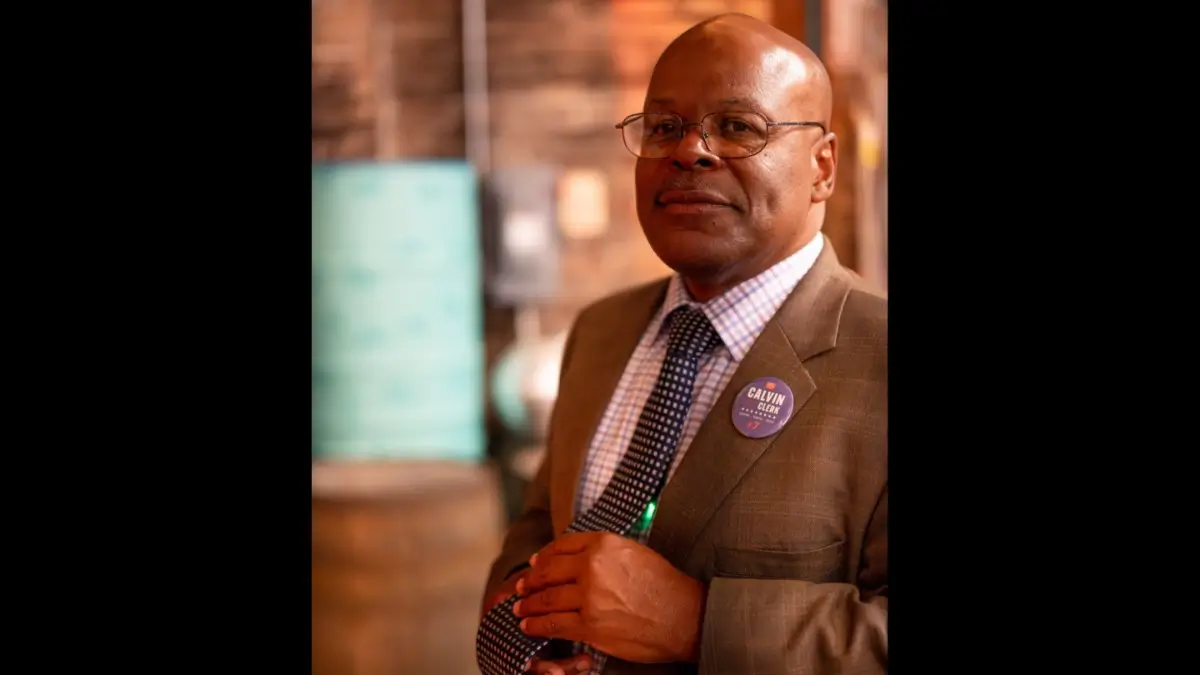
But the state Senate voted last week to pass Senate Bill 256, a proposal that would merge the clerk’s offices for Orleans Parish civil, criminal, and juvenile district courts into a single office, thereby eliminating Duncan’s position.
The Republican-majority Louisiana House is likely to vote on the measure this week, hoping it passes and is signed into law by Gov. Jeff Landry, becoming immediately effective, before Duncan’s scheduled swearing-in on May 4.
Supporters of the bill say the consolidation of New Orleans courts would streamline operations and improve efficiency, while opponents warn it is likely to create confusion and reduce funding and staffing for an already-overwhelmed criminal court system in a parish that has a much higher rate of felony cases than anywhere else in the state, as observed by The Lens.
Many Democrats contend the legislation’s true intent is to deny Duncan the office, as the governor and other prominent Republican officials have long denied his innocence, despite his legal exoneration.
Duncan was found guilty in the 1981 murder-robbery of 23-year-old David Yeager, serving 28 years in prison, AP reported. In 2011, just before a hearing to consider new evidence, prosecutors offered to reduce Duncan’s sentence to time served if he pleaded guilty to manslaughter and armed robbery. Duncan did so and was freed, but never stopped trying to clear his name. In 2021, with the help of the Innocence Project of New Orleans, he convinced a judge that he had been unjustly convicted, and his sentence was vacated.
Duncan studied law in prison while trying to appeal his case. In the process, he became a self-taught jailhouse lawyer — officially as part of the Inmate Counsel Substitute Program at the Louisiana State Penitentiary in Angola, NPR reported. He worked on hundreds of cases, helping many fellow inmates overturn their convictions.
One of the biggest challenges Duncan faced was obtaining public records: “I used to donate my plasma just to save enough money to buy my records,” he told NPR.
After his release, Duncan earned a BA in paralegal studies from Tulane. Last year, at 60, he received his law degree from Lewis and Clark University in Oregon. He now lives in New Orleans, where he’s the founder and director of the Light of Justice program, which works to improve access to the courts for incarcerated people.
Duncan told the AP he believes he’s being retaliated against by Louisiana officials who have not accepted his innocence.
As state attorney general in 2023, Landry opposed Duncan’s petition to be compensated for his wrongful conviction. Duncan withdrew his petition after Landry’s successor, Liz Murrill, who was publicly critical of his use of the word “exonerated” to describe himself (since he had initially pleaded guilty to earn his release) threatened to go after his law license.
Murrill vowed to take “further action” against Duncan when he ran for clerk if he didn’t stop calling himself “exonerated.”
Sen. Jay Morris, a Republican from Monroe who authored Senate Bill 256, said the intent is to “provide some efficiencies” and bring Orleans Parish in line with the rest of the state, where each parish has a single clerk’s office that handles both civil and criminal functions.
Morris told Duncan during a phone call prior to a March Senate judiciary committee hearing that the bill’s aims were not personal, but instead were “what the governor wants,” in order to “right-size” a bloated court system, The Lens reported.
Morris also admitted to reporters that the legislation has been fast-tracked to take effect before Duncan takes office.
“Otherwise we’d probably have to pay him for four years in a job that’s going to be eliminated,” Morris said.
Duncan, a Democrat, told lawmakers during the committee meeting that the existing criminal clerk’s office is already disorganized and needs better handling of existing files to avoid the sort of costly mistakes that led to his wrongful conviction and those of so many others.
“They had the wrong person because we lost the evidence in the clerk’s office,” he said.
Last August, hundreds of sensitive criminal court records, including files tied to rapes and capital murder cases, were accidentally thrown out and buried in a landfill by city employees, WDSU reported. Only 75 percent of the files were recovered.
Most importantly, Duncan told lawmakers, the legislative proposal disregards the will of the voters who chose him as criminal clerk for Orleans Parish, who also serves as the city’s chief elections officer.
“The citizens of New Orleans overwhelmingly said: ‘I want to give this person a chance, he can make a difference,’” Duncan said, adding, “I worked for this all my life. … What this bill does, it says: ‘Thank you, but you wasted your time.’ It disenfranchises everybody.”
Morris also introduced a trio of other bills that would eliminate 11 judgeships across Orleans Parish, which is overwhelmingly Democratic.
The Orleans judges who testified at the Legislature described the lengthy dockets they face every weekday and the long hours they spend on the bench, actively handling a higher volume of and more complex trials than in other parishes.
The bills to consolidate the Orleans Parish courts are about power, not efficiencies, Sen. Royce DuPlessis, a New Orleans Democrat, said during the floor debate last week.
He argued that SB 256 had no fiscal note attached to demonstrate any likely savings from the clerk’s office merger, and that it subverted the will of voters.
He proposed an amendment that would have delayed the consolidation of Orleans Parish clerk offices until May 2030, after Duncan’s four-year term.
“I have never seen something so barbaric,” Duplessis said. “I understand politics, and I know you all are going to vote how you are going to vote. But just know, when we are all done here, history has a record.”
The amendment was voted down.


