President Donald Trump is once again brushing aside basic history, pushing forward with plans to install a Christopher Columbus statue near the White House and insisting the long-debated explorer is a “hero” — despite Columbus not actually discovering the land Trump is crediting him for.
The White House has stopped short of formally confirming the statue’s installation, but it hasn’t denied it either. Instead, the administration leaned into a bizarre viral defense that quoted Tony Soprano, the fictional crime boss from The Sopranos, as if a TV character’s take on Italian-American pride somehow settles centuries of historical fact.
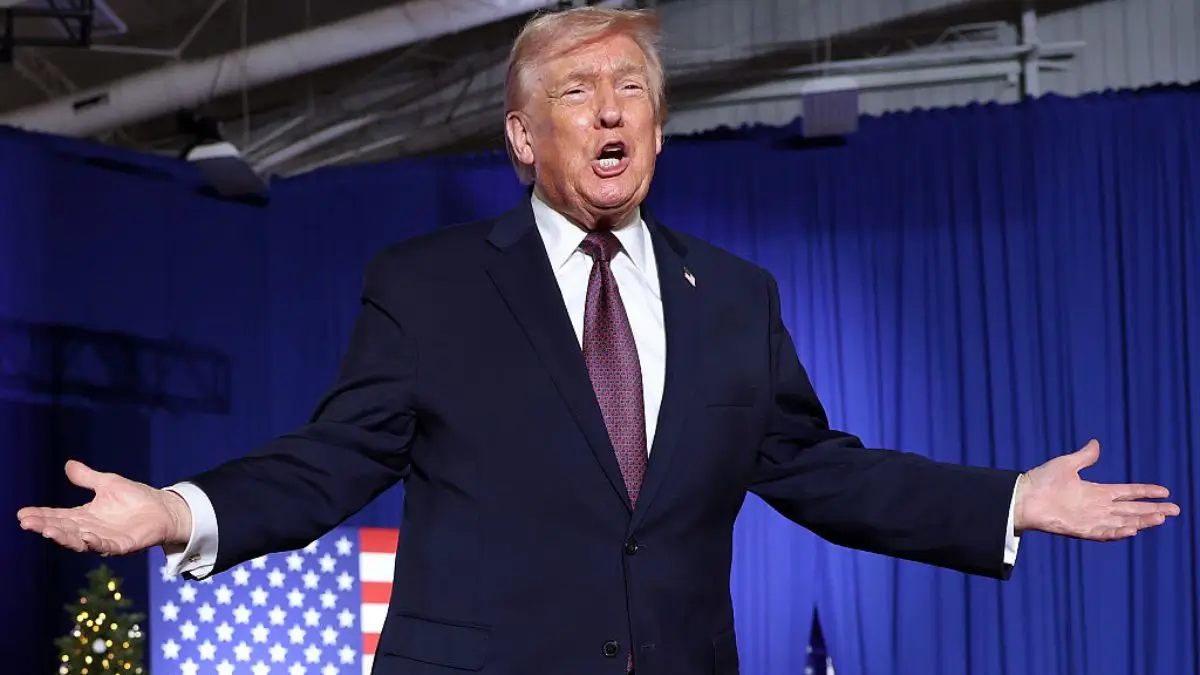
“In this White House, Christopher Columbus is a hero,” said Trump spokesman David Ingle, according to Fox News. “And he will continue to be honored as such by President Trump.”
Ingle’s phrasing immediately caught attention because it mirrors a famous scene from The Sopranos where Tony scolds his son after a teacher criticizes Columbus in class. “He discovered America is what he did!” Tony says. “He was a brave Italian explorer, and in this house, Christopher Columbus is a hero, end of story!”
The proposal surfaced following reports that the administration is preparing to install a replica of a Columbus statue that was pulled down and dumped into Baltimore’s Inner Harbor during racial justice protests in 2020. According to The Washington Post, the statue is a reconstruction of a piece first unveiled under President Ronald Reagan and later destroyed as protesters targeted monuments tied to slavery and colonialism.
The administration’s wink to a TV anti-hero underscored how little daylight there is between Trump’s political instincts and his cultural ones. It also landed with a thud among critics, who saw the quote as proof that the White House was snubbing real history.
“I just can’t wrap my head around this f-ckery,” one critic cringed on Threads, later adding, “They’re just dumb and stupid apparently.”
Others focused on the basics. “Columbus made four voyages to the New World and never set foot on the mainland. All four times he landed on one of the Caribbean islands. What a fool! Doesn’t even know fourth grade geography let alone history!”
View on Threads
Some were simply stunned. “This isn’t real, right? Like, this is satire? Please tell me it’s satire.”
And others pointed to cost and priorities. “Wasting money for America is what he’s doing.”
Behind the scenes, the statue’s journey to Washington has been years in the making. John Pica, a Maryland lobbyist and president of the Italian American Organizations United, said his group owns the statue and agreed to loan it to the federal government. He told The Associated Press that an intermediary contacted him around Columbus Day last year, saying the White House was looking for a Columbus statue.
Pica said his organization took a straw vote and unanimously agreed to send it. The loan agreement was signed earlier this month. Asked whether he believed the statue would actually be installed, Pica said, “Cautiously optimistic, yes.” He said the timing remained uncertain but could be “possibly within two weeks.”
Maryland state Del. Nino Mangione, a Republican who helped recover the statue from the harbor, confirmed the plans. “I was there when we got it out of the harbor,” Mangione said, noting that artist Will Hemsley used pieces of the old statue to “build and restore a beautiful, brand new statue.”
For Pica and his group, the placement is about honoring a figure long embraced by Italian Americans. For Trump, it fits a broader effort to lock in a traditional, triumph-focused telling of U.S. history as the country approaches the 250th anniversary of the Declaration of Independence.
Trump has repeatedly argued that Columbus and other historical figures should be judged by the standards of their time, not modern ones. Last October, the White House issued a Columbus Day proclamation calling the explorer “the original American hero, a giant of Western civilization, and one of the most gallant and visionary men to ever walk the face of the earth.”
“Outrageously, in recent years, Christopher Columbus has been a prime target of a vicious and merciless campaign to erase our history, slander our heroes, and attack our heritage,” the proclamation continued.
“Before our very eyes, left-wing radicals toppled his statues, vandalized his monuments, tarnished his character, and sought to exile him from our public spaces. Under my leadership, those days are finally over — and our Nation will now abide by a simple truth: Christopher Columbus was a true American hero, and every citizen is eternally indebted to his relentless determination.”
Trump has echoed that stance elsewhere, declaring last year, “I’m bringing Columbus Day back from the ashes.” He complained that “Democrats did everything possible to destroy Christopher Columbus, his reputation, and all of the Italians that love him so much.”
The administration’s embrace of Columbus comes as historians and educators have increasingly emphasized darker parts of his legacy: violence against Indigenous people, the beginnings of transatlantic slavery, and the launch of mass European colonization.
Columbus never set foot in what is now the United States, never reached Asia, and died believing he had found a route to China. He made four voyages to the Caribbean, landed in the Bahamas and present-day Venezuela, and brought enslaved Indigenous people back to Europe while spreading disease and brutality across the islands he reached.
That reassessment has driven many cities and states to replace Columbus Day with Indigenous Peoples Day, a move President Joe Biden recognized with a proclamation in 2021. Trump ignored that shift, issuing his own Columbus Day proclamation instead.
The statue at the center of the latest fight was toppled on July 4, 2020, as anger boiled over after the murder of George Floyd. It was one of many Columbus statues vandalized or removed nationwide during that period.
Pica said his group retains ownership of the statue and would take it back if a future administration asked for its removal.


