Detroit police officer Zachary Melvin pulled over a Black woman named Tracey Allen last year for minor traffic violations – but ended up shooting her six times. Luckily, she survived.
But within hours after the October 26 shooting, Detroit Police Chief Todd Bettison criminalized Allen by telling reporters she had refused to provide her information before driving off with Melvin clinging to her car, fearing for his life.
The chief then realized he was wrong after watching the body camera video, calling another press conference the following day to tell reporters that not only had Allen handed the officer her information but that Melvin had committed multiple policy violations that led to the shooting. Charges against Allen were quickly dismissed while the cop was suspended without pay.
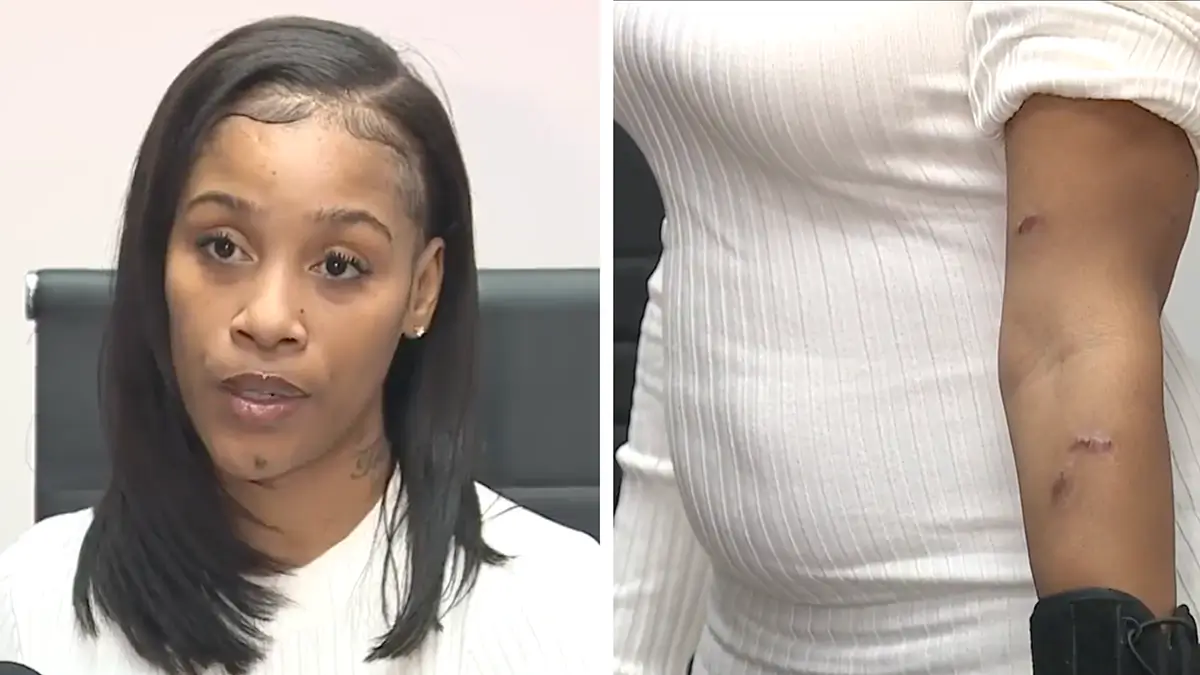
On Wednesday, Allen filed a $25 million lawsuit against Melvin and the city of Detroit, accusing the officer of violating her Fourth and 14th Amendment rights through excessive force, unreasonable seizure and racially disparate policing, and the city of negligent training.
“The officer chose to use excessive force,” said her attorney, Maurice Davis, during a press conference on Thursday. “And that choice led to my client being shot six times in various places throughout her body.”
Allen, a mother of five, told reporters at the press conference that she had just left Walmart and was pulled over by Melvin who accused her of having illegal tints and an obscured license plate.
She said she handed the cop her license and registration but he became impatient when she was taking too long to pull up her insurance card on her phone, so he began arguing with her.
She was frightened of his angry demeanor and asked him to call a supervisor but he refused so she dialed 911.
“I told the operator that I feared for my life and asked her to stay on the phone with me,” she said. “After that, he called for backup, the backup officer pulled up and pepper sprayed me.”
Fearing for her life, she drove away from the cops and was on her way to a nearby police station when the two cops chased her down and boxed her in with their patrol cars.
“He already had his gun out so I thought I was going to get shot in my head,” she said.
Melvin first stood in front of her car with the gun drawn, then moved to the side, ordering her out at gunpoint, but she refused to step out which was when he began shooting at her.
“As he shot my truck up, I pulled off. I didn’t know I was hit until I got to the light,” she said.
“I thought I was going to die.”
‘Officer Will Be Held Accountable’
With multiple bullet wounds on her left arm and leg, Allen drove to a nearby police precinct, where she was met with more cops with their guns drawn.
But when she told them she had been shot, they began rendering first aid, then transported her to the hospital. After she was treated at the hospital she was then transported to jail. But none of the cops told her why she was going to jail.
“Basically I was going to jail because I was going to slow to give him my insurance,” she told reporters. “That’s all I knew I was going to jail for.”
At the jail, a cop told her she was being arrested because she drove away from the traffic stop with the cop clinging to her car which would be a serious felony charge.
“I said, no, he wasn’t. That never happened. And they told me I’ll have my day in court,” she said.
Meanwhile, local media were publishing stories with headlines like “Woman shot by Detroit police after refusing commands, chief says” and “Woman shot inside vehicle after she attempted to ram officers, police say.”
But then Chief Bettison viewed the body camera video and realized that Melvin had lied to him about what had happened which was when she was released from jail with no charges.
Melvin, who has been on the force less than two years, was suspended without pay and is supposedly under criminal investigation.
Bettison held another press conference the day after the shooting and told reporters he had not seen the video before the first press conference and “was going off preliminary information” — which were the lies told to him by Melvin.
“We do not shoot at moving vehicles unless it is an extreme circumstance where life is in jeopardy,” Bettison said.
“She did give her license, she did give her registration, her insurance was on her phone. … If a supervisor had been called, I don’t think it would’ve went this way,” the chief explained. “The actions of the officer in violating our policy (are) not consistent with what should be done. The officer will be held accountable for that.”
But Davis, Allen’s attorney, said police and prosecutors have refused to give him the body camera footage. However, video of the shooting was captured by a home security camera and obtained by local media, contradicting the initial police narrative.
“This case is about more than Tracy Allen, it’s about sending a message that violence against innocent citizens must stop,” Davis said.
“Police officers they are entrusted with enormous power, and that power comes with responsibility, when that responsibility is abused, the courts are the proper place to ensure that accountability,” Davis added.
Last year, Detroit police arrested at least two Black women after faulty facial recognition and license plate readers misidentified them as criminals. They also detained a Black man for walking while Black, lecturing him “accountability.”


