U.S. Attorney General Pam Bondi thought she was seizing a moment of chaos to project federal authority and pushing President Donald Trump’s agenda forward.
Instead, Minnesota Governor Tim Walz used her own timing against her and left her political gambit in ruins.
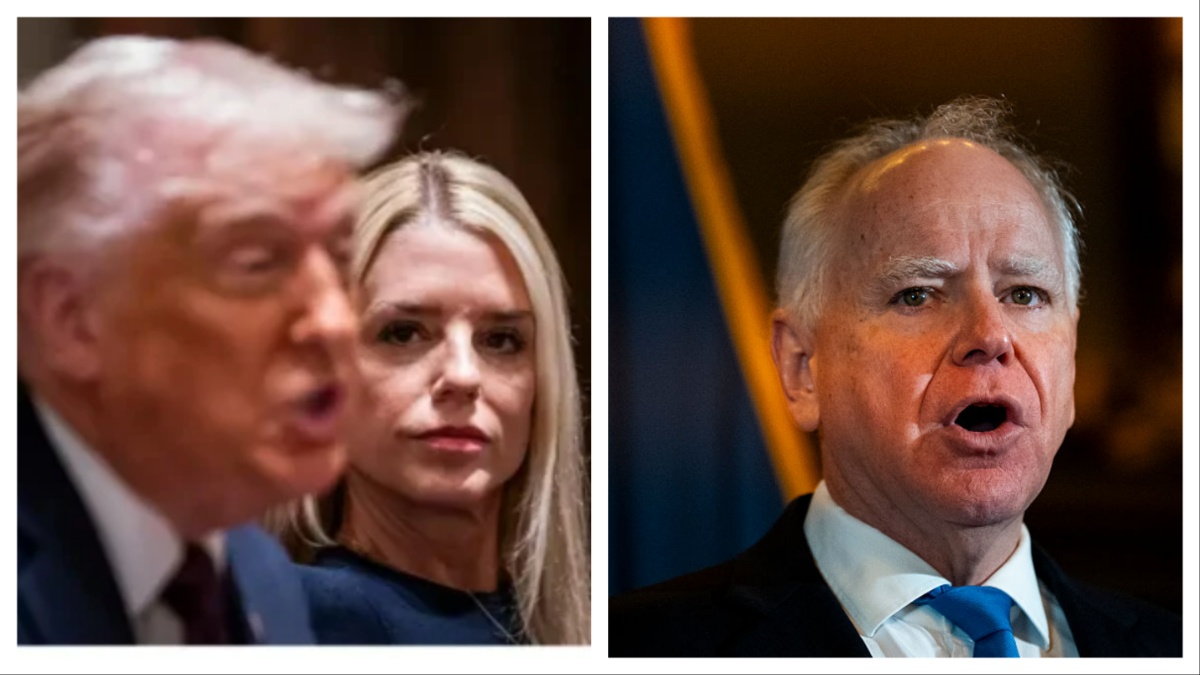
Late last Saturday, just hours after federal immigration agents fatally shot 37-year-old ICUnurse Alex Pretti in south Minneapolis — the third shooting involving federal agents in less than three weeks — Bondi sent a letter to Walz’s office demanding Minnesota hand over a wide swath of state records to the Department of Justice.
Pretti’s death, coming after the Jan. 7 fatal shooting of 37-year-old Renée Good by an ICE agent and another federal agent’s nonfatal shooting of a man on Jan. 14, has thrust Minneapolis into a national flashpoint over immigration enforcement.
Bondi, in her capacity as the nation’s top law enforcement official, framed her demands as a step toward restoring “law and order,” citing what she described as Minnesota leaders’ refusal to enforce federal immigration laws and protect agents.
Her letter urged Walz to hand over detailed state records on Medicaid and food assistance programs, end so-called sanctuary policies, allow Immigration and Customs Enforcement (ICE) access to state facilities, and grant the DOJ access to Minnesota’s voter rolls to “confirm that Minnesota’s voter registration practices comply with federal law.”
That last demand — access to voter data — quickly drew widespread skepticism and alarm. To many legal and political observers, it had no meaningful connection to immigration enforcement or the recent shootings. Critics called it leverage, not oversight, and likened the letter’s tone to a coercive “ransom note.”
“‘ICE will leave Minnesota if you hand over your voter rolls’ tells you everything you need to know. … It was always about rigging elections,” Rep. Ilhan Omar, D-Minn., wrote on X.
On Sunday, Walz made it clear he was unimpressed.
At a press conference, the governor noted that Minnesota had already cooperated with federal authorities where required and had provided relevant data. “If it’s about fraud, it’s already been addressed,” Walz said, flatly dismissing Bondi’s framing. “This has nothing to do with fraud.”
Then came the remark that detonated across social media.
“I would just give a pro tip to the attorney general,” Walz added. “There’s **2 million documents in the Epstein files we’re still waiting on. Go ahead and work on those.”
The reference alluded to a longstanding deadline the Justice Department has missed to release materials related to the Jeffrey Epstein investigation — a point of bipartisan frustration. Lawmakers and advocates have repeatedly accused Bondi’s department of slow-walking those disclosures despite statutory obligations, adding fuel to the perception that her letter was political theater rather than serious legal strategy.
The DOJ itself pushed back on the narrative that Bondi’s letter amounted to a quid pro quo. A department spokesperson told Fox News Digital that claims about the letter’s intentions were “shamelessly lying,” arguing Bondi’s requests were aimed at improving cooperation between federal and state officials.
Online reaction was swift and — in many corners — brutal.
“His restraint is amazing. He doesn’t take their crap, but doesn’t give them the response they are looking for either,” one commenter wrote, praising Walz’s calm dismantling of Bondi’s demands.
Others were less restrained in their language. “Walz is all out of f*cks to give.”
Supporters of Walz hailed what they saw as a rare moment of political jujitsu: deflecting a perceived threat without escalating it. “This is why Tim Walz will always be my guy,” one wrote. “He is so good with his comebacks!”
“Maybe “promise” to give them the voter rolls when every Epstein file is released with redactions,” another suggested.
Meanwhile, Bondi’s position only grew more precarious.
Her letter came amid national outrage over federal immigration enforcement tactics in Minneapolis. Protesters have crowded the streets in subzero temperatures, calling for ICE and other agents to leave Minnesota entirely as legal battles unfold in federal court over the surge of immigration agents.
Critics argue that Bondi’s inclusion of voter data demands echoes a familiar pattern: invoking crime and immigration as justification while quietly advancing politically charged electoral objectives. That perception has only hardened as scrutiny over the Justice Department’s handling of the Epstein files has intensified and as lawmakers call for greater oversight of federal immigration operations in Minnesota.
For Walz, the message was simple: intimidation only works if the other side is afraid. And instead of blinking, the Minnesota governor turned Bondi’s threat into an indictment — one that left her defending her own record, her own delays, and her own credibility.


