President Donald Trump’s White House launched a new platform on Friday claiming to expose “media bias,” but within hours it was scrambling to fix its own blunders—yanking the site offline, wiping errors, and igniting a fresh round of scrutiny that undercut its entire message.
Promoted across official government channels as a tool to combat “fake news,” the page debuted with flimsy accusations aimed at discrediting mainstream media reports, complete with a list of so-called “fake news offenses.”
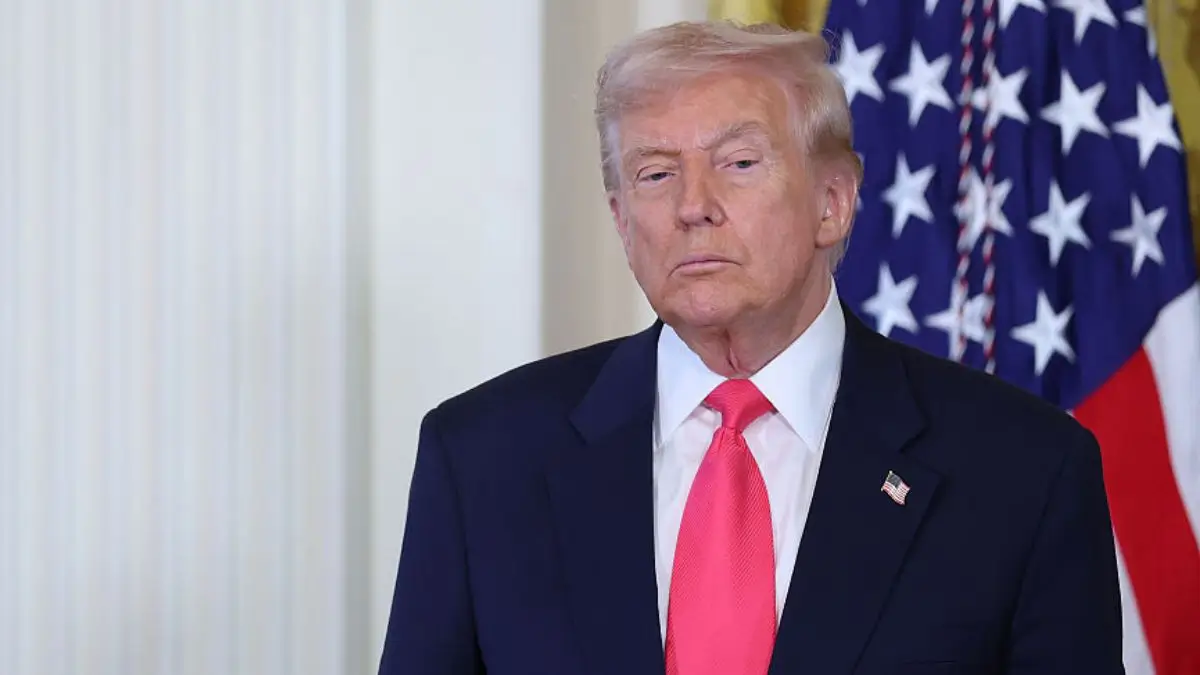
“Tired of the Fake News? We’ve got the place for you,” the White House posted on X. “Get the FACTS. Track the worst offenders. See the Fake News EXPOSED.”
But the rollout collapsed almost immediately. Within hours, the webpage went dark, replaced by a broken link after Fox News demanded a correction. The White House had misidentified a Fox reporter as the source of several questions asked during a recent press conference, listing the network as an “offender.”
The error forced the administration into an abrupt retreat.
“Fox News asked the White House to correct it and now there’s a 404 error where the page once was,” Washington Post media reporter Scott Nover wrote on X, capturing the public unraveling of the project.
By the end of its first day, the tracker was back online. But the damage was already done: the administration’s push to expose media mistakes had only highlighted its own.
View on Threads
When the page stabilized, Fox News had been removed from the offenders list, which had 31 entries drawn from 21 news outlets, along with a sortable leaderboard. Users could search the tracker by publication or reporter and review Trump’s catalog of grievances.
Several entries reflected the White House’s long-running conflict with news outlets that have highlighted the president’s falsehoods and dubious claims.
One example cited The Associated Press coverage titled “Trump makes unfounded claims about Tylenol and repeats discredited link between vaccines and autism.” Another targeted The Wall Street Journal for a report on Trump’s tariffs headlined “Italian Pasta Is Poised to Disappear From American Grocery Shelves.” ABC, CBS, MSNBC, The Washington Post, The New York Times, and Politico were also listed.
“These outlets don’t just get it wrong—they do it over and over again,” the site declared, sorting the flagged stories into categories that stretched from “Bias” and “Malpractice” to “Omission of context,” “Left-wing lunacy,” “Mischaracterization,” “False Claim,” and “Lie.”
In one glaring example, the Daily Beast and other outlets were faulted for not covering the deportation of Kilmar Abrego Garcia “in a way the White House liked.”
The entry took issue with news stories that described Garcia as a “Maryland dad,” which is accurate, and for “omitting facts about his criminal history.” However, Garcia has no criminal convictions, and the outlets Trump cited have reported on both Garcia’s arrests and the allegations tied to them, making the White House’s charge difficult to go along with.
The administration also used the new tracker to condemn coverage of Trump’s recent attacks on six Democratic lawmakers, including a Truth Social post in which he accused Sen. Mark Kelly and others of “seditious behavior, punishable by death.” Outlets were labeled “media offenders of the week” for reporting those statements.
The site marks one of the most aggressive escalations yet in the administration’s ongoing campaign against the media. The president has spent years framing traditional outlets as adversaries, and his press team has adopted that posture with renewed intensity in Trump’s second term. Several journalists have already been removed from the White House press pool or suspended from Pentagon access for coverage officials described as unfair or hostile.
Earlier this year, Trump dismissed the Associated Press for refusing to change the Gulf of Mexico to the Gulf of America in its news coverage after the White House announced the rebranding as an official directive. The AP declined, noting that geographic names are not altered at a government’s request, and the outlet was promptly removed from rotation—another sign of how aggressively the administration has tried to force its preferred language into mainstream reporting.
The legal front has expanded as well. In 2020, Trump sued The Washington Post in a defamation case that was later dismissed by a federal judge in 2023. This past summer, he secured a $16 million settlement from CBS News related to the editing of a 2024 interview with Kamala Harris on 60 Minutes.
The president’s rhetoric toward reporters has grown visibly sharper. During an Air Force One gaggle, he responded to a question from journalist Catherine Lucey about the Epstein files by telling her, “Quiet piggy”—a remark that drew swift condemnation and reinforced concerns about the administration’s approach to handling scrutiny.
White House Press Secretary Karoline Leavitt framed the website as a long-overdue response to what she called persistent misrepresentation in the press. “The Trump White House is holding the Fake News accountable like never before,” she wrote in a post announcing the launch.
Yet the irony of a fact-checking project stumbling over its own inaccuracies was not lost on political observers.
“Is ‘Truth’ Social on the list?” one critic asked in the comments on Yahoo! News. “All of the White House communications are disturbingly childish and embarrassing,” a Threads user wrote.
Others said Trump’s latest stunt was nothing more than a cover for uncomfortable facts. One person put it bluntly: “Trump: ‘Fake News’ and ‘Fake News Media.’ Translation: Things that are true that Trump is trying to hide and the organizations that report on them.”
The administration’s attempt to present itself as the arbiter of truth revived longstanding questions about Trump’s own record with false claims. Over Trump’s first term, The Washington Post estimated that he made 30,573 false or misleading statements—an average of more than 20.9 per day—leading many outlets to create their own trackers to keep up with Trump’s alternative facts.
“Government approved news,” one critic observed. “Imagine if Biden had done this. How much hearing loss would we have experienced from their howls of rage at government overreach? Apparently government overreach is okay if MAGA does it.”


