At 79 years old, President Donald Trump has mastered many skills, but staying awake during important White House events apparently isn’t one of them.
The commander in chief found himself at the center of social media mockery after appearing to doze off on Thursday, Nov. 13, during a ceremony where he signed an executive order expanding foster care services for children transitioning into adulthood. The event was particularly meaningful as it highlighted one of first lady Melania Trump’s key initiatives, but the president seemed more interested in catching some shut-eye than celebrating the accomplishment, according to Bloomberg.
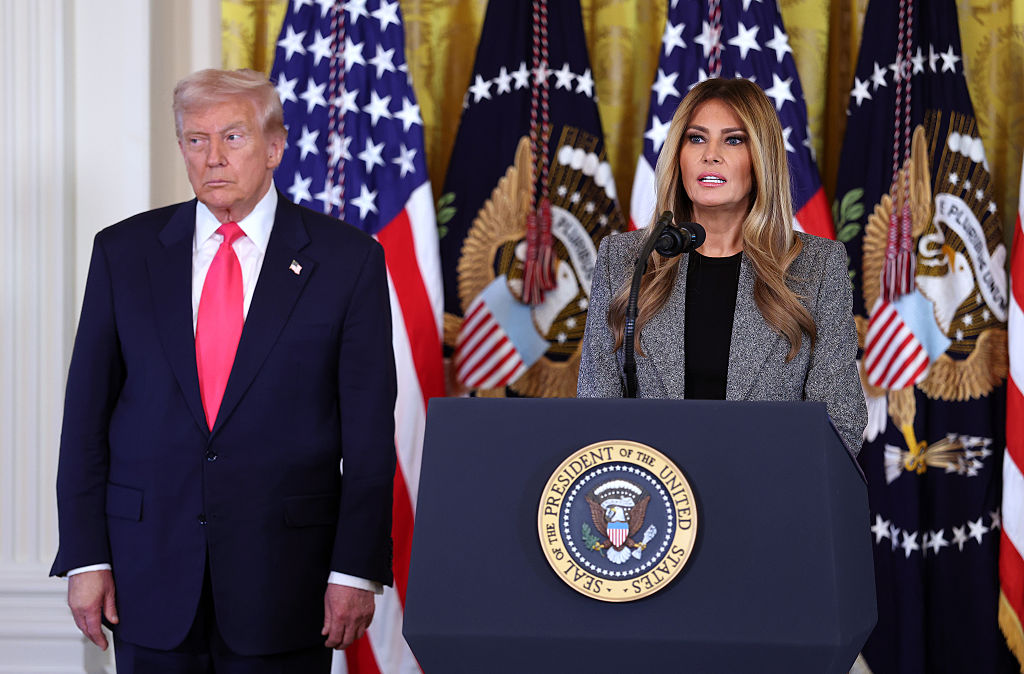
The awkward moment unfolded while Melania was speaking about protecting American children in foster care and ensuring they would never be forgotten.
As the first lady addressed the audience alongside foster families at the White House, cameras caught Trump’s head nodding and his eyes appearing to close. The real kicker came when he suddenly snapped back to attention and started clapping, as if he’d been engaged and alert the entire time. The recovery attempt fooled absolutely no one, and the internet had a field day with the video.
When the video hit the social media platform Threads, reactions poured in immediately.
View on Threads
“Trying to keep himself awake. Melatonin didn’t let him have a chair for the ceremony,” one person joked.
Another observer noted, “He can barely keep awake even standing. Good god,” while someone else quipped, “What’s wrong with his hand?”
The most cutting comment might have been the simplest: “He’s glitching,” perfectly capturing the bizarre nature of watching the president malfunction in real time.
A fifth person added, “He was nodding and over clapping to wake up,” nailing exactly what everyone witnessed.
View on Threads
This wasn’t Trump’s first encounter with the sandman during official duties.
The former real estate has been caught nodding off on multiple occasions, turning what should be serious political moments into viral content.
During another recent appearance, Trump seemed to fall asleep last month during a White House news conference where officials discussed new health initiatives.
The president appeared to nod off while Dr. Mehmet Oz, who serves as Trump’s administrator for the Centers for Medicare and Medicaid Services, broke down the White House’s new policies on fertility drug pricing. Video appears to shows Trump slumped over and snoozing.
In October, the president drifted off to sleepy time about half an hour into a White House roundtable, turning the moment into yet another episode of his now-routine mid-meeting fade-outs.
Footage from the event shows Trump standing beside deputy chief of staff Stephen Miller as the adviser begins his remarks. Even with Miller offering complimentary words about him, the reality star-turned-politician’s eyelids drooped and his focus slipped, giving the impression he briefly nodded off right there in the room.
These incidents have raised questions about his health and his ability to stay engaged, especially during crucial policy discussions and important ceremonial functions.
The frequency of these episodes has turned what might have been isolated incidents into a recognizable pattern that critics have seized upon, with some floating the idea that he has had a stroke.
He even seemed to fall asleep at the memorial service for Charlie Kirk, after seeming to act oddly while standing before the audience.
As the social media reactions demonstrate, people aren’t just noticing these moments anymore; they’re documenting them, analyzing them, and most importantly, laughing about them.
The image of Trump jolting awake and clapping to cover his tracks has become the perfect metaphor for someone trying to fake their way through a situation they clearly weren’t prepared for.
Whether it’s exhaustion, disinterest, he is sick, or simply the demands of a grueling schedule catching up with him, one thing is clear: the internet isn’t going to let him sleep through it quietly.


