Atlanta police have launched an investigation after a rope resembling a noose was found hanging from a tree outside the city’s first Black history museum.
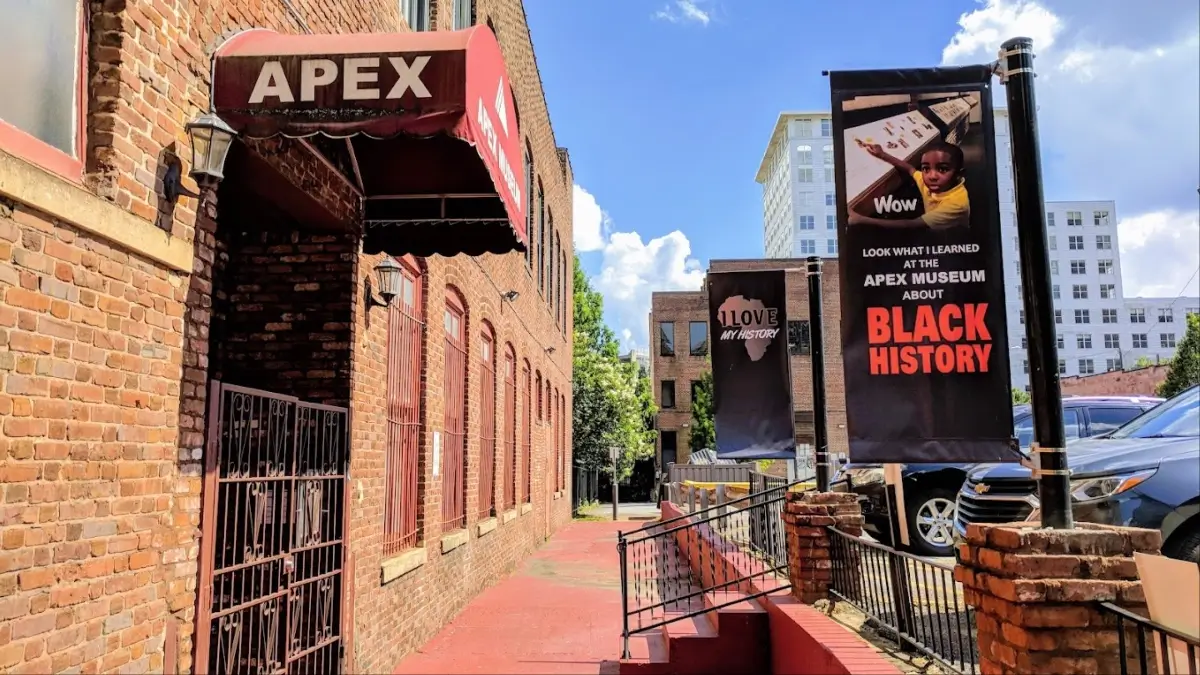
Viral cellphone footage showed a long rope with a small loop tied at one of its ends hanging from a high tree branch. The rope was discovered on Sept. 17 near the APEX Museum on Auburn Avenue.
Museum President and CEO Dan Moore, Jr. recorded and posted a video of the noose after it was discovered, which triggered intense backlash online and widespread concerns.
“I felt like it was a problem because of this time that we’re living in,” Moore told WAGA-TV. “Why do I have to look up a rope in the tree that resembled a noose?”
Moore and his staff said they don’t believe the rope was left by happenstance, but that there was clear intent in the decision to hang the rope across the street from a Black history museum.
Museum staff member Kyler Winston-Kendricks said that Atlanta Police are not calling the rope a “noose” at this point, but she told WXIA that she believes the “inference is there.”
“It’s pretty much adding fuel to the fire,” Winston-Kendricks said. “To do this in a Black historic neighborhood. It says a lot.”
Some people who learned news of the incident disagreed with Winston-Kendricks’ assessment.
“That’s not a noose. It’s just a knot,” one Facebook user wrote.
“Imagine being triggered by a string,” another person added.
Others believed the incident was a crime intended to cause racial terror. Many are hoping that surveillance footage will catch the culprit.
“That’s a hate crime,” one Instagram user wrote.
“This is extremely upsetting,” another person added.
She added that the incident happened right as the museum was preparing an exhibition on the Atlanta Race Massacre that began on Sept. 22, 1906, when white mobs killed dozens of Black residents after unsubstantiated reports spread that Black men were to blame for four sexual assaults on local white women.
In a statement about the rope incident, police said, “Officers are investigating the circumstances. At this time, there is nothing significant to report.”
Georgia Homeland Security has also joined the investigation.
Moore released an official statement about the incident on the APEX Museum’s social media channels.
“Placed beside a museum dedicated to Black life and resilience, the rope reads as an act of intimidation: a clear message intended to wound…silence…and to remind people that the same threats and violence of our country’s past can be conjured in the present,” the statement read in part. “It aimed to transform a site of learning and remembrance into a place of fear, which is precisely why this should not…MUST not happen in our time.”
The museum, founded in 1978 in the historic Sweet Auburn neighborhood, hosts exhibits showcasing the history of slavery, civil rights, and the advancement of Black Americans.
Gerald A. Griggs, president of the Georgia State Conference NAACP, also called on Georgia State University officials to conduct a full investigation into the incident since the rope was found near the campus.
“The Georgia NAACP is deeply disturbed by the discovery of a rope tied in the shape of a noose on Georgia State University’s campus. A noose is not a prank — it is a threat. It is a symbol of racial terror, historically used to intimidate and silence Black communities through fear and violence. Its presence on any campus is unacceptable.”
The rope hanging comes after a number of incidents that have stoked racial tensions across the country.
Historically Black colleges and universities in the city of Atlanta, alongside others in the country, were the recent targets of bomb threats. Some of those universities also received active shooter threats. Authorities eventually determined that none of the threats were credible.
The recent death of Mississippi college student DeMartravion “Trey” Reed also made national headlines after his body was found hanging from a tree on Delta State University’s campus. Authorities suspect no foul play, but his family has called for an independent autopsy to confirm the cause and manner of his death.


