A Black sailor who died in the attack on Pearl Harbor was finally laid to rest in his home state of North Carolina, nearly 84 years after his death.
Born in Vass, North Carolina, Navy Mess Attendant 3rd Class Neil D. Frye enlisted in the Navy in July 1940.
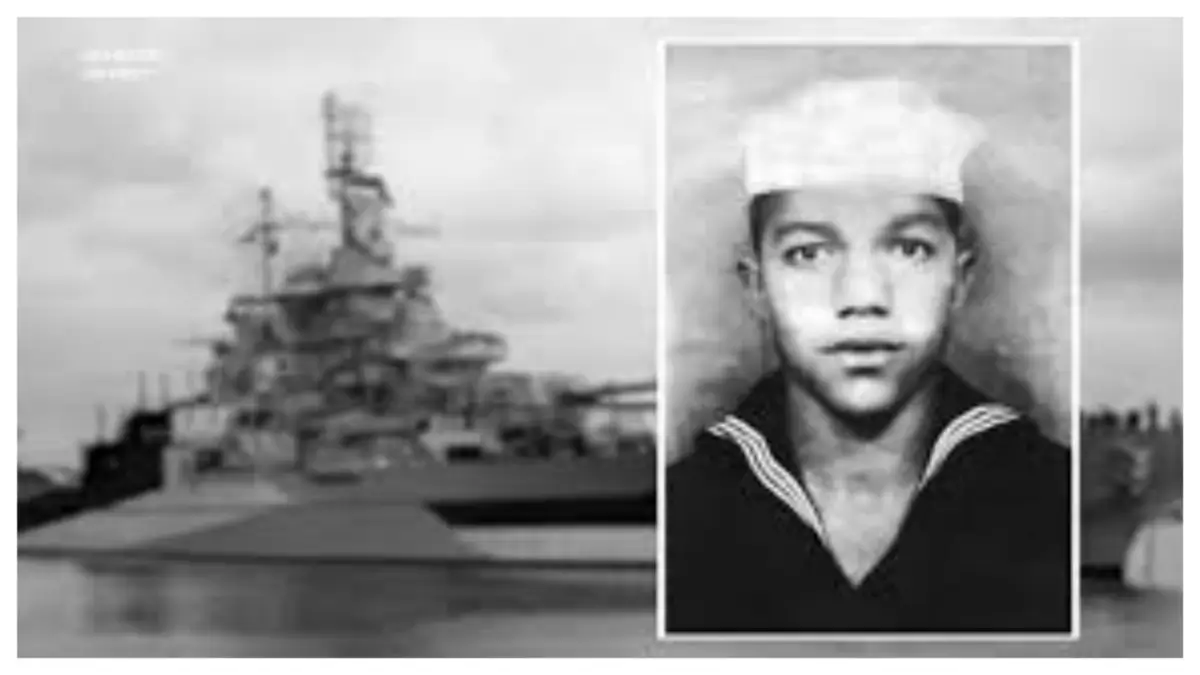
He worked in the Messman Branch, a racially segregated division of the U.S. Navy that was almost exclusively made up of African-American, Asian, and foreign service members who were responsible for feeding and serving officers.
“He enlisted in the Navy in a time where, you know, Black men were considered second-class. But he fought for this country with the same values,” his niece Carol Frye-Davis told WTVD.
In Oct. 1941, Frye’s mother wrote the Navy requesting that Frye be transferred to a base in Rhode Island where his brother was stationed, but Frye never made his own personal request by the time the Japanese attacked Pearl Harbor on Dec. 7, 1941.
He was on the USS West Virginia when the battleship was struck by several bombs and torpedoes, causing it to sink to the bottom of the harbor.
Frye was among 106 crew members who died, according to The Pentagon’s Defense POW/MIA Accounting Agency (DPAA). He was 20.
In 2014, Frye’s family started attending the DPAA’s regional meetings where the agency would provide updates on whether they’d recovered and identified remains of missing soldiers.
In 2017, the DPAA exhumed the remains of 35 unidentified sailors from the USS West Virginia who couldn’t be identified at the time of their recovery, WHRO reported. Frye’s family submitted DNA samples in more recent years, hoping that one of those sailors would be a match.
The family said they received a positive ID for Frye’s remains in September 2024. Three months later, The DPAA officially announced that Frye’s remains had been accounted for.
Frye was laid to rest with full military honors at Sandhills State Veterans Cemetery in Spring Lake, North Carolina on April 3, which would have been his 104th birthday.
He was also posthumously awarded a Purple Heart Medal and a Combat Action Ribbon.
“It’s been an emotional, but a beautiful experience,” Frye-Davis said. “He had his life ahead of him and he was cut down at 20, but he did it for this country.”
Frye had nine siblings, only one of whom is still living.
“I was more happy than sad because I knew that they had found him,” Frye’s youngest sister, 87-year-old Mary Frye McCrimmon said. “I knew where he was. We didn’t have to wonder.”


