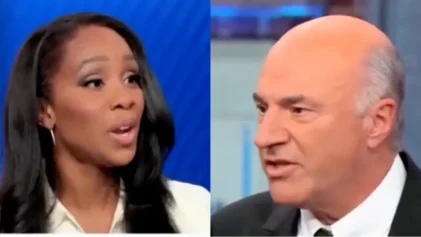
There comes a time when everyone will admit when they were wrong, even “Shark Tank” judge Kevin O’Leary.
O’Leary recently posted a clip of himself talking about a deal he reluctantly made that turned out to be a blessing in disguise. In the March 21 post, O’Leary was seemingly discussing the years-old deal with an audience, but it’s not clear where exactly he was or when the discussion took place.
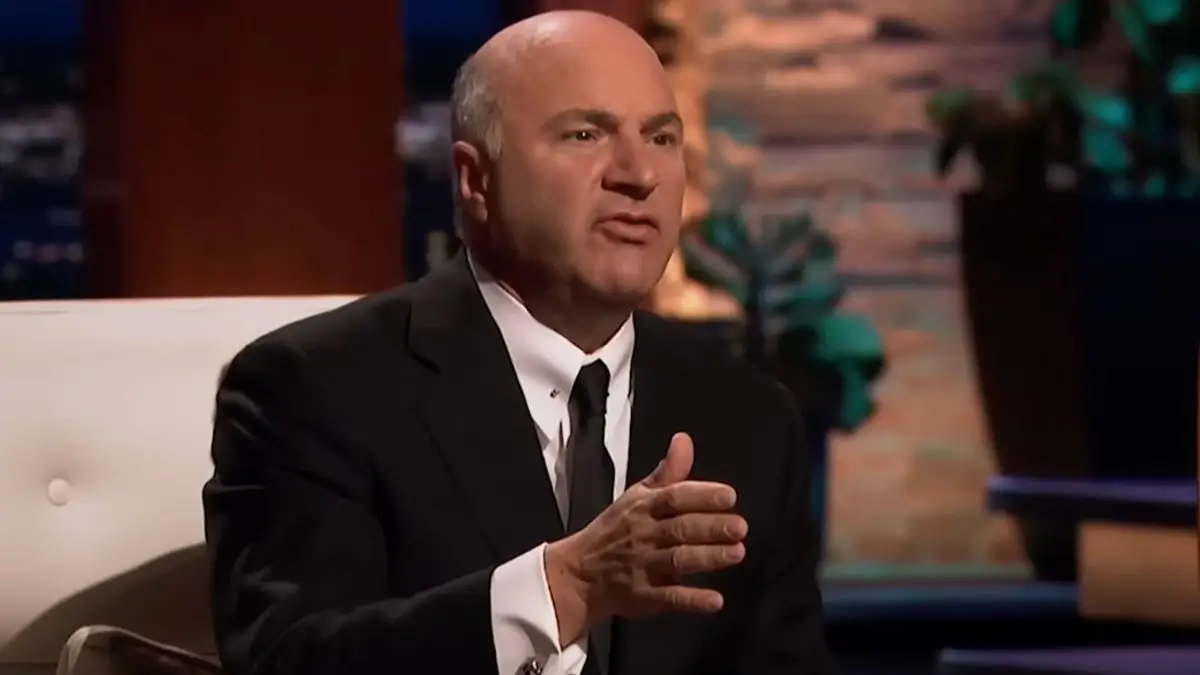
Sitting onstage with an unidentified woman, he said, “This woman comes out named Anna Skaya, four years ago. She says, ‘I do cat DNA test.’ So she takes a swab and you stick it where the sun doesn’t shine in your cat and you send it in for $29. You’re going to get the data on what to feed your cat so you can extend it’s life.”
O’Leary said he told Skaya he could just buy another cat for $5 so why would he care if it dies. He added, “I can just get another one because the average life of a cat is 12 years. She could extend the cat’s life to 20.”
He initially thought, ‘This is a stupid idea.’ But she was so persistent. I finally said for $250,000 I could just get her out of here. I’m going to buy her deal.”
Some of his exchange with Skaya appeared during the 21st episode of season 10, while other scenes may have been cut out.
In fact, all viewers of the 2019 “Shark Tank” clip get to see is O’Leary asking her a question about whether the test will tell him if he has a “defective” cat. But a few minutes later he was the first judge to throw out an offer: $250,000 for 8.3 percent and 1.7 percent in advisory shares.
Skaya initially wanted $250,000 for 5 percent but then ‘Shark Tank’ judge Robert Herjavec said he would match Skaya’s deal with O’Leary. This means both men would each give $125,000 for a 10 percent stake, which Skaya agreed to by saying, “Guys, let’s do it!”
O’Leary would soon learn that the deal, although he was initially hesitant about it, would actually prove to be beneficial to him down the road.
He told the live audience, “That company was not in the cat business, it was in the DNA data collection business. And it got bought by Zoetis for such a number that we had to sign a [NDA] to not disclose the purchase price.”
Mr. Wonderful did not reveal the price but he did say he made “a sh-tload of money,” which animal health conglomerate Zoetis closed in 2022.
“A $29 cat DNA test turning into a fortune? one person said in the comments of O’Leary’s X post. “That’s the art of seeing potential where others see a dead end. Brilliant move!”
Another posted, “So he made money from a mistake.”
A third impressed individual wrote, “Wow, what a great story Kevin, thanks for sharing this with us. You never know what can develop from one product.” Meanwhile, a fourth noted, “Things are not what they always seem on first blush. Great story.”
In a follow-up at the end of the 2023 Youtube clip, Skaya revealed that the deal worked in their favor as well. “When I pitched to the sharks we made $200,000 in sales. In just a year in a half since ‘Shark Tank’ we’ve done three and a half million in sales,” she said.
According to their website, Basepaws launched in 2017 as a petcare genetics company so pet owners can get their animals screened for disease risks.
Nine months ago, Skaya shared on Linkedin that her time at Basepaws had ended. With a picture of her smiling next to O’Leary, she explained in her statement that after being on “Shark Tank” three times, Zoetis acquired it.
As for the success of the company, she said Basepaws continues “to innovate at top speed now.”