A business owner learned a valuable lesson about integrity and how to take constructive criticism when every investor turned their back on him on “Shark Tank.”
Maneesh Sethi, from season 7, episode 29, was seeking $500,000 for a 3.14% stake in Pavlok, his smart bracelet that “releases a mild electric sensation that helps you reduce cravings and actually breaks bad habits in the brain.”
His “zapper” is backed by the 1960s science of aversive conditioning that can be traced back to Russian physiologist Ivan Pavlov’s associative learning theory, the Pavlovian principle, from the 1890s. To activate the shocking pulse, users need only to press the lightning bolt sensor that was located on top of the bracelet where the face of a watch is typically found.
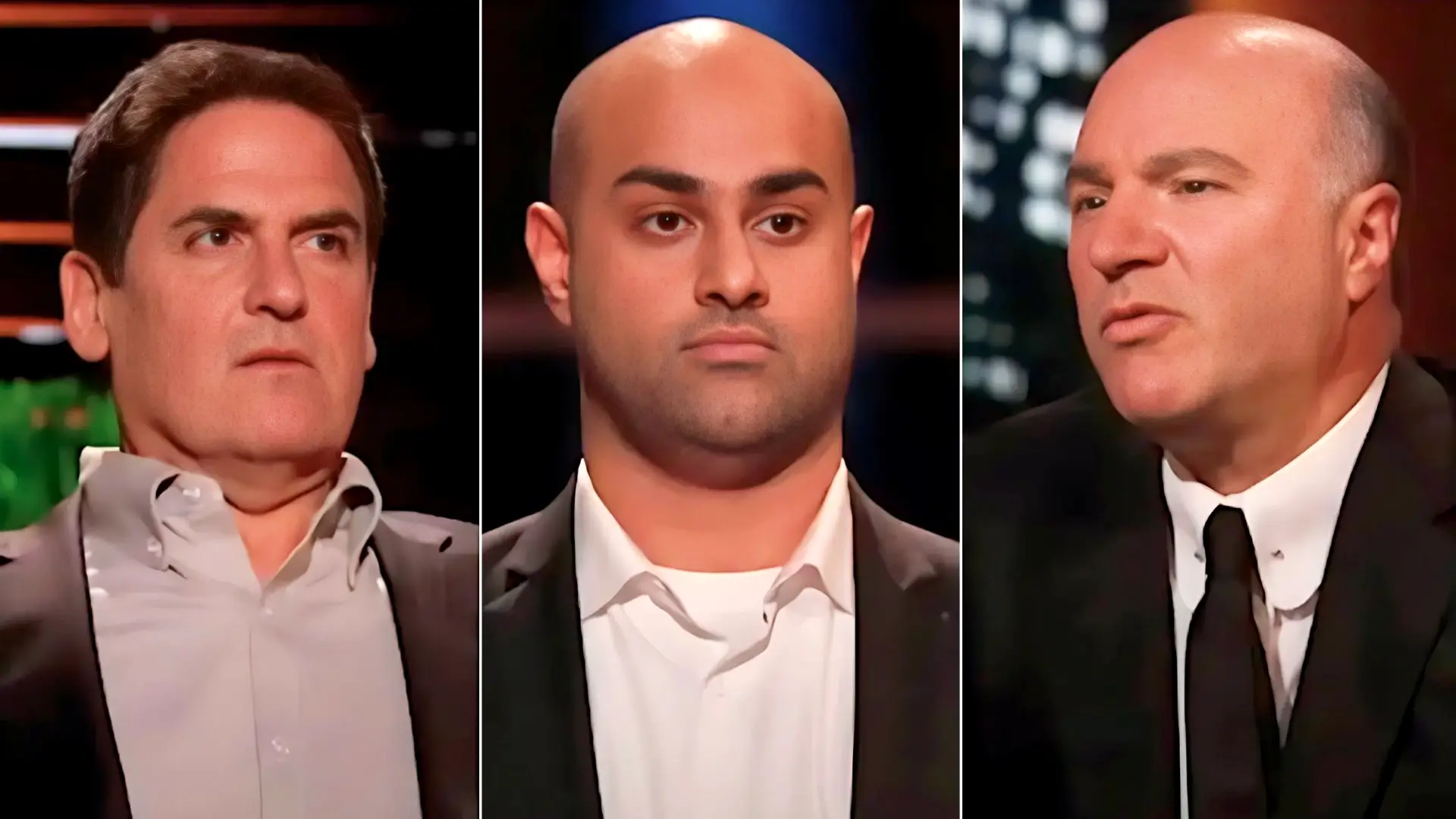
In the investors’ pod on that 2016 day were Mark Cuban, Lori Greiner, Kevin “Mr. Wonderful” O’Leary, Barbara Corcoran, and Robert Herjavec. Each was given a band to wear as they tested the strength of the sensation.
“Oh f—k,” “Ow,“ “Turn it back down,” and “I barely feel it” were some of their reactions as Sethi changed the degree of sensation on the device. Cuban opted to hold the Pavlok in his hand, limiting its aversive shock to his fingers.
Throughout the presentation, Sethi attempted to stave off their questions until the end. His efforts began to crumble when Cuban began to inquire about the entrepreneur’s representation of published research.
“Where it falls off for me is if I have to be disciplined to buzz myself, do I not have the discipline to stop?” asked Herjavec, as he too expressed doubts.
As he probed into the premise, the contestant became obviously overwhelmed. Cuban, however, was already uninterested in making a deal, as he told his co-star, “It’s all nonsense, Robert. It’s all nonsense across the board.” When Sethi revealed his creation can cease to work after three days, the minority owner of the Dallas Mavericks quipped, “You’re such a con artist.”
A debate about the product’s efficacy nearly broke out when Sethi claimed users can break a habit within five to seven days. It is commonly noted that the formation of a habit can take anywhere between 18 to 254 days. “No, no, no… It’s all nonsense,” argued Cuban. The business owner snarked, “He doesn’t know what he’s talking about.”
He also alleged that $800,000 had been made in pre-orders for the Pavlok that was retailing for $200. He claimed the company had a $16 million valuation.
Cuban’s skepticism continued with, “How can you people be so gullible? … None of it’s your evidence. No one’s disputing aversion therapy… You’re using other people’s studies… It’s not about being the smartest guy in the room. You can’t be that stupid, Robert, to even think there’s any legitimacy.”
The lack of “verifiable proof” sank his chances of making a deal with most of the sharks. “The one thing that kills tech products is hyperbole. … You went so over the top with nonsense; it is everything but a legitimate product, and for those reasons, I’m out,” said Cuban.
The snippet shared on the “Shark Tank Global“ YouTube has reached 6.1 million. Among the reactions is one that read, “Gotta respect Mark Cuban’s ability to detect BS immediately.” “Being disrespectful is one thing, but yelling over and also insulting mark and Kevin is a force to be reckoned with,” read a second hot take. A third fan stated, “The way he smirked all through when Kevin said he was interested, he knows it’s a scam.”
Mr. Wonderful offered to “solve” Sethi’s problems by offering him the money for the proposed 3.14 percent; the caveat is that the entrepreneur would have to repay the investment within two years with 7.5 percent interest.
To the disbelief of the sharks, he turned down the deal, claiming that Mr. Wonderful would be bad for his business. “You’re an a—hole. Get the f—k out of here. F—k you,” were O’Leary’s parting words.


