Billionaire investor Mark Cuban once demolished an entrepreneur’s hopes on “Shark Tank” by refusing to even touch the offered product and setting off a domino effect of no’s from his fellow sharks.
During season 3, episode 6, the billionaire investor gave his raw, unfiltered reaction during Ryan Naylor’s presentation of Esso Watches, colorful silicone timepieces supposedly containing “negative ion technology” claimed to offset harmful effects from everyday electronics.
In 2012, Naylor stepped into the spotlight, seeking $35,000 for 20 percent of his watch company. His pitch centered on the claim that his products could neutralize the detrimental impact of positive ions emitted by computers, televisions, and fluorescent lights. Naylor asserted his watches contained negative ions that would restore the body’s natural electromagnetic balance.
“Our bodies are bombarded by positive ions, which are molecules simply emitted from electronic devices,” Naylor explained to the investors. “Too much positive ion in our bodies puts unnatural pressure on us. What we do is put the counterpart of positive ion in our watches to help restore our energy field.”
To showcase his product’s purported effectiveness, Naylor orchestrated a balance demonstration with shark Lori Greiner. He had her stand on one foot with outstretched arms, then pushed down on her arm, causing her to lose balance.
After putting on an Esso Watch, Greiner appeared steadier during the identical test, commenting, “That’s a little weird.”
It seemed to work, and like he might have something for them to seriously consider.
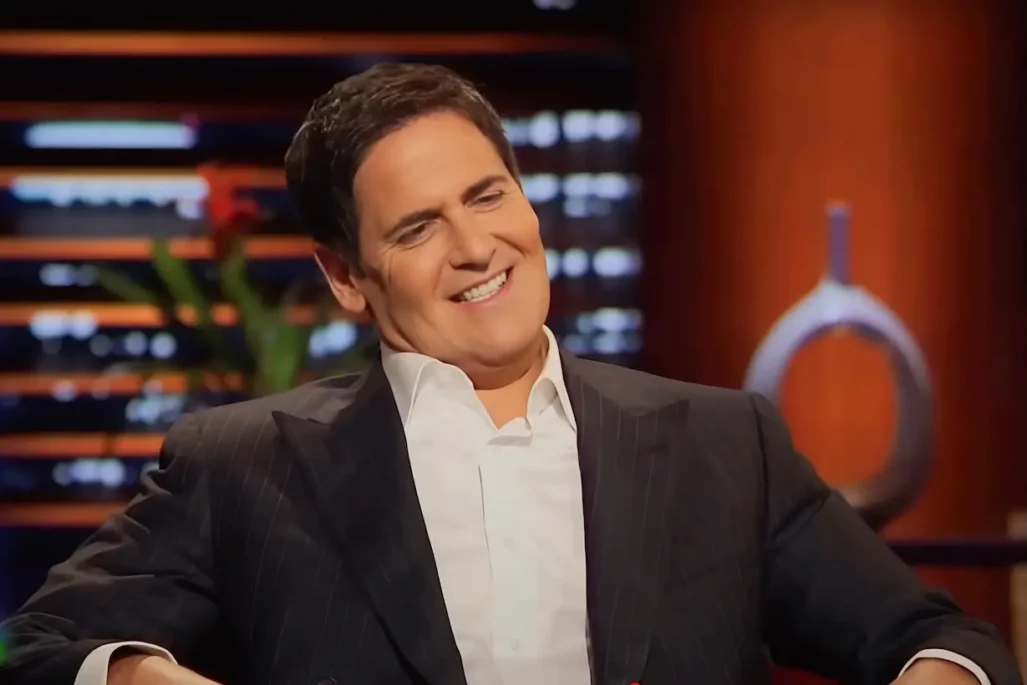
When Naylor distributed samples to the panel, Cuban immediately declined the blue watch, which was extended toward him despite being the color of his basketball team, the Dallas Mavericks.
“That’s OK, you can keep it,” said Cuban.
Robert Herjavec inquired if Cuban was “allergic to positive negative ions stuff?” prompting an unmistakably blunt response.
“No, I’m allergic to scams,” Cuban declared. “Seriously, this is not new. It’s been disproven. What you saw was the placebo effect. There’s athletes that wear it. It’s a joke, it’s a scam, it’s not real. I’m out.”
Despite the cutting rejection, Naylor remained composed and revealed impressive financials – $120,000 in sales from an initial $10,000 investment over just 12 months, with roughly $70,000 in profit.
These numbers momentarily captured Kevin O’Leary’s attention, though they wouldn’t salvage the rapidly deteriorating pitch.
The presentation collapsed entirely when Greiner asked whether Naylor possessed independent laboratory verification for his health assertions.
“You have to have independent laboratory testing that shows your claims. Otherwise, the FTC is going to be all over you,” she cautioned. Naylor confessed he had no scientific evidence, simply stating negative ion technology had “been around for years.”
Greiner promptly exited, labeling the venture “a liability nightmare.”
The situation worsened when FUBU co-founder Daymond John directly questioned Naylor’s claims about designing his watches.
“So you’re saying that you already purchased the first watch for this show, but you designed the other two?” John asked.
When Naylor confirmed, John unleashed, “I helped take a company called Roomba Time, and they had the exact same line. So you’re lying, and with that, I’m out.”
Despite Lori suggesting that a lot of companies have the same watch designs, the damage was done. Naylor insisted he designed two of the three designs he presented, but John suggested he was not being truthful.
The remaining investors quickly withdrew, with O’Leary delivering a final sardonic offer.
He said, “If you admit it’s a scam, maybe I’ll invest.”
Naylor refused.
The unanimous rejection marked only the beginning of Naylor’s troubles. Following the broadcast, he received several lawsuits from consumers out of California claiming they had “medical issues” and damages because of his product, that had not been shipped out for delivery yet.
A bigger lawsuit came after Exxon Mobile initiated a trademark infringement lawsuit against Esso Watches, asserting ownership of the Esso name from the gas station.
“We fought it for a little bit. We tried. We put the cash that we had made into legal to defend ourselves to prove that we were not violating their copyright by any means,” Naylor later revealed on “The What Would U Ask Podcast” in 2012. He said they ultimately reached a settlement that ended the business for good.
“‘Shark Tank’ sucked, but boy did it give me so much firepower,” he admitted.
Speaking with GeekWire in 2015, Naylor suggested the outcome was predetermined before he ever entered the studio.
“I realized that these Sharks had no intention to do a deal with me,” he said. “They obviously knew the story before I walked in and had prepped for what I was going to do and say.”
The entrepreneur eventually bounced back, founding LocalWork, an employment platform that has connected over 100,000 people with jobs, and launching VIVAHR, a recruitment software company for small businesses, Women.com reported.
Despite the humbling television experience, Naylor has expressed openness to returning to “Shark Tank” with a different venture, noting he would ensure his “product and messaging is completely aligned with my passion and goals.”


