The first Michigan State Police officer who confronted Dakarai Larriett during a traffic stop earlier this year accused the 42-year-old Black man of being drunk, claiming he smelled like alcohol, specifically something “fruity.”
The second cop was convinced Larriett was under the influence of marijuana and medication – an indication he never smelled alcohol – even though the video shows that officer having a face-to-face conversation with Larriett.
“We’re trained in standard sobriety evaluations, we’ve had over 800 hours of that,” the second cop, Matthew Okaiye, boasted to Larriett. “In our professional opinion due to our training experience, we don’t believe you can operate that motor vehicle safely.”
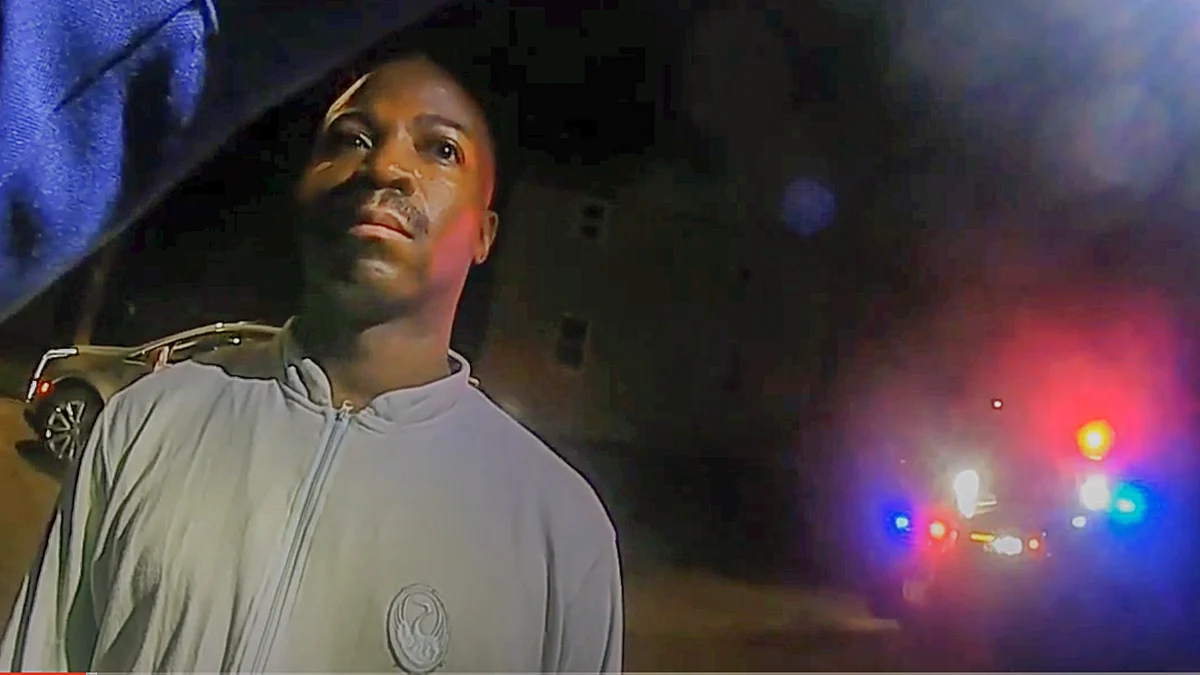
However, their professional opinion was proven wrong by a blood test that indicated Larriett was not under the influence of alcohol, marijuana, or medication. And body camera footage suggests they may have even been trying to plant drugs in his car.
Larriett, who comes across as soft-spoken and clear-headed in the video, was charged with operating under the influence of a controlled substance.
But prosecutors dismissed the case “due to lack of evidence and the unlawful nature of the stop and arrest,” according to a lawsuit Larriett filed Wednesday.
“The actions of the Michigan State Police officers were part of a pattern and practice of racially discriminatory policing,” wrote attorney Shawndrica N. Simmons in the complaint obtained by Atlanta Black Star.
The lawsuit accuses Michigan State Police of violating Larriett’s Fourth Amendment rights, false arrest and malicious prosecution.
The Arrest
The incident took place at 3:10 a.m. on April 10 in Benton Harbor after Michigan State Trooper George Kanyuh pulled him over, claiming Larriett did not come to a complete stop at two flashing red lights – allegations that Larriett denied.
Body camera video shows Kanyuh mocking Larriett’s license plate, which is made up of his first name, “Dakarai.” The name Dakarai is African, and it originated from the Bantu language of Zimbabwe’s Shona people.
“You’ve been drinking daiquiris, my goodness,” Kanyuh tells his partner before stepping out of the car and engaging with Larriett.
Kanyuh asks for Larriett’s license, insurance, and registration, then asks if alcohol has impacted his ability to drive, but Larriett says no.
“When was your last drink? Has it been at least two hours?” Kanyuh asks.
Larriett said yes but later in the video explains that it had been much longer than two hours while clarifying that he did, in fact, answer the question accurately.
“I can smell it on your breath,” Kanyuh tells him. “Something fruity-like. What were you drinking?”
“There’s no alcohol in here,” Larriett responds.
But Kanyuh orders him out of the car and has him do several field sobriety tests, which, to the untrained eye, he appears to pass. But the cops claimed he made numerous mistakes.
Kanyuh asks him if he is on any medication, and Larriett says he is, but when the cop asks him what type of medication, Larriett declines to answer, telling the officer that “I prefer to keep my medication private.”
Kanyuh keeps peppering him with questions, including asking him if he was under the influence of marijuana, which Larriett denies.
That was when Kanuyuh walked to his car and appeared to be searching for something that Larriett believed was a drug to plant in his car. The video even goes black for several seconds as he is searching his car.
“Drugs?” Okaiye asks after walking up to Kanyuh as he is searching his patrol car.
“I don’t think I have any,” Kanyuh responds. “I had a stash in here somewhere. I don’t know where it’s at.”
The cops transported him to a local hospital to get his blood drawn, then to jail, where he says he was further humiliated after cops conducted an X-ray scan of his stomach and claimed to have spotted evidence that he had smuggled drugs into the jail by ingesting them.
“It is clear that the troopers were planning to plant drugs in Plaintiff’s vehicle and implicate him in a drug crime as they also attempted to at the jail,” the lawsuit states.
The cops were so desperate to find drugs in his system that they even wanted to examine his feces, according to the claim.
“An extremely humiliating moment occurred where I was forced to defecate publicly while Trooper Kanyuh yelled at me not to flush,” Larriett told the Detroit Metro Times.
Watch the 54-minute body camera video on Larriett’s YouTube channel or the shortened, edited video below.
The lawsuit also describes an X account belonging to Kanyuh that contained racist, homophobic and misogynistic language, including one retweet of a photo of a Black woman captioned, “Met the biggest beauty of a crackhead last night” and another retweet of a white man burning a Colin Kaepernick jersey.
That account, @GKanyuh, has since been deleted. But Larriett gathered screenshots from the account as well as screenshots from the other cop’s account revealing tweets similar in nature.
“Trooper George Michael Kanyuh is not shy about his bias and prejudices against gay people and Black people. A simple gander at his social media that was still up as of this writing is indicative of that,” the complaint states.


