Former President Donald Trump’s remarks have once again stirred up controversy online after he gave a special shout-out to Black Congressman Byron Donalds at a campaign rally in western Pennsylvania by labeling him “one of the smart ones.”
The Republican presidential nominee is back on the campaign trail, appearing at his first rally in Johnstown, Pennsylvania, since the July 13 campaign stop in Butler County, where a bullet grazed his ear in an incident authorities are investigating as an assassination attempt.
During his appearance in Johnston, he spent most of the rally criticizing his presidential opponent, Vice President Kamala Harris and President Joe Biden.
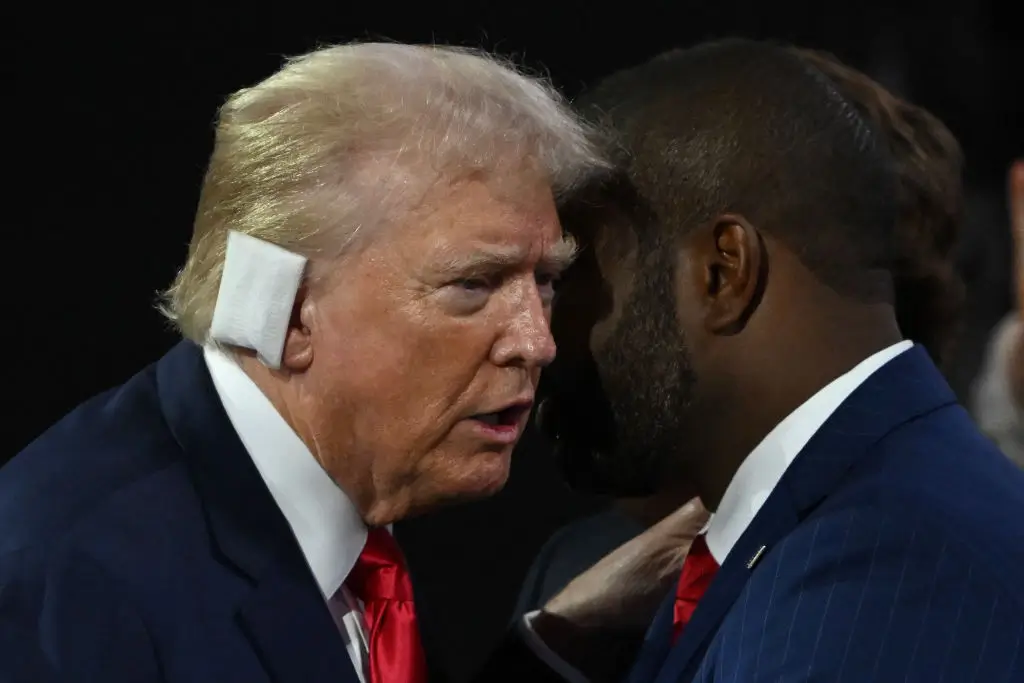
At one point, he spotted U.S. House Rep. and Trump devotee Byron Donalds, asked him to stand up, and praised him as a “superstar of the future.”
“He’s great. He knows exactly what I’m talking about,” Trump said of the Florida Republican to rally attendees. “That one is smart. You have smart ones, and you have some that aren’t quite so good.”
The “ones” Trump referred to are what gave many people pause.
Many online expressed that his remarks had clear racial intent behind them, given the fact that Donalds is one of Trump’s most vocal Black supporters and has consistently championed his MAGA agenda during this election cycle. Others thought he was simply referring to politicians.
Whether he was alluding to Black Americans, politicians as a whole or conservatives who have chosen to stand behind him is what netizens online are debating now.
“He knew exactly what he was saying and was relaxed when he said it,” one X user wrote.
Trump’s unbridled rhetoric often ignites moments where the public clashes over the intention behind his words. Still, he carries a well-documented history of making numerous inflammatory and bigoted remarks when speaking about race relations.
In a June 2016 rally in Redding, California, Trump made headlines after calling out a Black supporter in the crowd, saying, “Oh, look at my African-American over here.”
During a rally two months later in Michigan, he attempted to appeal to Black voters by telling them, “You’re living in poverty, your schools are no good, you have no jobs, 58 percent of your youth is unemployed – what the hell do you have to lose?”
Following the deadly Unite the Right rally in Charlottesville, Virginia, in 2017, where white nationalists and counterprotesters clashed, he infamously declared that there were “very good people on both sides.”
He has also called Mexicans “criminals and rapists,” suggested a nationwide ban on Muslims, and has called COVID-19 the “Chinese virus.”
In 2011, years before Trump first ran for president, he boasted to a New York radio show host that he has a “great relationship with the Blacks.”
Earlier this summer, a former producer for “The Apprentice” published a piece in Slate claiming he heard Trump use the N-word to refer to a Black contestant during the show’s filming in 2004.
At his presidential debate with President Biden in June, he alleged that immigrants are taking “Black jobs,” and he also questioned Kamala Harris’ racial identity at the NABJ Conference in Chicago in July.


