The Democratic National Convention kicked off its first night with a tribute to one of the most iconic civil rights leaders of our time, the Rev. Jesse Jackson.
After a heartfelt video highlighting Jackson’s extraordinary life, the 82-year-old, who was the second Black person to run for president on the Democratic ticket, appeared spot-lit in the audience in a wheelchair on the stage with his protégé the Rev. Al Sharpton.
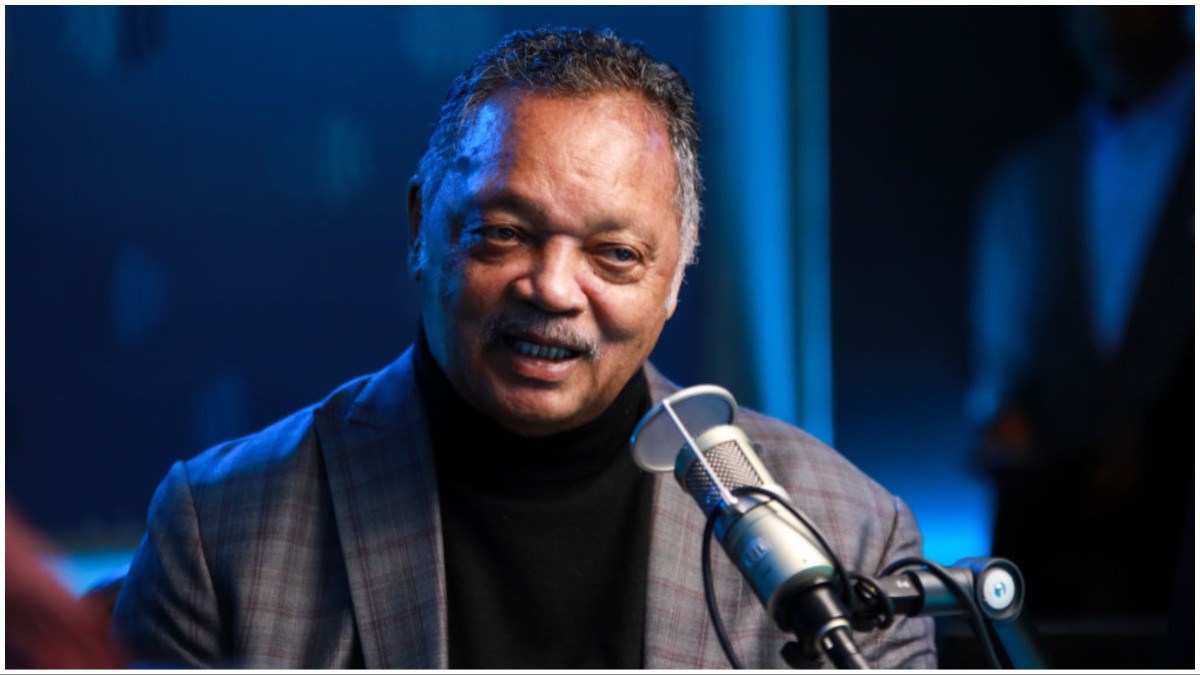
Though he didn’t speak on the stage as many of the other notables, Jackson waved and gave a thumbs-up as the crowd stood cheering.
Oprah Daily captured the moment on Instagram, captioning it, “WHAT A MOMENT! Rev. Jesse Jackson surprised Day 1 of the @demconvention and got an emotional standing ovation. Are you watching? Let us know in the comments below!”
Viewers responded warmly.
“What a beautiful and emotional moment,” one person commented. “May God bless him and his family.”
Another wrote, “He needs to be celebrated.” A third added, “A life dedicated to humanity! Thank you for your service!!”
“Sure hope he lives to see Kamala win,” one of the page’s 3.3 million wrote.
Some also shot up prayers after seeing the former Rainbow P.U.S.H. leader struggling with his health.
“Wait! Why is he in a wheelchair?” one commenter asked. Another quickly offered a prayer, “Lord, keep your arms around him.”
Jackson, diagnosed with Parkinson’s disease in 2017, stepped down last year as president of the Rainbow PUSH Coalition, the multiracial organization formed in 1996 when his Rainbow Coalition group merged with the Operation PUSH nonprofit he’d founded earlier to advocate for social change.
On X, users expressed similar sentiments.
One tweet read, “Dang what happened to Jesse Jackson. God bless him but I didn’t know his health declined like that.”
Another user wrote, “Jesse Jackson getting some love in his ailing health… And I’ll give a shout out to his sublime work at WATTSTAX a half century ago.”
Concerns over Jackson’s health have been ongoing since his diagnosis. Earlier in August, Sharpton posted photos and videos of Jackson on social media, and many people took note of his frail and weakened state.
“Brother Jesse is going down so fast wow. Bless him,” one person posted on X at the time.
Despite his health challenges, Jackson’s legacy remains strong, with many remembering the impact his presidential campaign meant to them. After his DNC appearance, many reflected on his past contributions.
“’KEEP HOPE ALIVE! KEEP HOPE ALIVE!’ Rev. Jesse Jackson, DNC 1988 I remember his speech well, and I was in elementary school when I heard it way back then! I have indeed kept hope alive! Thank you, Jesse!” one person tweeted.
"KEEP HOPE ALIVE! KEEP HOPE ALIVE!" Rev. Jesse Jackson, DNC 1988
— 𝕏𝕖𝕟𝕟𝕚𝕒𝕝 𝕻𝖎𝖔𝖓𝖊𝖊𝖗 🥄 (@LoveCreatesMore) August 20, 2024
I remember his speech well, and I was in elementary school when I heard it way back then!
I have indeed kept hope alive!
Thank you, Jesse! 💙 pic.twitter.com/XrkI524nWV
Jackson was born in Greenville, South Carolina, in 1941 and witnessed first-hand segregation and the painful reality of Jim Crow.
He serves as an ordained minister and member of Omega Psi Phi, and in the 1960s worked alongside Rev. Martin Luther King Jr. in the Southern Christian Leadership Conference. Jackson was also with Martin when he was assassinated at the Lorraine Motel in Memphis, Tennessee, in 1968.
Throughout his career, he has been a steadfast advocate for broadening the Democratic Party’s reach as both an activist and a presidential candidate in 1984.
He was the first Black man to run for president on the Democratic ticket, but not the first Black person. The first Black person was New York Rep. Shirley Chisholm in 1972.