The white president of historically Black university in Missouri placed on leave amid claims of harassment will keep his job after an independent investigation found no evidence he bullied a Black administrator who made the allegations against him before she committed suicide in January.
Lincoln University President John Moseley returned to work March 15 after he had been on paid leave since Jan. 12 following the death of Antoinette “Bonnie” Candia-Bailey, who had served under Moseley as the vice president of student affairs.
Following the decision to reinstate Moseley, Victor Pasley, the president of the university’s Board of Curators, expressed full support for him, but acknowledged the school’s shortcomings in handling employee relations, especially when it comes to mental health.
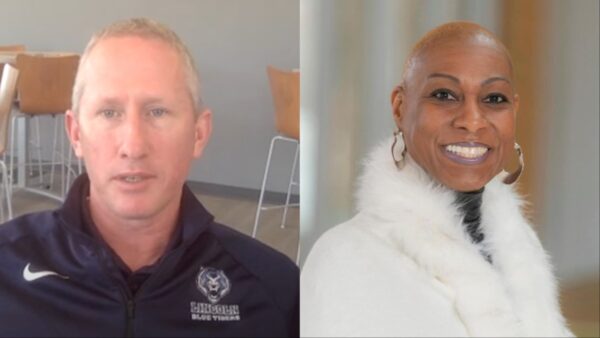
“For us, this report is not the end of a process, but rather the beginning of one,” Pasley wrote, affirming the conclusions in the report. “None of its findings have led the Board to doubt President Moseley’s ability to lead the University, but this tragedy has forced us to grapple more fully with issues facing Lincoln and our individual students and employees — ranging from mental health support to employee work and relationships.”
The 49-year-old Candia-Bailey took her own life on Jan. 8, just days after she sent an email to the university’s Board of Curators and others, accusing Moseley of intimidation and “mental damage” after she was on the job for less than a year.
Previously, the deceased woman’s mother, Veronica Candia, and husband, Anthony Bailey, revealed that Moseley terminated her employment in the days leading up to her death.
Candia-Bailey reportedly shared with friends and family that her professional relationship with Moseley had deteriorated and that she dreaded going to work.
“She said this job isn’t going to kill me and this job depresses me,” Candia-Bailey’s longtime friend Monica Graham told NBC News.
More specifically, Candia-Bailey claimed Moseley’s attitude toward her worsened after she told him that she was diagnosed with severe depression and anxiety, leading her to ask for time off under the Family Medical Leave Act.
However, Moseley scoffed at the request, Candia-Bailey claimed, while accusing her boss of intentional harassment and bullying.
Later, investigators found that the university did not violate the Americans with Disabilities Act by not accommodating Candia-Bailey’s mental health needs, noting that she was not eligible for medical leave because she had not been at the university for a full year.
The university did respond appropriately to her requests by allowing remote work and the use of accrued leave, according to the Board’s statement.
Candia-Bailey also told family members that she felt she was being targeted because of her race, citing Moseley’s complete lack of support.
On the day of her death, Candia-Bailey sent an email to her friend Monica Graham, which included a letter addressed to Moseley.
In the letter, Candia-Bailey raised serious concerns about Moseley’s leadership style, underscored by a wider culture of toxicity among the school’s adminstrative staff.
The allegations of harassment and bullying immediately prompted an uproar among students and alumni, who organized a massive campus protest to demand Moseley’s removal.
Following its closed-door meeting on Jan. 12, however, the Board of Curators placed Moseley on paid leave and hired an outside investigator to look into Candia-Bailey’s claims and to review the the school’s handling of personnel issues.
Nearly three months later, the investigation has ended with Moseley’s name being cleared.
“Dr. Candia-Bailey’s claims that she was bullied by President Moseley were unsubstantiated. Specifically, when directly asked in the course of this investigation, no witnesses reported that they had ever witnessed President Moseley engage in bullying — and all denied having ever personally felt bullied by President Moseley,” the board said in its statement, which was widely circulated on social media.
The Board’s decision didn’t sit well with some HBCU alumni, who took to social media to assail Moseley’s reinstatement after it was announced last week.
“I hope the Board of Curators at Lincoln University never know peace again,” wrote Je’lon Alexander, a 2021 graduate of Morehouse in Atlanta, in a post to the platform X. “To allow this white man to remain president at an HBCU after evidence of him bullying Dr. Antoinette Candia-Bailey where she committed suicide is pure evil. Believe and listen to Black Women!!”


