Authorities in Libya say the death toll from calamitous floods that devastated the eastern coast of Libya has risen to more than 5,300, with thousands more expected to be impacted, especially a sizable number of migrants stationed in the region.
Nearly 700,000 migrants and refugees currently reside in Libya, according to a report released this year by the International Organization for Migration. About 1,000 asylum seekers inhabit several coastal cities situated along the east of Libya where Mediterranean storm Daniel struck on Sunday, Sept. 10.
“At this early stage …we’re not very sure about how badly they’re affected,” U.N. agency spokesman Paul Dillon said. Libya is known as a transit country for migrants from more than 40 nations, including in Sub-Saharan Africa, who are heading to Europe.
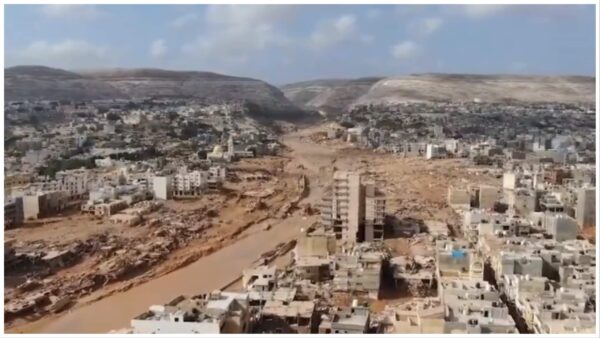
The worst-hit city was Derna, where the majority of storm-related deaths were recorded. Heavy rainfall and wind gusts washed away several roads, burst through two dams, and caused tremendous damage to power lines and infrastructure.
Officials are still assessing damage in the city and nearby regions, but most of Derna, which is home to around 100,000 people, is underwater. The city was inaccessible for most aid workers.
About 9,000 people remain missing, but when communications and power are restored, that number could decrease. More than 7,000 people in the city were injured, and most were treated at field hospitals and aid agencies, according to one emergency health professional who spoke to The Associated Press. At least 30,000 people in Derna have been displaced by the floods.
“Bodies are everywhere, inside houses, in the streets, at sea. Wherever you go, you find dead men, women, and children,” Emad al-Falah, an aid worker from Benghazi, said over the phone from Derna. “Entire families were lost.”
Libyan health authorities fear that “the number of victims will exceed 10,000 and about 100,000 people missing,” according to local news reports. More than 46,000 people who were displaced by the storm had been occupying cities in the east of Libya before the floods hit, according to figures from the United Nations High Commissioner for Refugees (UNHCR).
As for plans to help eastern Libya recover from the devastation, a U.S. special envoy shared plans to send aid alongside partners with the United Nations and western Libyan authorities. Egypt, Germany, Iran, Italy, Qatar, and Turkey are also prepared to send help.
About 1.8 million people in total were impacted by the floods.


