Newly published research proves that a manufacturing process worth millions during the 18th century was first invented by Jamaicans and stolen by the British Empire, leading the nation to the apex of the Industrial Revolution during the colonial period.
Jenny Bulstrode of the Jamaica Gleaner shed light on the origin of the Cort Process, which was heavily credited to banker turned ironworks owner Henry Cort nearly 300 years ago.
The process transformed scrap metal to industrial-grade wrought iron that could be used for numerous purposes like building bridges and railways and developing engines and machinery.
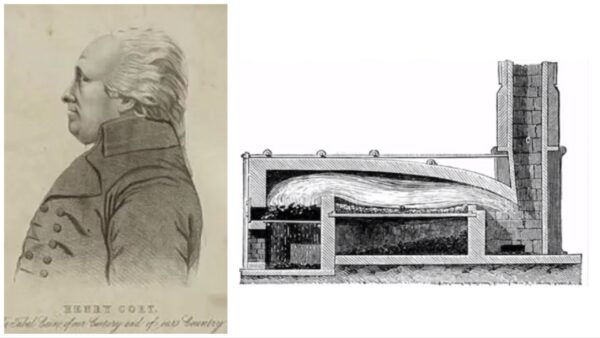
From the late 1700s to the mid-1800s, British manufacturers were able to turn a tremendous profit from this process alone, enough to transform the entire nation into a global power.
However, the truth is that the method was developed by 76 Black Jamaicans in a factory not far from Morant Bay, Jamaica in the 1770s.
Many of those Jamaicans were the product of widespread abductions from West Africa, home to many significant iron-working cultures, according to the Jamaican Gleaner. They would tie plantation scrap iron into bundles and heat the bundles in a furnace where fuel is kept separate from the metal, an industrial approach that was distinct from European ironworks.
Among the Jamaicans who developed the process were enslaved men: Devonshire, Mingo, Mingo’s son, Friday, Captain Jack, Matt, George, Jemmy, Jackson, Will, Bob, Guy, Kofi (Cuffee) and a Windward Maroon called Kwasi (Quashie) who killed the freedom-fighter Three Finger Jack in 1781.
It was their innovative technique that made British enslaver and foundry operator John Reeder the equivalent of nearly $1.5 million Jamaican dollars at today’s currency rate.
Cort heard about the Black metallurgists when news reached him of the death of Three Finger Jack. Not long after, the British government put Jamaica under martial law and shut down the foundry the Jamaicans worked at under the pretense that it might fall into enemy hands. In actuality, the British feared the Jamaicans might realize they could overthrow the government and undermine British foundry owners with this inventive practice.
Afterward, Cort patented the process as his own and used it in his ironworks in Portsmouth, England. However, in 1789, he was caught embezzling Navy wages in the millions. As a result, the British government seized his patents and integrated the process nationwide.


