A Georgia railroad company has filed a petition with the Georgia Public Service Commission (PSC) to take over several plots of privately owned land using the state’s eminent domain law.
Should the move prove to be successful, multiple families in the poor, small community of Sparta, Georgia, will be disenfranchised.
The residents of the small city, located about 100 miles from Atlanta, are fighting to maintain control of their property, hoping to be victorious in this seemingly lopsided battle.
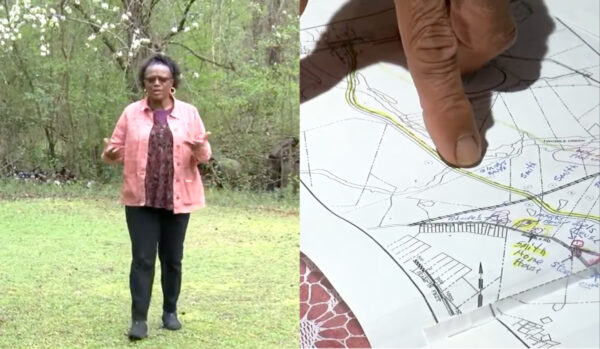
Though a tiny and poor town, the 1,300 citizens of Sparta are proud of their legacy.
According to the Southern Poverty Law Center, the history of the city’s founding dates back to 1926, when a Black farmer named James Blair Smith purchased 600 acres of land in the area to grow various crops that would provide generational wealth for his family.
On the land, Blair Smith started a farming company that would cultivate and sell cotton, peas, butter beans, and corn, an extraordinary undertaking of independence during the racist era of Jim Crow. In his heyday, Blair Smith fought off efforts from whites who wanted to take over the land, according to The Guardian.
Now, his descendants and some whites in the area are picking up a similar fight, this time against a corporation.
In March 2023, the Sandersville Railroad Company made the first step to seize land by attempting to take advantage of the state’s eminent domain law. This is a last-ditch effort since residents have turned down offers to sell off their land for the railroad to build a 4.5-mile spur through the city.
In 2022, the railroad sent letters to several families — Black and white — about selling their properties.
Sandersville, the 125-year-old shortline freight railroad, wants to lay tracks through Sparta to connect directly to the nearby Hanson quarry. This would open up a way for tons of gravel and sand to be transported more easily and efficiently than by truck, the current method.
The company desires to build train tracks that would slash through eight properties and impact several other homes, blasting dust and debris in the area highly populated by retirees.
While most of the homes on Sandersville’s radar are older African-Americans, one retired white couple has filed a petition to stop the railroad, complaining their property would be split in half. David and Sally Garret are the first to file their complaint with the PSC.
Aside from taking land that has been in some of the residents’ families for almost a century, many are concerned about the pollution the railroad will bring.
“Our community is already like a dumping ground, so we’re going to fight this to the end – there is no compromise,” Janet Smith, a retired school teacher, army veteran, and wife to a fourth-generation descendant of the original landowner, told The Guardian.
Smith, 64, rallied the community to start the “no railroad in our community” coalition.
“They didn’t expect us to push back because we’re poor and Black. But this property is all that we’ve got to leave to our sons – it’s the disrespect of it all,” Smith explained.
As a private company, the railroad still has to make a case to the PSC that building the spur would be a public benefit. The Southern Poverty Law Center has assigned lawyers to come in and help the community who oppose the move. Attorneys are consulting with property owners and helping them navigate the significant legal hurdles that are mounting against them as they try to save their properties.
“These are older people, they are retired, they don’t really have the means to litigate against a railroad company with seemingly unlimited resources, and so this really pushes the question of, why did the railroad company choose this route?” said Jamie Rush, senior staff attorney with the SPLC’s Economic Justice Project.
Executives at Sandersville submit their proposal to consider the disruption it might make to the lifestyles of those living in Sparta.
“After surveying the land, the chosen route is the most efficient and least impactful route,” said Ben Tarbutton, owner of the Sandersville Railroad Company.
Tarbutton also adds the company doesn’t want to seize the land but will use all avenues available to further its bottom line.
“While it is not our desire to use eminent domain, we are confident in our legal ability to utilize it, if necessary,” the railroad owner says.
The community and their legal advisers believe Sparta is an easy target because the majority of the citizens are poor and Black.
According to recent surveys, one out of every three residents lives below the poverty line. Also, 70 percent of the town identifies as Black.
“Does the railroad think if they tried to go through a predominantly white section of town, they would have encountered too much pushback?” Rush asks. “Is it because the railroad believes it can intimidate this community with these letters? These are the questions we are asking.”
The company says no part of its proposal is based on “race, color, creed, poverty level or any related factors,” stating the company is just embracing the president’s infrastructure package.
Tarbutton asserts this proposal meets the goals of President Joe Biden’s bipartisan Infrastructure Investment and Jobs Act, saying, “The project addresses a glaring need in our state, region, and nation … as the United States embarks on a historic effort to repair, rebuild and reinvest in critical roads and bridges.”
In 2021, Biden signed the biggest infrastructure bill in decades. Now, billions of dollars have been allotted federal funds to rebuild America, including the restoration of bridges, railroads, and highways.


