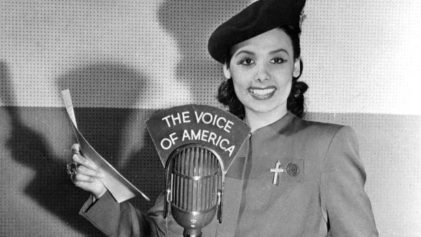
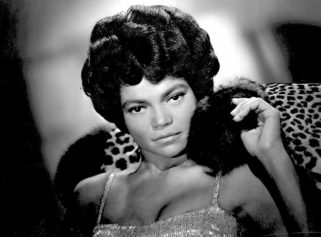
Actress and singer Lena Horne is one of the most popular women to have performed or danced on Broadway. She challenged stereotypes and broke barriers for Black women that paved the way for other early greats like Katherine Dunham. And now one of the most iconic entertainers in history is being honored with a Broadway theatre in her name.
On Tuesday, Nov. 1, the Brooks Atkinson Theatre on 47th Street was renamed The Lena Horne Theatre, according to CBS News.
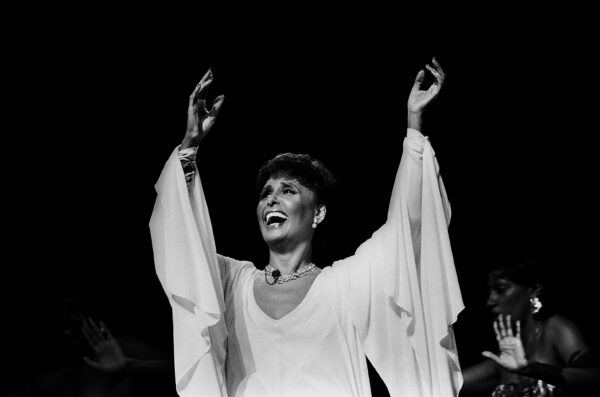
The theater was built in 1926 as the Mansfield Theatre and later renamed after former New York Times drama critic Justin Brooks Atkinson in 1960, according to Broadway Direct. The intimate playhouse was renovated in 2000 and hosts up to 1,069 people. It is one of nine historic Nederlander Organization theaters.
Horne’s granddaughter, actress and producer Jenny Lumet, was present for the renaming of the new theater. She described the historic moment to CBS as a “celebration of the contributions of Black women to theater history.”
“I think,” she adds. “I think it’s a celebration of all people in theater history but Black women, as we know, tend to get the short end of the stick. And this, I feel like, it’s not about grandma, it’s about a thank you.”
Talk show host Gayle King went on to share a tale about how she met Horne, who was unable to attend Oprah Winfrey’s Legends Ball in 2006.
“So Oprah wanted to give the gift to her personally cause she got all the legend’s diamond earrings, as Oprah does. And went and take it to her in person and I got to come,” she explained. “So we’re sitting in the bedroom with Lena Horne, talking to her. We walked out of there like, ‘Oh my god. I can’t believe it.'”
The theater community came together to pay tribute to Horne, including Vanessa Williams. The singer and actress performed the classic song “Stormy Weather,” which she sang numerous times in the Broadway play “After Midnight.”
“She made such a tremendous path, not only in theatre but in film as well as her television performance and her always pushing the envelope,” Williams told People at the event. “Not only did I get a change to meet her numerous times, but I got the Lena Horne Award back in the ’90s for my accomplishments, and she’s been a wonderful role model through her activism, through her stories, her career, her life, her loss, her triumphs. “She’s not just a gorgeous face,” Williams added.
Horne, who was born in 1917, started out singing at the Cotton Club, a Harlem nightclub, at the age of 16. The Grammy-winning vocalist grew up amongst an established family of organizers and leaders from the NAACP and the Urban League. She later moved to Hollywood and worked her way to land big movie roles such as in the all-Black musicals “Cabin in the Sky” and “Stormy Weather,” both released in 1943.
Horne was one of the few actors of color who starred in movies, on television, and on Broadway and dedicated her career and platform to fighting for civil rights. She received an honorary doctorate from Howard University in 1989 and an honorary doctorate of Humane Letters from Yale University in 1998. In her decades-long career, she earned a number of accolades, including four Grammy Awards, a Tony for Best Actress, and an NAACP Image Award before she passed of heart failure in 2010 at 92.