The Grand Ole Opry House Auditorium has been the location of many great moments, but in 2022 the prestigious venue was the setting for a historic moment of one of Nashville’s most lauded educational institutions.
One college graduated its youngest Black female to earn an M.D. diploma.
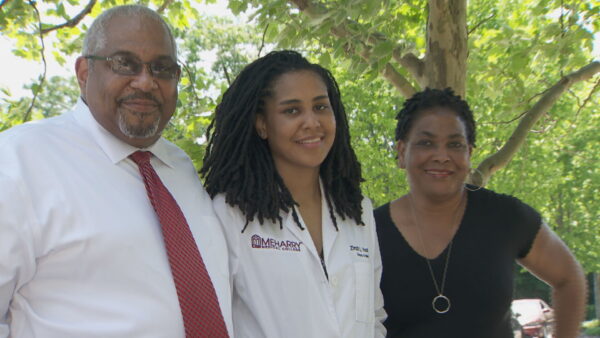
On Saturday, May 21, at Meharry Medical College’s 147th Commencement ceremony, Zindzi S. Thompson, 21, became the youngest African-American female to earn a Doctor of Medicine from the school.
Thompson enrolled as a student at 16, following the footsteps of another 12 or more family members who matriculated through the heralded university.
The South Carolina native said, “I have always wanted to be a doctor for as long as I can remember. There’s nothing else that I wanted to be.”
Like many parents, Samuel Thompson and Machelle Thompson, who are both attorneys, created an environment and plan to help her achieve her dream. Differently from others, they helped the brilliant young lady achieve those dreams with a mind-boggling intensity and intentionality.
The parents told Nashville station WTVF, “We always get, ‘What is the secret? What did you do?’ We stayed out of her way. Yes, we did.”
Their 3-year-old daughter told them she wanted to be a doctor and by 13, with the scholarship to back up her goals, she enrolled at Mary Baldwin University in Virginia.
Machelle said, “We saw that she was a little bit different starting at 3. So, since she was 3, she’s worked towards this goal.”
Zindzi’s father said, “A big part of the process has been letting her go and achieve her goal. And that’s been the hardest part. The academics for her and knowing that she was going to do it was easy, but not having your daughter through those years was the hard part.”
Eighteen years later, Zindzi’s toddler dream has been realized, and she is looking at the journey in amazement. “It’s definitely a mountain. I’m so, so excited,” she remarked, thinking about her future. “I’ll be called a doctor — Dr. Thompson.”
Her mother understands the gravity of her daughter’s accomplishment in the full line of American history. Her child becomes a doctor 158 years after Rebecca Lee Crumpler became the first Black woman physician in this country.
A year prior to Crumpler receiving her M.D. from the New England Female Medical College — five or six generations from Zindzi — Blacks were legally emancipated from slavery.
Even now, out of all doctors in the country, women only make up 35 percent and Black women make up just 2 percent of that small number, according to Fortune magazine.
Machelle marvels, “I think about my ancestors and everything that they went through, and then I look at my daughter, and it’s amazing. It truly is.”
Thompson doesn’t seem to have any plans post-graduation to slack off, accepting a summer residency in a psychiatry program at Washington University Barnes Jewish Hospital in St. Louis.


