Angela Yee Is Quietly Building a Business Empire Outside of Her Morning Gig on the ‘Breakfast Club’

Every morning, Angela Yee talks it up on the nationally syndicated FM morning radio show “The Breakfast Club.” Behind the scenes, she’s building a business empire.

Yee, who was born to a Chinese father and a Montserratian mother, operates three brick-and-mortar businesses centering on wellness, nutrition, education and diversity, equity and inclusion. 
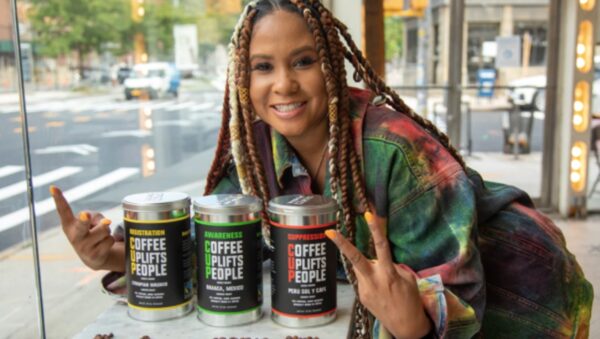
Photo from coffeeupliftspeople.com

Her businesses include a coffee shop called Coffee Uplifts People, which she co-owns with Tony Forte and LaRon Batchelor; a juice shop, Drink Fresh Juice, which she co-owns with Tony Forte; and a hair-care company, Private Label. 

Yee says she has faced challenges as a Black female founder.

“It’s been hard because I still struggle with imposter syndrome. Sometimes I feel that I’m not smart enough or that I don’t belong in a certain room. Starting out in radio, I was looked at as a sidekick…I rebelled against that notion because I had so much to prove.

“Most of the jobs I’ve worked at, I was the only woman. When we’re live on ‘The Breakfast Club,’ I’m still the only woman in the room. I do the most work because I have to prove myself. If I were a man, I don’t think I’d be the same way. I feel that I have to be more prepared than anyone else, yet I still don’t get the same respect. I do all of this work just to be considered equal,” Yee said.
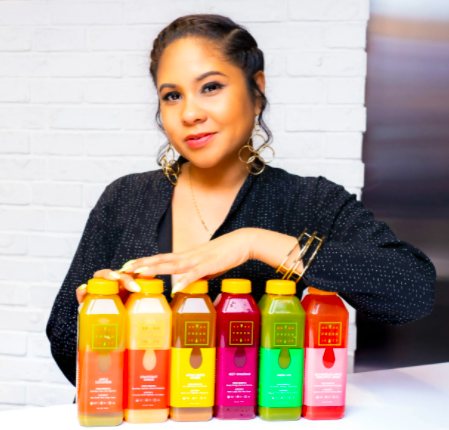
Photo from drinkfreshjuice.com

Yee added that she has found people don’t often take her seriously because she is a Black woman. “People think you’re only there to fill a quota, so they may not take you seriously.”

She shared that she has found support from other Black women.

Read full story at Finurah here.

Still independent.

We hope this story was worth your time. For over 14 years, Atlanta Black Star has stayed Black-owned and independently run. We didn't get here by waiting on ad budgets that were never built to prioritize us. Our readers did that.

Corporate support for Black media has always been thin. Outlets like ours get roughly 1% of the $170 billion spent on U.S. advertising each year, and that margin is shrinking further as advertisers walk back the DEI-linked commitments they made in 2020. That's the backdrop. It's not why we're asking.

The wider picture isn't any steadier. Newspaper ad revenue has fallen more than 80% since 2005, and local newsrooms are closing at a rate of roughly two a week nationwide. When outlets go under, it's rarely the ones built to center a Black perspective from the ground up that get to stick around.

We know a request for support isn't why you came here. But without readers choosing to fund this work directly, the depth of reporting we can do at home and abroad shrinks along with everyone else's. If you're not in a position to give, that doesn't change how much we value you as a reader.

If you are able to, a recurring contribution does more for us than a single one-time gift, because it lets us plan the next investigation instead of just the next invoice. It takes about 30 seconds, no long form, no account. Thank you for continuing to support independent journalism and freedom of the press.

Back to top