Civil unrest has erupted on the French Caribbean islands of Martinique and Guadeloupe in response to COVID-19 vaccine mandates, heightened by distrust of the French government.
Demonstrators burned barricades, looted stores and attacked police early Thursday in Martinique, shuttering the island. It is a trend that followed a week of protests in Guadeloupe, including makeshift bombs and charred vehicles. No casualties have been reported.
About 90 people have been arrested amid the unrest in Guadeloupe. France deployed dozens of special forces to the island earlier this week. Authorities there have implemented a curfew in response to the chaos that evolved from a strike the week prior.
The French government has instilled a vaccine mandate for health care workers and requires a health pass, or vaccine passport, for access to public buildings, including restaurants, cafes and libraries.
French Minister of the Economy Bruno Le Maire told reporters “the health pass is not negotiable” on the French Caribbean islands, and “we are not going to negotiate the health security of the French.”
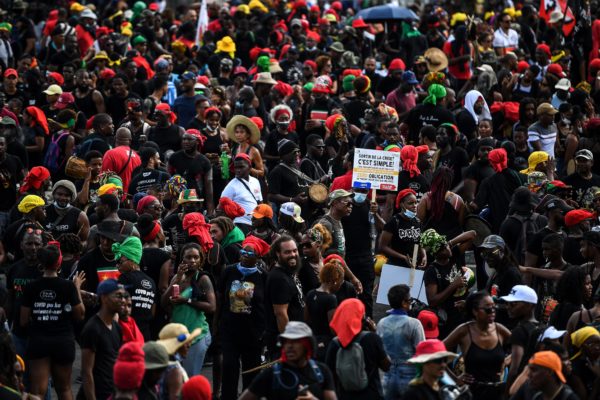
By Friday evening, the ministry was forced to soften its stance. In a statement, the ministry stated it would delay the Nov. 29 deadline to finalize implementation of the vaccine mandate to Dec. 31.
Those who had refused the vaccine were also placed on unpaid leave, but now they will receive more time to engage in “dialogue” with their managers while still getting paid.
French President Emmanuel Macron on Thursday tightened COVID-19 protocols in response to a spike in cases in France. Earlier in the week, Macron called the crisis on the islands “explosive” but said the government would “not give in to lies, distorting of information and the exploitation by some people of this situation.”
Martiniquans and Guadeloupeans’ vaccine hesitancy is deep-rooted in trauma and a longstanding distrust of the French government stemming as far back as slavery.
Olivier Serva, the MP for Guadeloupe didn’t mince words when calling the situation on the island “quasi-insurrectional”. He believes the opposition is an attempt to “weakening state authority” and is a symptom of the legacy of “colonial slavery”.
The islands are tainted by contaminated soil and water from a cancer-causing pesticide that the French continued to authorize for use despite becoming aware of its dangerous effects.
Chlordecone, also known as Kepone, was sprayed on banana crops on the islands for decades. It was banned in the U.S. in 1975 after hundreds of workers at a Virginia factory developed nervous tremors, slurred speech, short-term memory loss and low sperm counts. However, it was not officially banned on the French islands until 1993, three years after it was banned in mainland France.
Research showed that 95 percent of Guadeloupe residents and 92 percent of Martinique residents deal with effects of the chemical. Reports show that Guadeloupe, a country of over 395,000 residents, has the highest prostate cancer rate in the world.
The unrest comes as France’s Pacific territory of New Caledonia plans to hold a Dec. 12 vote for independence.
While France has delayed the full implementation of the vaccine mandate, leaders on the island have plans to continue their protests.
Maité Hubert M’Toumo, the secretary general of the island’s biggest union, the UGTG, said the protest now represents a bigger fight. “They express the depth of suffering, inequality, poverty and exclusion felt by the people, especially the young and the elderly.”
More news from our partners:
Finurah Funding Friday: Check Out Small Business Grants Being Offered From Lyft, U.S. Bank, and More


