Tesla Inc. has been ordered to put its money where its reported values of cultivating a workplace sans discrimination lie, in the hands of a former employee.
That ex-employee is Melvin Berry, a Black man who sued the company in 2020 for failing to stop a white supervisor from allegedly hurling racial slurs at him. A private May 12 ruling by an arbitrator sided with Berry against the electric-car manufacturer, to the tune of $1.02 million.
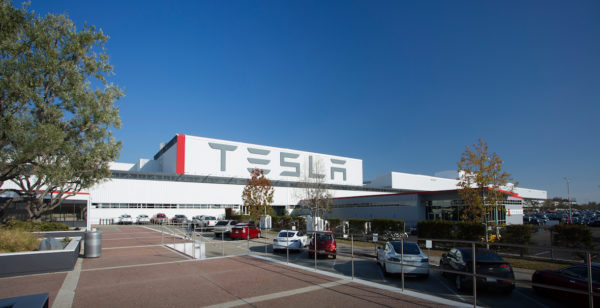
The victory is rare for a discrimination suit where collecting data of the alleged harassment can be challenging, and proving actual wrongdoing can be even more arduous. But the arbitrator, former Sonoma County Superior Court judge Elaine Rushing, believed Berry and witness accounts proved Tesla turned a blind eye to the claims.
Employment attorney Cliff Palefsky — who is not associated with the case — weighed in on what he felt contributed to the outcome. “Racial discrimination awards are rare and it seems this was especially hard fought,” he told Bloomberg. “[Rushing] was clearly troubled by the facts, culture at the company and the tone of the defense,” he added.
“Case law is clear that one instance of a supervisor directing the N-word at a subordinate is sufficient to constitute severe harassment,” said Rushing. Tesla’s alleged lack of response to the matter also made it clear to Rushing the company was liable to Berry’s claims of harassment.
“This is a case of 23 year-old white man with only a high school education supervising a 43-year-old African American man with a college degree, a classic invitation for serious resentment,” added Rushing.
Berry, 43, began working for the company in 2015 as a materials handler, but his departure came in under two years. Berry alleged that his supervisor, who was half his age and had only obtained a high school diploma, frequently called him the N-word. When Berry reported the racial harassment he claimed the supervisor retaliated by making his already laborious duties even more strenuous.
Berry’s $1.02 million award is broken down as such: three-quarters goes toward attorney’s fees and legal cost, and Tesla must pay $266,278.50 in damages, including $100,000 for Berry’s emotional distress. As for Berry, he plans to take to some time to himself after the long-fought battle. However, he plans to launch his own media company for motion design and animation. He hopes his victory against sheds light on how “Tesla treats its employees.”
On social some people felt the award was too low; some called for boycotts while others were sadly not shocked by the claims made against Tesla.
Tesla, which is owned by billionaire Elon Musk, has more than 80,000 employees worldwide. While its cars may be all the craze, the company has been anything but exempt from numerous complaints of racist employees and harassment at its facilities.
Employees allegedly call the factories “the Plantation” and claim the workers are often referred to as “cotton pickers.” Former Fremont factor worker Aaron Craves said in a sworn statement that he endured similar racial harassment as Berry.
“I was directly called N-word and n—-a approximately 100 times at the Fremont factory. I heard the terms N-word and n—-a used over 100 times by co-workers, and by my lead Auggie, in the Tesla factory,” claimed Craven.
His statement and several others like it are a part of a 2017 lawsuit against Tesla, alleging rampant racism exhibited against Black employees. Since 2018, just under 200 employees have requested the right to sue Tesla for discriminatory practices ranging from skin color, age, race and more.
Tesla denies the claims, stating it is, “absolutely against any form of discrimination, harassment, or unfair treatment of any kind.”


