‘You Got to Do Your Research’: Usain Bolt Explains Why He’s Interested In Getting Equity Rather Than Endorsement Checks

Usain Bolt is dropping some knowledge on the importance of having ownership in a company.

On Aug. 3, Bolt sat down with the hosts of the “Earn Your Leisure” podcast and discussed why he’s decided to get equity within a business instead of endorsement checks. In the clip, he says, “Later on in our career, we’re like, ‘You know what, we need to stop taking cash and get some equity, because a lot of these companies are getting bigger and bigger and bigger.’”
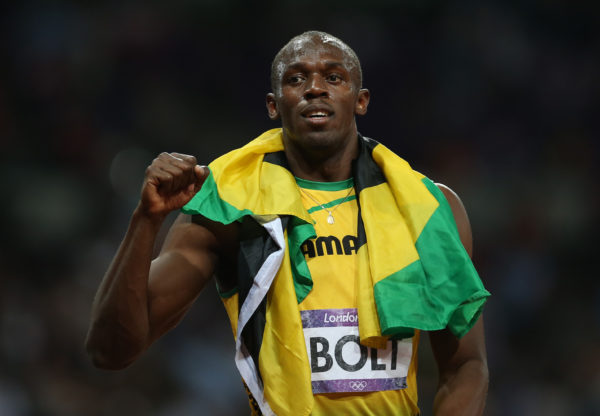
Usain Bolt of Jamaica celebrates after he wins gold during the Men’s 200m Final on Day 13 of the London 2012 Olympic Games at Olympic Stadium on August 9, 2012 in London, England. (Photo by Ian MacNicol/Getty Images)

According to Investopedia, equity “is the value of company’s sales (assets) minus any liabilities owed by the company not transferred with the sale.” Liability is typically a financial debt that someone owes another person. For example, if a person starts up a business and needs a bank loan, that loan is now a liability because the person will owe the bank money. But as the assets or sales increase and the loans start to get paid off the equity increases.

Bolt clarified that he wouldn’t get equity in every company he does business with, but only the “right companies.” “You got to do your research,” he said, “You know what, at the end of the day we can take the equity and in the long run it’s bigger.” The 34-year-old is estimated to have an net worth of $90 million, and he receives about $20 million per year just from endorsements. But Bolt has now realized that the power of having equity is that you own a piece of a company.

“I got three kids now, bro’, I got to think about the future,” the eight-time Olympic gold medalist said with a chuckle.

In 2016, Bolt became one of the biggest minority shareholders in Enertor, which is a company that sells insoles that are advertised as helping the customer stay injury-free and run faster. At that time, the company was valued at $10 million.


Democracy needs journalism it can trust.

This election season, the stakes are higher than usual — and so is the pressure on newsrooms to soften their coverage, stay quiet, or just disappear. Independent reporting, the kind that answers to readers instead of advertisers or political pressure, matters more in a moment like this, not less.

For over 14 years, Atlanta Black Star has stayed independent and reader-funded. We have no corporate owner and no shareholders telling us what to cover or how to cover it. That independence is also our biggest vulnerability: nothing protects it except readers choosing to fund it directly.

Newspaper ad revenue has fallen more than 80% since 2005, and local newsrooms are closing at a rate of roughly two a week nationwide. When outlets go under in a moment like this, it's rarely the independent, reader-funded ones that get to stick around.

We know a request for support isn't why you came here. But without readers choosing to fund this work directly, the depth of reporting we can do at home and abroad shrinks along with everyone else's. If you're not in a position to give, that doesn't change how much we value you as a reader.

If you are able to, a recurring contribution does more for us than a single one-time gift, because it lets us plan the next investigation instead of just the next invoice. It takes about 30 seconds, no long form, no account. Thank you for continuing to support independent journalism and freedom of the press.

Back to top