Mamie Till-Mobley has long been known as the Black mother whose 14 year-old son, Emmett Louis Till, was brutally tortured and killed in Mississippi during the Jim Crow Era.
But now, the masses will know her as not only the “mother of the civil rights movement,” but just how far she pushed to make justice for her son a reality. The upcoming movie, “Till,” will chronicle her decision to have an open-casket funeral to show her son’s gruesomely disfigured body — which was photographed for Jet magazine in 1955 — and how her fight for justice helped launch a movement.
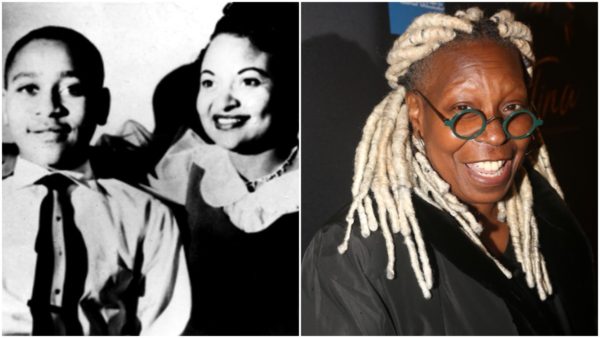
“When I began to make the announcement that Emmett had been found and how he was found, the whole house began to scream and to cry,” said Till’s mother nearly seven decades ago. “And that’s when I realized that this was a load that I was going to have to carry. I wouldn’t get any help carrying this load. I think everybody needed to know what had happened to Emmett Till.”
Directed by “Clemency’s” Chinonye Chukwu, the film will also star Whoopi Goldberg as Till’s grandmother, and Danielle Deadwyler as Mamie.
“We have waited a very long time to bring this historically necessary important film to people,” said Goldberg in a statement to Variety. “And as we watch the repression of American History when it comes to people of color it makes it even that more important. I couldn’t be with better people: Fred, Barbara [Broccoli], Chinonye, Keith [Beauchamp], Michael [JP Reilly] and Danielle.”
Deadwyler, who starred in HBO’s acclaimed limited series “Watchmen,” said she intends to represent the joy, love and life Mamie shared with her only child. “I am grateful for the women who support me as the one to carry the labor of this embodiment and as an inheritor of such a lineage,” Deadwyler said. She continued by stating the entire crew hopes to “uplift and transfigured with this film.”
Till had come from his home in Chicago to visit family for the summer of 1955 just outside of Money, Mississippi, when he was accused of making advances toward Carolyn Bryant, a white woman storekeeper. As a result, within days Till was kidnapped from his great-uncle’s home, beaten, mutilated, shot in the head and then abandoned in the Tallahatchie River. His disfigured body was discovered three days later on August 31.
Two men, the woman’s husband Roy Bryant and his half-brother J.W. Milam, were tried but acquitted of any involvement in the teen’s murder. Years later the woman, by then known as Carolyn Bryant Donham, would also recant her testimony of Till making any sort of advance at her. “Nothing that boy did could ever justify what happened to him,” claimed Donham in author Tim Tyson’s book “The Blood of Emmett Till.” The new developments laid out in the book prompted the U.S. Department of Justice to reopen the case in 2017, however, no charges were ever brought fourth against Donham.
Till-Mobley died in 2003.


