Drug testing is a necessary aspect of the NFL, however, some players think the sports league is too aggressive with its application of the policy.
Tennessee Titans wide receiver A.J. Brown recently expressed annoyance over the frequency of his screenings, claiming on Twitter that he has undergone three tests since the end of the season.
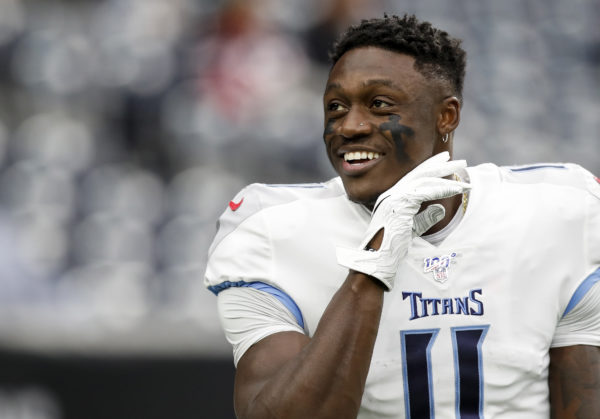
“NFL will y’all please leave me alone with these drug test. 3rd one this off-season. I don’t even drink protein milk. Chill on me,” he posted.
Despite the constant testing, the NFL has every reason to be pleased with the star, who had a banner year in football, pulling off 70 receptions for 1,075 yards and 11 touchdowns in 2020.
In 2019, former Carolina Panthers defensive back Eric Reid alleged that the NFL was targeting him with drug testing, claiming in September that he had been drug tested six times since signing with the team.
“This is supposed to be a random system. It doesn’t feel very random,” he told reporter Marcel Louis-Jacques.
The NFL and NFL Players Association released a joint statement declaring that an investigation showed the tests were randomly generated.
“We will not breach any players confidentiality, but we can confirm that the report documents the dates he was randomly selected for testing and the actual dates of the drug tests,” it read. “The report also demonstrates that Mr. Reid’s tests were randomly generated via computer algorithm and that his selection for testing was normal when compared with the number of tests players were randomly selected for throughout the league during the time he was on an active roster.”
Following the release of the statement, more information emerged that indicated Reid’s claims were not quite true.
According to Mark Maske of The Washington Post, an investigation into the accusations uncovered that Reid had lied about the amount of times he was tested. “According to one source familiar with the report delivered to the NFL and NFLPA on Eric Reid’s drug testing, that report says that Reid was not tested as many times as Reid asserted publicly.”
The veteran athlete, who has clashed with the NFL due to his support of Colin Kaepernick and his staunch activism concerning police violence and systemic oppression, remains a free agent.
In contrast to Brown, Titans player Taylor Lewan proudly took to social media to boast about his fifth drug test in six weeks.
“Pee was a 1.006 for my 5th drug test in 6 weeks shout out to the @nfl for keeping my hydrated,” Lewan tweeted.
In Lewan’s case, he did test positive for performance-enhancing drugs back in 2019, after which he denied deliberately taking any banned substance. He offered to take a polygraph test to prove his innocence, but the league maintained his four-game suspension.
According to The Bleacher Report, “upon employment” a predraft player or one signing with a new team, can be tested “for anabolic steroids and related substances.” In the offseason, players, including free agents, can be randomly tested up to six times. “During the preseason/season/postseason, 10 players can be randomly tested each week.” Only retired players are exempt from testing completely.
Once an athlete tests positive for any restricted substance they are liable to drug tests as often as deemed necessary by NFL medical officers.


