Actress Cynthia Erivo says respect and humanity are at the fulcrum of her craft as she opens up about her latest role, Aretha Franklin.
Erivo portrays the iconic vocalist in Nat Geo’s “Genius: Aretha Franklin,” a limited series that journeys through the late singer’s adolescent years to Franklin finding her voice, style, and ultimately herself through her music and life’s trials.
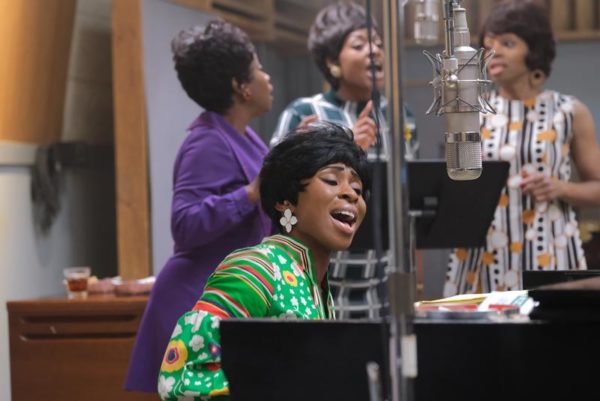
Though this is Erivo’s second foray portraying an iconic figure — she previously wowed critics as Harriet Tubman in 2020’s “Harriet” — stepping into the soul of Franklin, and peeling back the layers of public perception to reveal a woman full of aspirations, tenacity, and artistic genius was nothing short of intimidating.
“You want to make sure you’re doing it to the truest and fullest, and most honest of your abilities,” said Erivo, who has won an Emmy, Tony, and Grammy. “But more than anything there’s sort of this overwhelming feeling of responsibility to be able to show this person as a fully rounded human being.”
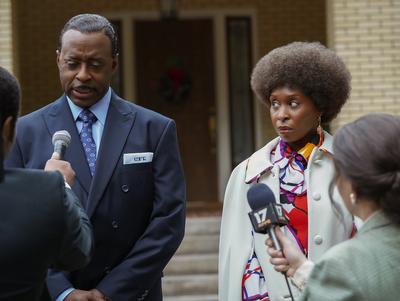
In eight episodes, two airing each night beginning March 21, audiences get a glimpse into a child prodigy singing gospel under the loose guidance of her father Rev. C.L. Franklin, portrayed by actor Courtney B. Vance, to an adult finding solace in using her voice for activism.
“We know her as the Queen of Soul Aretha Franklin, you know, but we don’t know her as Aretha Franklin the mother, Aretha Franklin the wife, Aretha Franklin the sister,” Erivo explained. While Erivo was learning Franklin’s cadence and lyrics she was also learning the journey of Franklin growing from a little Detroit girl with dreams of singing for the world to becoming the Queen of Soul.
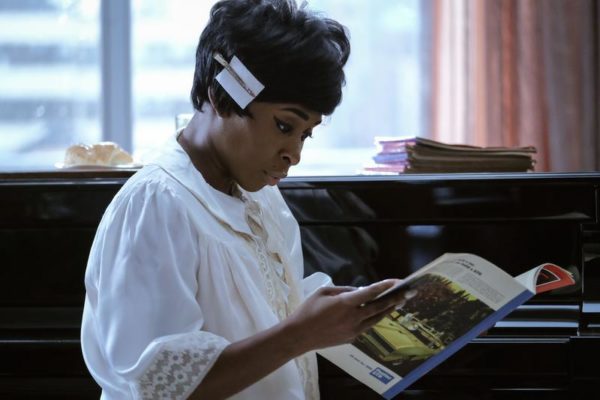
“Sometimes we forget that before we see this woman there’s a journey that has been made in order to get to that place, and I think that’s the thing that I felt responsible for, I wanted to make sure that we could see the journey.”
For Erivo, it is Franklin’s journey that lends itself to the heroic-like figure the public viewed her as for more than 40 years. The actress says audiences can literally hear Franklin discovering herself as her music changed through the decades.
“I really actually think that even when we were watching her through the ’60s when she had some of her biggest hits she still was learning and growing who she was. When you get to the ’80s, late ’80s, now she knows who she is, she wants to have fun, and that’s when the music and the songs sort of changes … that’s when she’s in herself, that’s when she is in who she is supposed to be.”
While much is anticipated from the limited series, ahead of its premiere the Franklin family expressed their lack of support and frustrations with the project. Kecalf Cunningham, Franklin’s youngest son, claimed the family did not give Nat Geo consent to tell the vocalist’s story.
“The Franklin Family is not in support of the National Geographic Aretha ‘Genius’ series!!! This deal was pushed through without our consent!!” wrote Cunningham while imploring people to not support the series on social media. Cunningham was also clear that his frustrations were not at all aimed at the actors, but instead the producers.
Nat Geo responded to the family’s concerns with the following statement:
“We received the message from the family, we hear them and acknowledge their concern for Ms. Franklin’s legacy. We think we have a shared goal here – to honor and celebrate the life and legacy of Aretha Franklin. We can tell you that everyone who worked on GENIUS: ARETHA approached telling her story with the intention to respect Ms. Franklin in every aspect of the series and in every decision we made. The studio worked diligently to attain the endorsement of Aretha’s estate, which we are grateful to have. We worked with many people who knew Ms. Franklin – from Clive Davis to members of her family’s estate – to make sure we told her story in an honest and authentic way. This series is called GENIUS – it is a tribute to Aretha’s GENIUS – something we hope we can all celebrate. One of the comments from a guest attending our premiere last week was: ‘Aretha lived so much life… she needs 100 biopics!.’ We can’t say it any better!”
Following the series’ four-night run on Nat Geo, “Genius: Aretha” will be available for streaming on Hulu beginning March 25.