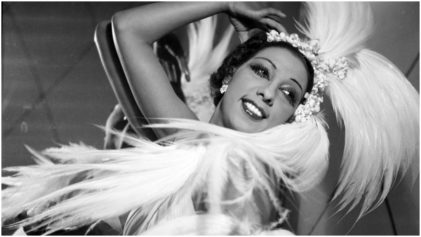
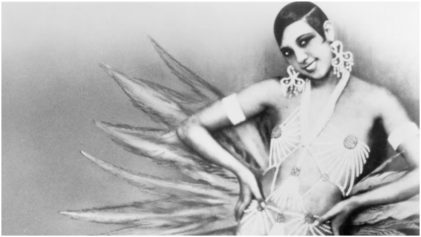
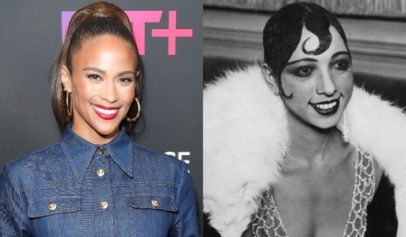
Josephine Baker is a name that most have heard before. She was an entertainer, activist and the first Black woman to star in a major motion picture. But her impact was even bigger than that, according to Terri Simone Francis, associate professor and director of the Black Film Center at Indiana University and author of a new biography: “Josephine Baker’s Cinematic Prism.”
“The book really focuses on Baker as a pioneer of early Black cinema. She’s known as a cultural figure, she’s known as a Black History Month figure, the woman that adopted 12- 14 children — the person who was just a phenomenal performer,” Baker said. “But my book really focuses very specifically on her labor on screen, her work as an actor, and how her acting and her portrayal of these characters was its own kind of authorship.”
Over the years, Baker has inspired many upcoming artists and actresses, including Diana Ross and Beyoncé. “They see the intelligence of her moves in a way that I think is special to someone who is also a dancer and a performer,” Francis said.
Born in 1906, in St. Louis, Missouri, Baker’s career spanned six decades. In addition to influencing some of the biggest names in the industry, her impact also is being captured in a new series by LeBron James’ The Springhill Company, which will examine the entertainer’s multifaceted life.
“There’s a Josephine Baker for everyone,” Francis said. “There’s the Josephine Baker of exuberance and adventure — of a delightful eroticism in her dancing and all of that — the ambition. There’s the Josephine Baker of the ’30s who is the first Black woman to star in a film in 1927, ‘Siren of the Tropics.’ She then goes on to make two other feature films in the ’30s and then another one in the early post-war period.
“And then during World War II, we have Josephine the spy. Josephine Baker transports [military secrets] for the [French] Resistance on her music sheets. There’s this other Josephine Baker who then desegregates Miami Beach,” Francis continues.
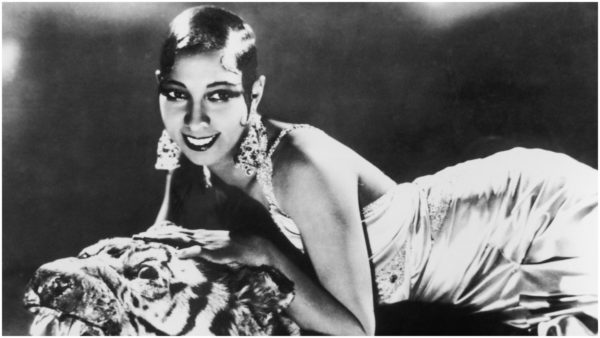
While she acknowledges that Baker’s move wasn’t the most revolutionary activity of her time, she says, “It’s an important kind of move that moves the expansion of democracy forward.” Baker would later participate in the March on Washington. “And while she’s doing all of this — the glamor, the presence, the dedication to hard work,” Francis adds.
In her book, Francis pays specific attention to what the Black media of the time had to say about Baker. “My sources for her work came from the Black press,” Francis said. “I don’t have a strong interest in what crazy white people had to say about her. I feel like that story has been told. Yes, an exotic, erotic revelation. But what I learned when I was looking at the Black press coverage of her performances in the United States, is that they were really enamored with her as a comedy dancer. They like her innovation and her physical wiriness that she would do — and these faces. And in Paris, she’s doing what looks to be the same movements, but they’re read in this completely other context,” Francis said.
Francis thinks Baker, who died in 1975, would have been interested in the climate of today’s entertainment world, as she was limited to the roles she could play at her time. “In some ways, it’s a similar moment with a similar vogue around Black creativity,” Francis said. “It’s always easy to just kind of follow a script, and I think that Josephine Baker was someone who decided to write her own script.”
“Josephine Baker’s Cinematic Prism” is available now and details the early days of Baker’s stunning career.