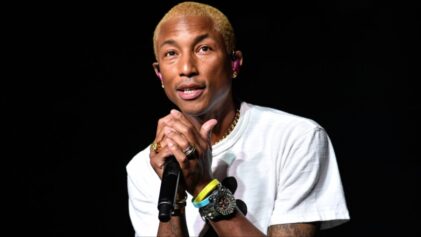
Music producer Pharrell Williams is the latest celebrity to explore his ancestral lineage with the help of Harvard scholar Henry Louis Gates Jr. on the show “Finding Your Roots.”
Pharrell, who is from Virginia, was stunned to learn that one of his relatives was an enslaved woman, Jane Arrington, whose experience in bondage was documented in the Slave Narratives: Federal Writers’ Project of 1936-1938.
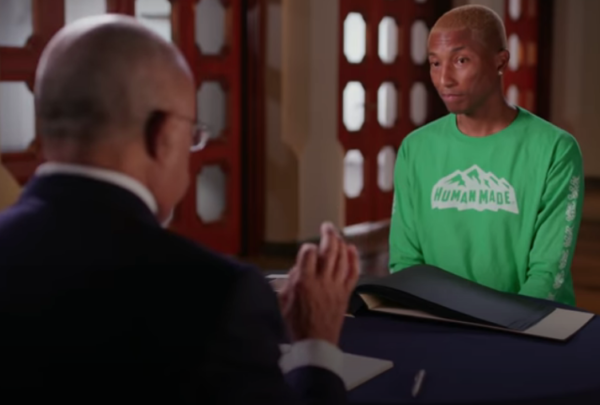
“Jane’s words gave Pharrell an intimate glimpse of his ancestors’ experience under slavery. Those words also forced him to confront what those ancestors actually experienced,” says Gates as he narrated the program leading up to Pharrell reading his great-great-great aunt’s narrative.
But it would be the musician’s great-great-great grandfather Fenner’s time enslaved that struck Pharrell to his core.
“Wow,” said Pharrell after learning Fenner was born into slavery, and, for the first 10 years of his life, only knew bondage. “I didn’t want to cry, and I’m trying not to be angry.”
As Gates reminds Pharrell that he is not a machine, he asks, “what else can you feel?” Williams responds, “it’s intense, sir. It’s intense.”
Like Pharrell, rapper Nas was similarly taken aback by Gates’ findings when researching the his roots in 2014.
“Bill of sale March 27, 1859. A receipt for a human being,” said Nas while staring at the document revealing his third great-grandmother was purchased for $830 during slavery.
“I got more than that in my pocket right now,” the native of Queens, New York, continued. “See, this is painful now, to see that, that is like, that hurts.”
For just shy of a decade, Gates has hosted the series featuring a string of celebrity guests all itching to know more about their ties to America’s history.
The historian’s latest project is a book and four-part series “The Black Church: This Is Our Story, This is Our Song” exploring politics, culture and religion. Throughout the four episodes, viewers will learn, or in some cases gain more insight, into how the Black church has been a foundational aspect of the country’s DNA.
“The church is the oldest, the most continuous and most important institution ever created by the African-American people,” explained Gates to PBS’s News Hour. “t was a laboratory for the formation both of the identity of a New World African people.”