Actress Viola Davis has won an Oscar, an Emmy, two Tonys, and performed on both Broadway and off-Broadway. But while she is now celebrated for a career that spans more than three decades, the actress says her humble beginnings did not lend way to her feeling a sense of belonging among her peers.
During an interview with Insider that was published on Feb. 13, Davis says that while performing Eurocentric theater written by Shakespeare and others, she was akin to an outlier among her mostly white college thespian counterparts.
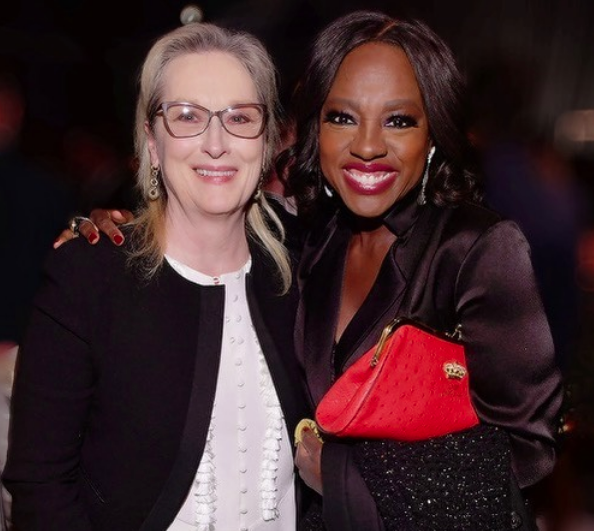
“I can’t say that I’m not appreciative of my training there, but I did not find a sense of belonging,” Davis explained of her time attending Juilliard and performing theater. “I felt like what was required of me was to make any hint of my Blackness disappear, that it would somehow be a good thing if the audience could forget I was Black,” she continued.
Decades later the actress would go on to win awards for her performances in August Wilson’s “King Hedley II” and “Fences.” Most recently her 2020 portrayal of “the Mother of the Blues,” Gertrude “Ma Rainey” Pridgett, in the Netflix film adaptation of the Black playwright’s play “Ma Rainey’s Black Bottom” redounded in even more praise of her talent.
“It shows what Black life was like in 1924, how it was informing our relationships,” she said to Deadline last October. “You try to take that emptiness and fill it up with something.”
Still, the 55-year-old says her accolades and résumé have not eliminated the disparity in opportunities made available to herself and other Black actors compared with their white counterparts.
“We get probably a tenth of what a Caucasian woman gets and I’m number one on the call sheet. … I have a career that’s probably comparable to Meryl Streep, Julianne Moore, Sigourney Weaver,” Davis told “Entertainment Tonight” last July. “Yet I am nowhere near them, not as far as money, not as far as job opportunities, nowhere close to it.”


