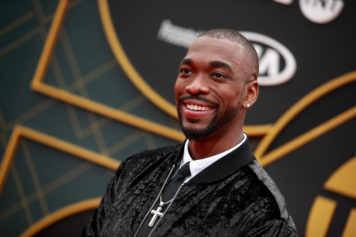
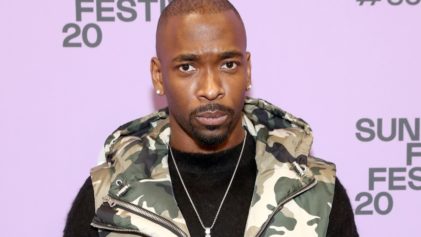
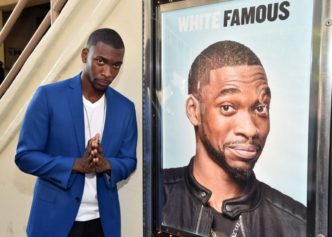
After a frightening encounter with law enforcement last year, in which a police officer allegedly placed a knee on his neck, comedian Jay Pharoah is now revealing how his parents reacted to the incident.
During a recent episode of Taraji P. Henson’s Facebook Watch series “Peace of Mind,” the 33-year-old revealed that while talking to his mother on the phone he could hear the “shakiness” in her voice, “the ‘what if.'”
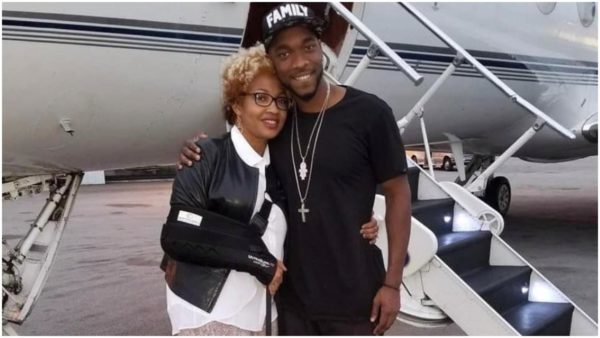
He added, “And that’s what she said, ‘We could have lost you today, had it been different.’ She was like, ‘You really need to thank God.'” Pharoah explained that he went through a series of mixed emotions. “I said, ‘I do thank God. But Mom, I’m just mad right now. I’m in a way that I’ve never been mad before. Because I’ve never experienced this.'”
The former “Saturday Night Live” star said his mother “felt totally helpless,” while his father “was just trying to figure out what was going on. Of course, he was emotional about it because he’s been through situations.”
The actor credited his parents for their efforts to protect him from situations like the one he faced last June. “Just ’cause, both of them from the ’hood. But they’ve tried to shelter me in a way where I don’t have to deal with that. And at the end of the day, I dealt with it,” the star explained. “There was nothing that could be done. So I know that moment for them had to spark emotion as well.”
In June 2020, the “Bad Hair” actor said he was jogging through a Los Angeles neigborhood when he was approached by LAPD officers who had their guns drawn. During an appearance on “The Talk,” the comedian said that he wasn’t alarmed at first glance at the police.
“I’m not thinking nothing of it because I’m a law-abiding citizen,” he said at the time. “I’ve never even got a ticket. … I see a gun from my peripheral, and I look, and the officer is like, ‘Freeze, get on the ground,’ and I’m like, ‘Oh snap. They about to take somebody down’… Guns [drawn], get on the ground, spread your arms like an airplane. … Three more officers drove up.”
The incident took place just one week before the footage of Ahmaud Arbery had been released. Like Pharoah, Arbery had been jogging through a residential neighborhood, this one in Glynn County, Georgia, when a white father and his son chased him down in a pickup truck. The two men confronted Arbery before Travis McMichael, the son, shot him three times with a shotgun. Three men, including one who had been pursuing in another vehicle, were eventually charged with murder in the slaying.
Pharoah said he told the authorities to Google his name, as he didn’t have his ID on him, and it would ensure them that they had the wrong person. The cops were eventually told the man they were looking for had been apprehended, and they apologized to Pharoah. However, the star said that it was “not enough.”