Former “Saturday Night Live” member Jay Pharoah said he could have easily been George Floyd or Ahmaud Arbery after he was stopped by four officers from the Los Angeles Police Department in April.
Pharoah was jogging on Ventura Boulevard and Corbin Avenue at the time in Tarzana, California, when the officers said he fit the description of a Black man they were looking for wearing gray sweatpants and a gray shirt. The harrowing moment was captured by a nearby security camera.
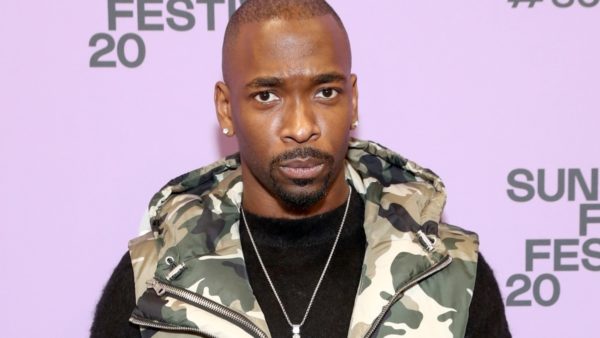
The actor and comedian spoke about being stopped on “The Talk” Friday, June 12, and said after first seeing the officers he didn’t get alarmed.
“I’m not thinking nothing of it because I’m a law-abiding citizen,” Pharoah explained. “I’ve never even got a ticket … I see a gun from my peripheral, and I look and the officer is like, ‘Freeze, get on the ground,’ and I’m like ‘Oh snap. They about to take somebody down’ … Guns blazing, get on the ground, spread your arms like an airplane … Three more officers drove up.”
“It’s hot, corona is definitely something to be worried about at this moment,” he added. “The police officers they didn’t have on gloves, they didn’t have on masks. When they put me in cuffs, after they were all on me, [an] officer put his knee on my neck.”
Pharoah said he told the officers to Google his name so they could see a big mistake was being made. The cops were eventually told the man they were looking for had been apprehended, and they apologized to Pharoah.
“Get these f—–g cuffs off me,” he told them afterward.
Pharoah said the incident happened about a week before footage of Arbery being killed surfaced.
Arbery was a 25-year-old Black man who was jogging in Glynn County, Georgia, in February when he was chased down by a white father and son in a pickup truck, confronted, and killed with three blasts from a shotgun wielded by Travis McMichael, the son. After video of the encounter emerged three months later, both men, as well as a third who was in another vehicle, were arrested.
People have been protesting the deaths of Arbery, Floyd, and Breonna Taylor for weeks after Floyd’s death.
Floyd, a Black man, died on May 25 after a former Minneapolis police officer drove his knee into his neck.
Taylor was a Black woman who was shot and killed in March after officers from the Louisville Metro Police Department forced their way into her home on a no-knock search warrant looking for drugs.
Pharoah shared the footage of being stopped in an Instagram video that he made about Black people being victims of police brutality.
On “The Talk,” he said people from other communities have no idea what it’s like being Black in America.
“The point here is that being Black in America, is just that, being Black in America,” he told the hosts. “Other people can’t level with the same fears that I have. Leaving the house, we should not have to fear going to the grocery store, going to get some gas, running down the street. It’s called human civility. That’s what it is. It’s about being a human. That’s why everybody is out protesting.”