Actress Danai Gurira is getting another chance to exude Black excellence on the big screen. According to Variety, the “Black Panther” star will portray trailblazing congresswoman Shirley Anita Chisholm in an upcoming film.
The production titled “The Fighting Shirley Chisholm” will tell the historical story of Chisholm’s 1972 presidential run; the film is directed by Cherien Dabis from a script written by Adam Countee. Stephanie Allain will produce the project through her Homegrown Pictures banner, and Gabrielle Ebron will serve as an executive producer.
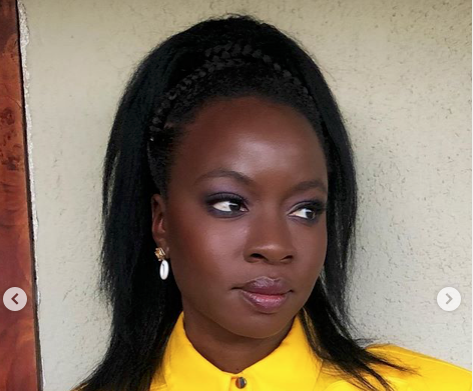
The report notes that although Gurira will play the congresswoman, this film is not considered a biopic. Instead, “The Fighting Shirley Chisholm” will center on the politician’s 1972 presidential campaign. It will also capture how the famous “Chisholm Trail” was populated by young people who fought for social and political change during one of the most unsettling moments in American history, most notably dubbed as the “Me Decade.”
The description goes on to note how Chisholm “recognized that she could make real change by challenging the status quo through her efforts to gain enough delegates to speak for the people at the Democratic Convention.” There are no details on when the film will be released or how it will be distributed.
As previously reported in 2018, Viola Davis was initially tapped to star in the Amazon project. She was also going to produce under her JuVee Productions banner. There’s no word on what led to changes in direction.
Chisholm’s career was extraordinary in many ways, but perhaps most significantly because, in 1968, she became the first Black woman elected to the United States Congress. She represented New York’s 12th congressional district for seven terms from 1969 to 1983.
In 1972, she became the first Black woman for a major party’s nomination for president of the United States during the general election. She also became the first woman to run for the Democratic Party’s presidential nomination. She campaigned with the slogan, “Unbought and unbossed.” Chisholm later worked as an educator for a few years until her retirement in 1982. She died in 2005 at the age of 80 after suffering several strokes.
This won’t make for the first time the politician has been depicted in Hollywood. “Orange Is the New Black” star Uzo Aduba recently starred as the political pioneer in the Hulu miniseries “Mrs. America,” which included an episode that focused on her presidential campaign.