A missing painting by renowned artist Jacob Lawrence has been rediscovered more than 60 years after it disappeared from the public eye.
The picture was discovered by a patron of the Metropolitan Museum of Art in New York, The New York Times first reported. The woman was viewing an exhibition titled “Jacob Lawrence: The American Struggle” when she noticed an empty frame from the multi-panel exhibition. She had a hunch about a painting hanging in her friends’ apartment and convinced them to speak with representatives from the Metropolitan Museum.
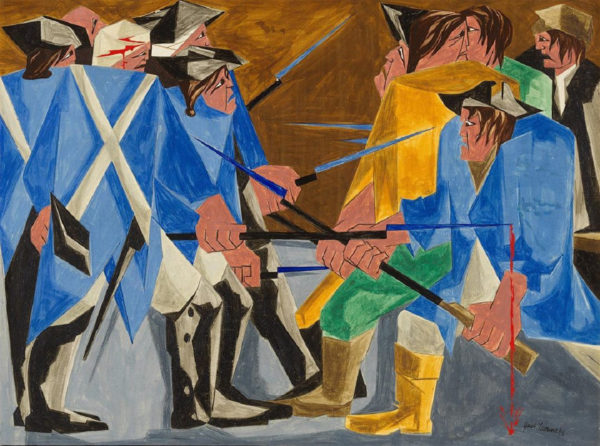
After going through an appraisal process, the piece’s authenticity was confirmed. The couple’s picture was hung in the Metropolitan Museum on Wednesday, Oct. 21.
“It is rare to make a discovery of this significance in modern art, and it is thrilling that a local visitor is responsible,” museum director Max Hollein said in a statement.
The piece is named “There are combustibles in every State, which a spark might set fire to. — Washington, 26 December 1786” is the 16th panel of a 30-piece larger work, “Struggle: From the History of the American People (1954–56).”
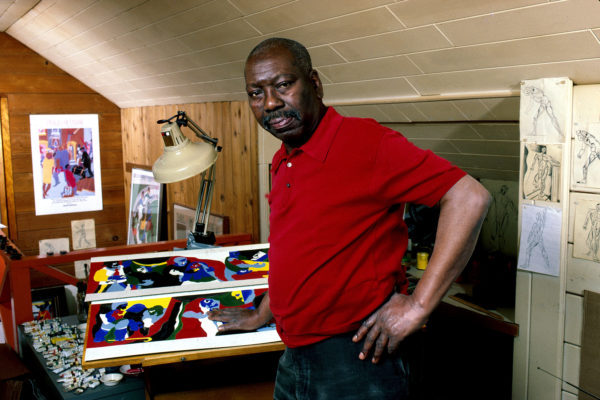
There are four other panels missing from the project, but their whereabouts are unknown.
The recently discovered panel depicts Shays’ Rebellion, an anti-tax uprising in Massachusetts that took place when the United States was still governed by the Articles of Confederation. The owners of the painting, an elderly couple, purchased the piece at a charity auction in 1960. The entire 30-piece series was shown together in public twice in the 1950s, then sold in 1959 to a collector who over time sold off panels individually, leading to the dispersal of the group of paintings.
“The painting has been hanging in my living room for 60 years untouched,” the wife told The New York Times. They asked the newspaper and museum to conceal their identities due to privacy concerns.
The woman felt she had a moral obligation to let the Met display the painting.
“Last week a friend of mine went to the show and said, ‘There’s a blank spot on the wall and I believe that’s where your painting belongs,’” she added. “I felt I owed it both to the artist and the Met to allow them to show the painting.”
The series featuring the painting will be on display at the New York until Nov. 1.


