A Black business group on a quest to become the first Black-owned franchise in NFL history is attempting to purchase the Oakland Coliseum to bring that dream one step closer to reality.
The African American Sports and Entertainment Group (AASEG) has offered $92.5 million to buy the city of Oakland’s portion of the coliseum site, CBS San Francisco reported last week.
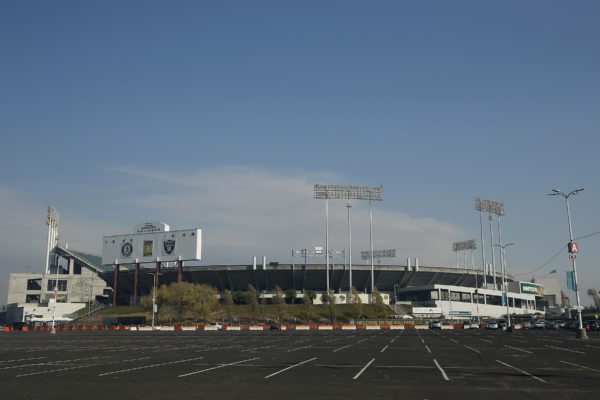
The stadium was jointly owned by Oakland and Alameda County before the Oakland A’s – the city’s Major League Baseball team — purchased the county’s half this year. The A’s also are trying to purchase the city’s other half.
However AASEG’s chairman, Ray Bobbitt, said there is no tension between the two groups.
“There’s no conflict. There’s no differences. We’re just trying to work together,” Bobbitt told CBS San Francisco.
AASEG first announced its desire to purchase an NFL franchise in June when it sent a proposal to the NFL asking it to consider bringing a professional team back to Oakland; which lost its franchise when the Oakland Raiders moved to Las Vegas, Nevada, this season. The move marks the second time the Raiders franchise left Oakland. The team played in the Oakland Coliseum from 1966 to 1981 before leaving for Los Angeles in 1982. After returning to Oakland in 1995 following an agreement with local authorities to renovate Oakland Coliseum, the franchise, stymied in its attempts to secure government funding for a new playing facility, gained approval to relocate to Las Vegas this year.
Bobbitt said they are in talks with the NFL, which has asked them to furnish them with a more detailed proposal.
“They asked us specifically to put together a list of potential African American principal owners, which we have done,” Bobbitt said.
Despite the majority of its players being Black, the NFL has never had a Black-owned franchise. It also recently came under fire for its treatment of Black quarterbacks who, despite the makeup of the league, are in the minority.
Founded this year, AASEG said its primary purpose is to use “the vehicle of sports and entertainment to create a pathway for increased economic equity within the Black community.”
“With Oakland being such a unique place for social justice and one of the components being economic justice, equity and equality; this is something we are grateful to be an architect of,” Bobbitt said.
Others in the group include: Loop Capital, the biggest Black-owned investment firm in the nation; retired NBA player and sports agent Bill Duffy; developer Alan Dones; Robert Bobb, former city manager of Oakland and others.
Bobbitt said their unique plan could make history if successful.
“It would just be such a historic opportunity, the NFL wanting to support the African American community and an opportunity for economic equity,” Bobbitt said. “This is an opportunity for an entire community to establish an economic vehicle for itself and be self-sustaining. … A lot of people in that community have been impacted by the loss of two of our sports teams. Our proposal is a unique one because it has an economic component and educational component and we want it to be one of the anchors for that site.”