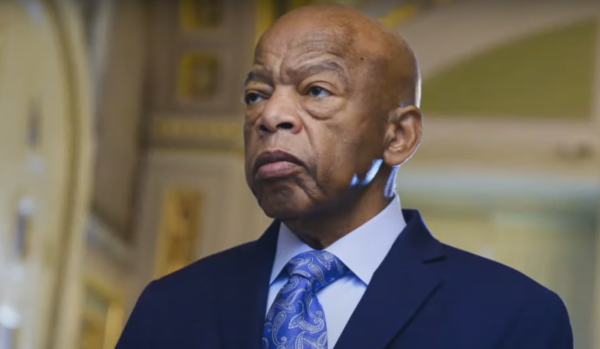
News of beloved congressman John Lewis’ death shook his Georgia constituents, those who admired him and those close to him. The former Freedom Rider died Friday following a battle with pancreatic cancer.
He was 80. Lewis died the same day as his friend and fellow civil rights activist C.T. Vivian.
But in the wake of the somber news, there have been questions about who will replace the 17-term congressman from Atlanta and how the process would work.
Under state law, state Democrats had until 4:30 p.m. Monday to decide if they will replace Lewis, who represents the 5th District of Georgia, on the ballot. According to The Atlanta Journal-Constitution, 131 people submitted applications vying for the seat. That number was whittled by the party nominating committee to five candidates, who spoke before the Democratic Party of Georgia executive committee Monday morning via videoconference.
By the afternoon, the executive committee had selected the DPG’s own chairwoman, Georgia state Sen. Nikema Williams. The 41-year-old represents Georgia’s District 39, which includes parts of Atlanta and suburban cities of College Park, East Point, South Fulton, and Union City. She is the first Black woman chair of the Democratic Party of Georgia and is deputy political director of the National Domestic Workers Alliance.
“We need someone who is not afraid to put themselves on the line for their constituents in the same way congressman Lewis taught us to do,” Williams told the committee on Monday, according to The Atlanta Journal-Constitution.

Williams was born in Columbus, Georgia, and raised by her grandparents in Smiths Station, Alabama, according to her website. She attended Talladega College, aa HBCU in Talladega, Alabama, where she graduated with a Bachelor of Arts in biology, according to her website. Williams was elected to her Senate post in 2017.
The longtime activist has spoken a about women’s rights and voter suppression, and in 2018, she was arrested at the Georgia State Capitol during protests calling for every vote to be counted. That year Georgia residents complained of voter suppression tactics by the state, including undelivered absentee ballots and long voting lines during the gubernatorial race between Democratic candidate Stacey Abrams and now-Gov. Brian Kemp, who then served as Georgia’s secretary of state, the executive office that presides over the state’s elections.
Two days before her selection, Williams tweeted about Lewis’ legacy, calling him “America’s greatest champion in the fight for justice and equality.”
“His legacy of Good Trouble will ring on in generations to follow,” she tweeted. “He was my hero and my friend, and I will miss him very much.”
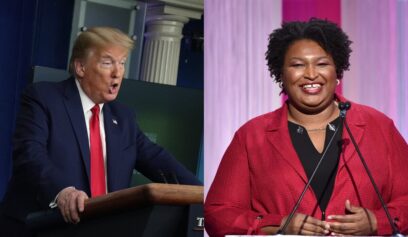
Williams will run against Angela Stanton-King, an ally of President Donald Trump, in the Nov. 3 election.
In the meantime, a separate special election will be decided to fill the remainder of Lewis’s term, the AJC reported. Kemp has 10 days to schedule the vote. The person will serve until January when Lewis’ term expires. An elections attorney told the AJC Kemp has the discretion on when the special elections will be held.