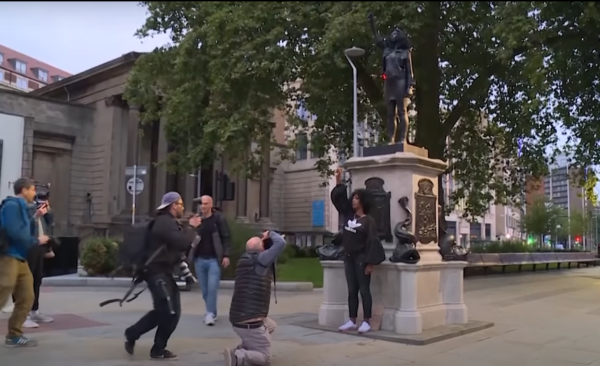
The statue of a Black Lives Matter activist in the English city of Bristol has been removed just 24 hours after it was put up by a British artist without permission. The figure was meant to replace a statue of a slave trader, one that had stood for 125 years.
The BLM sculpture was made and erected by British artist Marc Quinn and depicts Black Lives Matter activist Jen Reid standing with her fist raised. The statue was put in place of the 17th century slave trader Edward Colston, whose statue was knocked down from its place by demonstrators protesting the death of George Floyd. Quinn put the statue of Reid called A Surge of Power in place of Colston’s statue early Wednesday morning without the city’s permission. Just one day later, the statue has been removed and placed inside a museum.
The British City Council tweeted about the incident, saying “This morning we removed the sculpture. It will be held at our museum for the artist to collect or donate to our collection.”
Bristol Mayor Marvin Rees, who is Black, said the statue was put up outside of a process that involves a committee of historians coming up with an option “that reflects the city’s past and represents its residents’ differing views,” according to NBC News.
Quinn drew inspiration for the statue after seeing a picture of Reid standing on the plinth in a Black Power salute after protesters toppled Colston’s statue on June 7. After making contact with Reid, he made the statue out of black resin, and said it “is an embodiment and amplification of Jen’s ideas and experiences, and of the past, present and her hope for a better future.” He admitted he had not received permission to place the statue on the plinth, and says the figure was meant to be temporary.
Rees expressed that a replacement for the sculpture of Colston should reflect all aspects of the city’s history and be decided by Bristol’s residents.
The statue of Colston, which had stood in its place since 1895, was pulled down by demonstrators with ropes, and thrown into the water at Pero’s bridge. It has since been retrieved from the water and will be placed in a museum.
Quinn says that in the case that his statue is sold the proceeds will be donated to charities concerned with uplifting Black history.