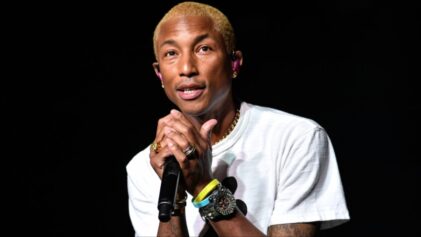
Ever since people have been protesting for racial equality after George Floyd was killed by a white police officer, Juneteenth has been brought into the national conversation. Three years ago Kenya Barris tried to bring awareness to Juneteenth when an entire episode of his show “Black-ish” was dedicated to the holiday.
Barris was a guest on “The Tonight Show Starring Jimmy Fallon” on Tuesday and said that he and Pharrell Williams have created a Juneteenth musical that they’ll bring to Netflix.
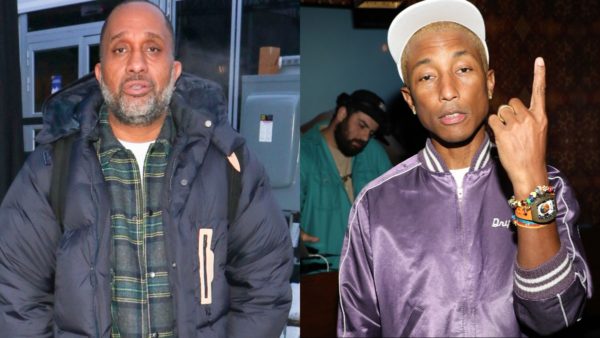
“So Pharrell sold a play along with other writers who wrote ‘Juneteenth’ with us,” Barris told Fallon at the 3:49 mark. “Juneteenth to me was one of my personal things I feel like I wanted to make that a national holiday, I wanted to help make that a national holiday. There’s never been an apology for slavery.”
“There’s never been anything that said slavery was legally wrong,” he added. “Greatest human atrocity in modern history, so I feel like the idea of celebrating that from an American standpoint might start to help the healing. We’re going to do a musical on Juneteenth, … We want to bring this to the audience … have it come on Netflix as like a weekend … to celebrate the day in a really big way.”
The 2017 “Black-ish” episode that centered on Juneteenth launched the show’s fourth season. ABC ran it again on Black Tuesday, June 2. Juneteenth was also acknowledged on Barris’ latest series “BlackAF,” as a party was thrown for the holiday during an episode.
Like Barris, Williams has worked to raise awareness about Juneteenth and helped to get his home state of Virginia to recognize it as an official paid holiday, which started this year for state employees.
Williams and Virginia Gov. Ralph Northam made the announcement at a news conference earlier this month. The governor plans to work with the Legislature in the future to make it a permanent state holiday.
Deadline reports that Williams will produce the Juneteenth musical with his partner Mimi Valdes, and Barris will produce it through his company Khalabo Ink Society.
Juneteenth celebrates the end of slavery in 1865 for Black people in Texas, two years after the Emancipation Proclamation declared all slaves in Confederate states as free.
When Confederate Gen. Robert E. Lee surrendered the Army of Northern Virginia to the Union Army of the Potomac at Appomattox, Virginia, on April 9, 1865, ending the Civil War in the East and effectively bringing the entire conflict to a close, Black people in Texas remained in bondage.
That changed on June 19 when Union Major-General Gordon Granger arrived in Galveston, Texas, to order Emancipation Day, forcing slave owners to grant Black Texans the freedom many of them already knew had been declared in 1863. Slavery remained in place in certain states like Kentucky and Delaware until the 13th Amendment took effect on Dec. 6, 1865.