A Florida man was released from prison this week after serving 16 years of a life sentence for a violent robbery, despite a lack of evidence and problematic eyewitness testimony.
It took two trials to convict Leonard Cure of robbing a Dania Beach Walgreens in 2003, according to NBC Miami. The first jury couldn’t come to a consensus, but the second jury found him guilty of robbery with a firearm and aggravated assault with a firearm. Since Cure was a convicted felon, he was sentenced to life in prison for the first count and a decade for the second, to be served concurrently.
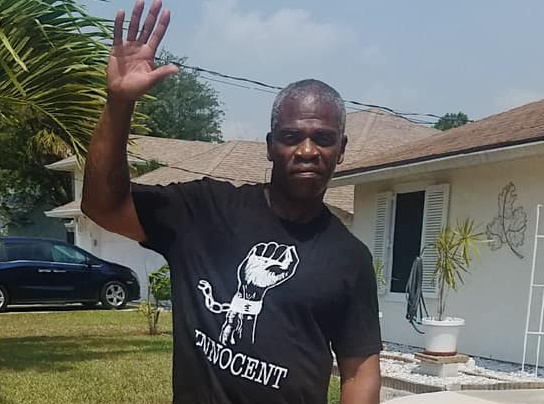
The insufficient evidence used to secure Cure’s conviction prompted the Broward State Attorney’s Office to recommend the 50-year-old’s release, the Sun Sentinel reported. In December, Cure wrote a letter to the Conviction Review Unit, which was started in August 2019 to determine if felons were wrongly imprisoned.
The conviction was largely based on eyewitness testimony, and there was no DNA left on the scene. At the time of the robbery, a manager and another employee were the only people in the store. Both were asked to pick a perp from several mugshots. However, one witness was shown shots of several different men, while the other was only shown pictures of Cure.
“The issues we find most troublesome are those surrounding how Cure became a suspect in the first place. Seemingly, a man who had no connection to a Walgreens’ robbery became the main suspect after someone reviewed photos of well-dressed/neat-appearing African American males,” Broward Assistant State Attorney Arielle Demby Berger said in a report.
Additionally, Cure had a believable alibi. He gave investigators a receipt proving he was at an ATM three miles away about 20 minutes before the robbery happened. He arrived at work, via the city bus, around the time the crime occurred.
“The only remotely viable way for Cure to get to the ATM at 6:52 a.m., commit the crime from 7:15 a.m. until 7:24 a.m. and to change and show up for work between 7 a.m. and 8 a.m. would be for him to be driving a car,” Demby Berger observed. “Even with a car based on the mileage, traffic, and school zones during that time, it still most likely would not have been possible.”
On Tuesday morning, a judge reduced his sentence to 16 years, which allows him to be set free for time served. Cure is the first case where the State’s Attorney’s Office recommended someone be released based on an investigation headed by the Conviction Review Unit.
The case is currently under review to determine if the robbery will be dropped from Cure’s record.
“Achieving freedom for Mr. Cure during this global pandemic, despite the limitations on our movement and activity in the courts, is a testament to the Broward State Attorney’s Office’s collaborative approach and IPF’s unwavering commitment to achieving justice for our clients,” said Seth Miller, executive director of The Innocence Project Florida. IPF, a state branch of the famed organization of attorneys dedicated to freeing the wrongfully convicted, was instrumental in Cure’s release.
“I am beyond excited,” Cure said before thanking the state’s attorney and The Innocence Project.
Cure added, “I’m looking forward to spending time with my family for the first time in 16 years.”


