An appeals court upheld a judge’s ruling that Florida’s felons cannot be denied the right to vote due to inability to pay court fees and fines.
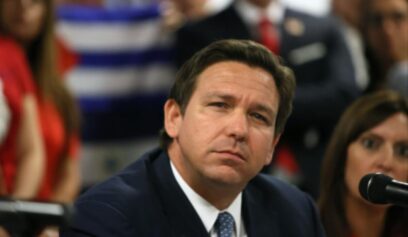
A three-judge panel from the 11th U.S. Circuit Court of Appeals in Atlanta upheld an injunction against a law stating felons must pay off all fees and fines before gaining suffrage, reported Politico. Florida Gov. Ron DeSantis and the state’s majority-Republican legislature added the requirement after voters approved Amendment 4, which granted felons the right to vote after they finished their sentences. Only convicted murders and sex offenders were excluded.
“These plaintiffs are punished more harshly than those who committed precisely the same crime — by having their right to vote taken from them likely for their entire lives,” the panel said in its decision. “And this punishment is linked not to their culpability, but rather to the exogenous fact of their wealth.”
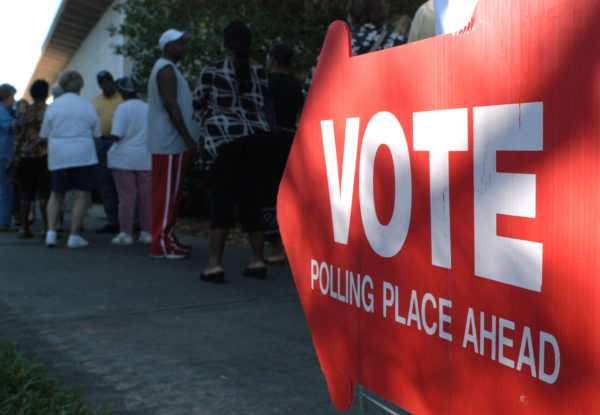
This decision upholds a ruling from U.S. District Judge Robert Hinkle, who deemed it unconstitutional due to the Constitution’s promise of equal protection under the law, as reported by The Washington Post. Hinkle issued an injunction to halt the implementation of the policy after 17 felons filed a lawsuit. He ordered Florida to institute a system where felons can prove they are unable to pay their fines.
All 17 plaintiffs are currently eligible to vote but they are concerned about others being denied suffrage because of their financial status.
The ACLU, who represents the plaintiffs, considers the ruling a victory.
“The Voting Restoration Amendment passed with 5.2 million votes and was one of the largest expansions of voting rights in United States history,” Daniel Tilley, legal director of the ACLU of Florida, said in a press release. “Despite the state’s best efforts to dismantle Amendment 4 through SB7066, today’s ruling affirms what Floridians intended when they passed Amendment 4–to restore to returning citizens their right to vote.”
“This law is a modern-day poll tax. This ruling recognizes the gravity of elected officials trying to circumvent Amendment 4 to create roadblocks to voting based on wealth,” said Julie Ebenstein, senior staff attorney with the ACLU’s Voting Rights Project.
“The preliminary injunction applies to our plaintiffs alone,” Ebenstein told WaPo. “But I hope the state and the counties will take note that the Constitution prohibits the state from disenfranchising somebody for being poor and unable to pay.”
Cody McCloud, DeSantis’ press secretary, told Atlanta Black Star the governor plans to challenge the ruling before all 12 judges of the court.
“We disagree with the ruling,” McCloud said in an emailed statement. “We are going to seek en banc review by the full court.”
A trial in Florida addressing the plaintiff’s other concerns is scheduled for April 6.