LL Cool J Releases His Rock the Bells Clothing Line That’s Inspired by Old-School Hip-Hop

He’s a rapper, actor and all-around entertainer, but now LL Cool J can add designer to that list.

It was recently announced that the rap legend dropped his Rock the Bells clothing line, which includes hoodies, T-shirts and sweatshirts that pay tribute to hip-hop’s yesteryear.
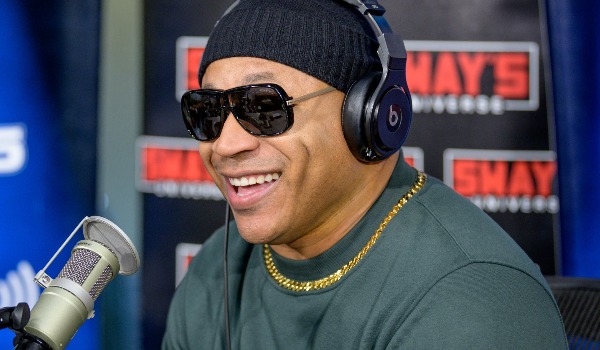
LL Cool J released his Rock the Bells clothing line on Jan. 28, 2020. (Photo: Roy Rochlin/Getty Images Entertainment via Getty Images)

One of the T-shirts, for example, has an image of a flyer from a 1987 LL Cool J show. A hoodie has a throwback link chain painted around the neck.

There’s also a limited edition Rock the Bells x Roots varsity jacket, designed after the same jacket that LL wore when he launched his old-school rap station Rock the Bells Radio on SiriusXM.

The title “Rock the Bells” derives from the rapper’s famous single from the ’80s.

“When I recorded ‘Rock the Bells’ in 1986, my heroes were people who embraced and lived the four elements of Hip Hop: Graffiti, DJ’s, Breakdancing, and MC’s,” said LL in a statement. “Drop 1 honors that spirit, while looking through the lens of current culture.”

The now–52-year-old grew to fame in 1985 after he appeared in the film “Krush Groove,” and he dropped his debut album “Radio” in that same year.

He released a slew of albums after that, the last being the 2013 “Authentic.” But earlier this month LL said he’s working on new music that’s being produced by A Tribe Called Quest‘s Q-Tip.

Plus, on the big and small screen, LL has been tremendously successful and currently co-stars in CBS’ “NCIS: Los Angeles,” which has been on the air since 2009.

As for the Rock the Bells clothing line, prices range from $45 for the T-shirts to $595 for the Rock the Bells x Roots varsity jacket.

Still independent.

We hope this story was worth your time. For over 14 years, Atlanta Black Star has stayed Black-owned and independently run. We didn't get here by waiting on ad budgets that were never built to prioritize us. Our readers did that.

Corporate support for Black media has always been thin. Outlets like ours get roughly 1% of the $170 billion spent on U.S. advertising each year, and that margin is shrinking further as advertisers walk back the DEI-linked commitments they made in 2020. That's the backdrop. It's not why we're asking.

The wider picture isn't any steadier. Newspaper ad revenue has fallen more than 80% since 2005, and local newsrooms are closing at a rate of roughly two a week nationwide. When outlets go under, it's rarely the ones built to center a Black perspective from the ground up that get to stick around.

We know a request for support isn't why you came here. But without readers choosing to fund this work directly, the depth of reporting we can do at home and abroad shrinks along with everyone else's. If you're not in a position to give, that doesn't change how much we value you as a reader.

If you are able to, a recurring contribution does more for us than a single one-time gift, because it lets us plan the next investigation instead of just the next invoice. It takes about 30 seconds, no long form, no account. Thank you for continuing to support independent journalism and freedom of the press.

Back to top