‘It Makes Me Crazy’: White Director Says Depiction of Africa in ‘Black Panther’ Is BS, Blasts Film’s Influence on Black Kids

The director Terry Gilliam hates the film “Black Panther” and how it makes Black kids feel.

And that’s despite the 2018 release being a cultural phenomenon and giving Black kids around the world their own set of superheroes — since other Marvel films and movies based on DC Comics have mostly white casts.
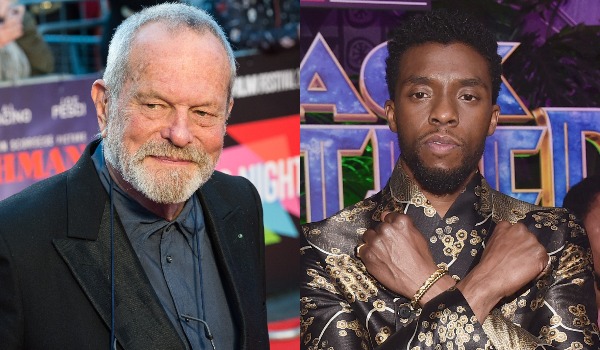
The director Terry Gilliam (left) said it angers him that Black kids were inspired by the film “Black Panther” starring Chadwick Boseman (right). (Photos: NurPhoto/NurPhoto via Getty Images, Alberto E. Rodriguez/Getty Images Entertainment via Getty Images)

Of course, “Black Panther” not only tells the story of Black male and female superheroes, it’s set in the fictional African country of Wakanda, thus giving Black folks even more pride about it.

“I hated ‘Black Panther,'” Gilliam told IndieWire. “It makes me crazy. It gives young black kids the idea that this is something to believe in. Bullsh-t. It’s utter bullsh-t. I think the people who made it have never been to Africa.”

“They went and got some stylist for some African pattern fabrics and things,” he added. “But I just I hated that movie, partly because the media were going on about the importance of bullsh-t.”

Gilliam was then asked if the critical acclaim behind the film was a “politically correct response that ignored aesthetics in favor of identity politics.”

“It makes my blood boil,” he answered.

Once the interview was published, many took the 79-year-old to task.

“What you said about ‘Black Panther’ was Trump level stupid,” someone tweeted on Sunday. “Especially with your zero record of ever casting a black person in a lead role, or really at all. God you’re old and out of touch.”

“How dare you say the makers of ‘#BlackPanther’ must [have] never been to Africa,” tweeted a second person. “The director actually took a research trip there and ultimately it was a fictional futuristic world anyway.”

“F–k you …That film represented and highlighted Black excellence and STEM,” tweeted a third person.

And a fourth person wrote, “I guess you got what you wanted : a 2 day news cycle to make sure the world remembers your crusty racist ass is not dead yet.”
Democracy needs journalism it can trust.

This election season, the stakes are higher than usual — and so is the pressure on newsrooms to soften their coverage, stay quiet, or just disappear. Independent reporting, the kind that answers to readers instead of advertisers or political pressure, matters more in a moment like this, not less.

For over 14 years, Atlanta Black Star has stayed independent and reader-funded. We have no corporate owner and no shareholders telling us what to cover or how to cover it. That independence is also our biggest vulnerability: nothing protects it except readers choosing to fund it directly.

Newspaper ad revenue has fallen more than 80% since 2005, and local newsrooms are closing at a rate of roughly two a week nationwide. When outlets go under in a moment like this, it's rarely the independent, reader-funded ones that get to stick around.

We know a request for support isn't why you came here. But without readers choosing to fund this work directly, the depth of reporting we can do at home and abroad shrinks along with everyone else's. If you're not in a position to give, that doesn't change how much we value you as a reader.

If you are able to, a recurring contribution does more for us than a single one-time gift, because it lets us plan the next investigation instead of just the next invoice. It takes about 30 seconds, no long form, no account. Thank you for continuing to support independent journalism and freedom of the press.

Back to top