In a unanimous vote Monday, a New Jersey Assembly committee voted 8-0 for amendment to a state anti-discrimination law, clearing a hurdle to enact legislation that would effectively ban hair-based discrimination.
The amendment, which aims to “protect people of color facing discrimination based on their hairstyle” or hair, was approved by the New Jersey Assembly Labor Committee and next must clear the Democratic-controlled state Senate and full Assembly before it would head to Gov. Phil Murphy‘s desk, where he would he take the final step of signing it to make it law.

New Jersey gets closer to joining New York and California as states outlawing hair-based discrimination. (Photo: Getty Images)
In doing this, the Garden State becomes the third state, alongside neighbor New York and California, to introduce legislative measures protecting natural hair and the people who wear it. The proposed amendment is backed by Democratic Reps. Angela McKnight, Verlina Reynolds-Jackson, Shanique Speight and Britnee Timberlake.
“If a person of color wants to embrace their cultural identity by wearing their hair in a certain style, they should be free to do so without fear [of] prejudice,” Reynolds-Jackson said in a statement. “No one should be told to straighten, cut or change their hair in any way to meet certain norms.”
“It’s time we enshrine these values into our law,” she added.
The issue of hair discrimination gained national attention last year when Andrew Johnson, a wrestler at Buena Regional High School in New Jersey was told by a referee that his dreads weren’t in regulation. He was given an ultimatum: cut his hair or forfeit his high-stakes match.
Johnson opted to cut his hair and went on win the match. However, video of a school official taking a pair of shears to his head sparked immediate backlash and calls for the ref to be fired.
The referee, Alan Maloney, was punished with a two-year suspension and later filed a lawsuit alleging defamation and emotional distress.
McKnight said the troubling incident served as inspiration for the bill.
“Unfortunately, it is all too common for African-Americans and people of color to be subjected to discrimination at work or school for wearing their hair in braids, twists, and dreadlocks or embracing their natural curls,” she said. “With this legislation, [Johnson] would have been protected from this kind of discrimination under the law.”
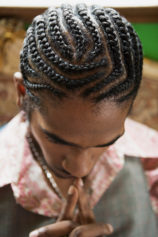
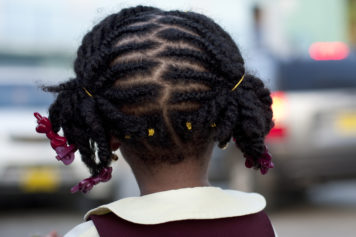
The proposed statutory changes, which are modeled after California’s “Creating a Respectful and Open World for Natural Hair” Act (CROWN), would amend New Jersey’s Law Against Discrimination so that the term “race” in that act’s language would now include traits historically associated with race, including hair texture, hair type and protective hairstyles, according to a news release.
New Jersey Senator and Democratic presidential hopeful Cory Booker, alongside Louisiana Rep. Cedric Richardson, this month introduced the first federal legislation that would outlaw discrimination based on natural textures and hairstyles commonly associated with a particular race.
“Discrimination against black hair is discrimination against black people,” Booker said, adding that the CROWN Act would make clear that prejudice “based on natural and protective hairstyles … including hair that is tightly coiled or tightly curled, locs, cornrows, twists, braids, Bantu knots, and Afros, is a prohibited form of racial or national origin discrimination.”