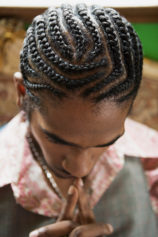
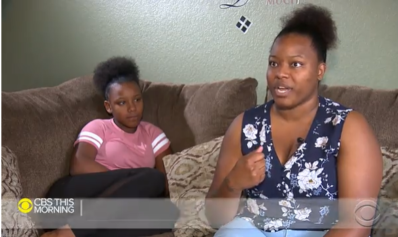
Despite a newly enacted law meant to crack down on hair discrimination in New York state, more than a dozen Catholic schools across the the city have continued bans on natural braided hairstyles.
This is on account of a loophole allowing faith-based institutions to continue the biased practice targeting male students, most of them Black, according to the New York Daily News.
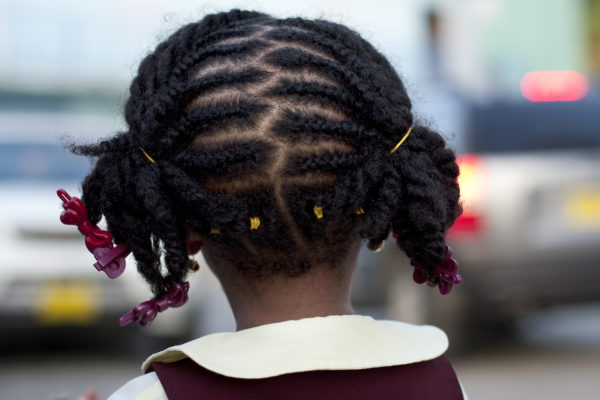
In February, the New York City Human Rights Commission released guidelines prohibiting discrimination based on hair. (Photo: Getty Images)
The law, signed by Gov. Andrew Cuomo in July, protects students and employees from race discrimination based on natural hair or hairstyles. Just this month, the statute saw an Upper East Side salon slapped with a $75,000 fine and mandatory bias training after discouraging its workers from wearing natural hairstyles. However, that same law has had little impact on Catholic classrooms.
A caveat in New York state’s older Dignity for All Students Act states, “Nothing in this article shall…apply to private, religious or denominational educational institutions,” while the city’s human rights law also exempts “any religious corporation incorporated under the education law,” the newspaper reports.
It’s these legal loopholes that have helped religious schools steer clear of the new city and state rules, allowing them to impose any restrictions they like.
“They’re just exempted because they’re religious institutions and can set whatever rules of decorum they wish, no matter how discriminatory or racist,” said David Bloomfield, a professor of education law at Brooklyn College and CUNY Graduate Center.
The anti-discrimination rules haven’t been enforced in at least 14 of New York City’s Catholic schools, where Black hairstyles such as cornrows are considered fads or trends. A student handbook from Christ the King School in the Bronx explicitly states that “no cultural preferences will be allowed, such as boys with braided hair.”
The ban on boys’ braids was recently highlighted in a Daily News report after Queens mother Lavona Batts took legal action against her child’s school, Immaculate Conception Catholic Academy, when it told her to remove the 9-year-old’s braids or he wouldn’t be allowed in school.
“I was infuriated that now I have to do this because of something like his hair,” Batts said of her lawsuit, filed in October. “This is discrimination.”
Cuomo and Mayor Bill de Blasio also blasted the school’s policy as “unacceptable” and vowed to take action.
The controversy still isn’t resolved, however. Assemblywoman Tremaine Wright (D–Brooklyn), who helped draft the state’s anti-discriminatory hair law, is now appealing for the New York Archdiocese to step in.
“It makes me very uneasy that the [New York] Archdiocese is not going to step in and encourage all of their schools to be compliant with state law,” Wright told the Daily News, noting that she and others crafted the bill with the expectation that it would apply to all schools.
A spokesman for the Archdiocese, which oversees Catholic schools across Manhattan, the Bronx and Staten Island, addressed the matter in a statement.
“Families attending any Catholic school agree to adhere to the terms of the school’s handbook, which will include guidelines on hair, wardrobe and personal conduct,” he said.