Detroit is in the midst of an economic resurgence, yet many of the city’s Black business leaders say they feel stuck on the outside looking in.
A recent survey by the National Business League shows that while the Motor City is experiencing a much-needed comeback, 80 percent of its most prominent Black entrepreneurs feel they’re being left out and overlooked in the city’s revitalization.
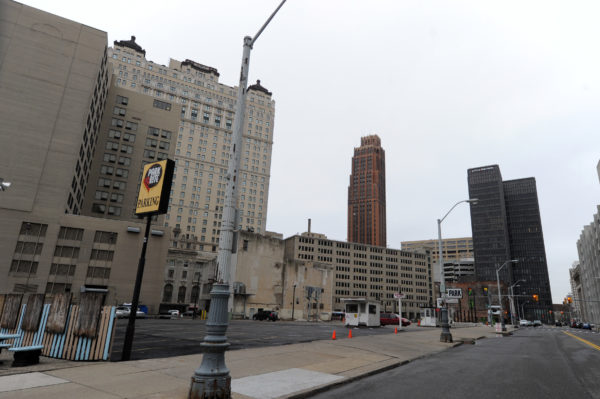
In years past, Detroit’s leading Black business owners have complained about being excluded from plans and discussions about the city’s resurgence. (Photo by Uli Deck/picture alliance via Getty Images)
Per the report, several of the city’s Black-owned businesses “felt left out of the current economic boom and opportunities for inclusion in the private sector development opportunities, particularly for major projects like the new hockey arena and old Hudson’s site.”
Another 62 percent of Detroit’s Black entrepreneurs are frustrated with the city and state’s leadership, particularly Gov. Gretchen Whitmer, who they said has done a shoddy job of ensuring they “get a fair shot” at snagging state government contracts and other development opportunities.
Similar frustrations arose in 2014 after The New York Times published an article highlighting small business success in the Corktown neighborhood one year after Detroit filed for the largest municipal bankruptcy in U.S. history. Missing from those success stories, however, was the role of Black businesses in helping the city get back on its feet.
U.S. Census Bureau figures from 2007 showed the city was teeming with Black entrepreneurs — over 32,000 to be exact. Much like today, however, Black business owners said they felt largely excluded from conversations around Detroit’s revitalization and struggled for access to funds and other resources.
“I think, for the most part, Black-owned businesses aren’t getting a piece of the pie,” local bookstore owner Janet Jones told HuffPost at the time. “What about the people who have been doing the hard work of living and working and having business in Detroit for the last 20 years?”
Dr. Ken Harris, president and CEO of the National Business League, said he isn’t at all surprised by the survey’s results.
He commented to radio station WWJ News: “When you look at the federal mandates in particular on federal opportunities that exist through the disadvantaged or DBE program, those numbers are startling. They’re not inclusive of black-owned businesses.”
If Michigan is to compete with the rest of the county, Harris said the state and city leadership must take steps to create more equitable and inclusive policies.
Alexis Wiley, chief of staff of Mayor Mike Duggan‘s administration, said Detroit is doing just that. In fact, she said 80 percent of the recipients of Motor City Match grants have gone to black-owned businesses.
Additionally, Wiley mentioned that Duggan’s administration launched the Entrepreneurs of Color Fund, which grants affordable loans to black-owned small businesses in Detroit.
City leaders admit more can be done to bring Black businesses into the fold, and it’s an effort that they’ll continue working on
“Governor Whitmer recognizes that this has been a longstanding concern, which is why during her first week in office she signed an executive directive to expand opportunities for small and disadvantaged businesses in Michigan,” the governor’s office said in a statement.
“If we’re going to call Michigan a successful state, we’ve got to expand opportunities for business owners in areas that are struggling,” it continued. “Governor Whitmer is proud to have put together the most diverse cabinet in the state’s history who will work to help businesses thrive and who are ready to get to work building bridges between entrepreneurs and state government.”