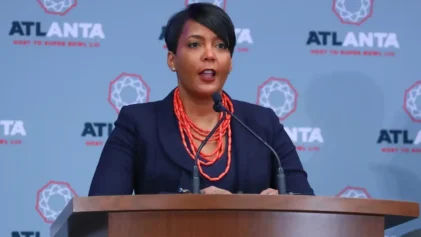
Atlanta Mayor Keisha Lance Bottoms happily announced last week that the city’s new housing program had successfully raised $50 million to get more homeless people off the streets and into housing of their own.
Funds raised for the city’s HomeFirst Initiative will provide 550 apartment-like units for those in need of shelter, as reported by The Atlanta Journal-Constitution. The money will also be used to revamp the old Capitol View Apartments on Metropolitan Parkway on the city’s south side.
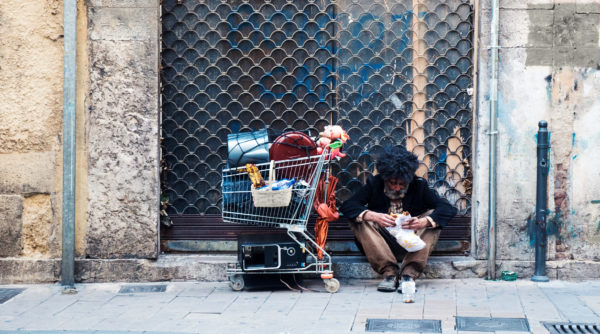
There are an estimated 3,200 homeless people in the city of Atlanta, about half of what it was 10 years ago, the city claims. (Photo by Ruben Earth / Getty Images)
“I think it’d be nice for people to get nice housing for the people in Atlanta because they really need it,” David Pratt, who’s lived off and on at the Bell Street overpass, told local station WSB-TV.
“They want their own house,” Pratt said of the city’s homeless population. “They don’t want to be their own program. They don’t wanna be told what to do. That’s got a lot to do with why people are out here.”
The city partnered with the United Way of Greater Atlanta to raise funds for the program, about $25 million of which came from private donations thats ranged from a few thousand dollars to a whopping $15 million, according to the AJC. The other half of the money came from the Homeless Opportunity Bond sale that started under former Mayor Kasim Reed and was approved in 2017.
The city’s efforts to raise $50 million was also announced around the same time it shuttered the city’s largest homeless shelter — a 100,000-square-foot haven that housed an estimated 500 people per night but was also blamed for an outbreak of tuberculosis.
According to data from the Atlanta Mission, which also serves the city’s homeless, nearly 2,000 people are forced to sleep on the streets at night because they have nowhere to go.
The HomeFirst Initiative, a rapid rehousing program, is working to change that. As explained by the AJC, rapid rehousing concept recognizes that most people are thrust into homelessness after a major financial crisis. The belief is that the faster they’re are afforded stable housing, the more likely they’re avoid becoming homeless again.
Plus, the temporary housing allows them to focus on getting back on their feet rather than worrying about where they’ll lay their head at night.
At a Wednesday press conference, Bottoms said there are about 3,200 people living on Atlanta streets — about half the number recorded a decade ago.
But homelessness awareness advocates are also drawing attention to the “hidden homeless.”
“It’s a miss-perception that many people have: that homelessness is represented entirely by the people they see on the streets,” Jack Hardin, Co-Chair of the Atlanta Regional Commission on Homelessness, told the AJC. “A far larger proportion of people experiencing homelessness have incomes and function at very high levels, but live on the margins of the economics of our society and any hardship can derail.”
City officials said it was a final donation of $114,000 from Ameris Bank that pushed the city to reach its funding goal. Using that money, the city not only plans to provide housing but also also connect those experiencing homelessnes to the necessary resources and rental assistance so that they remain stable.
“This is one of the things I had the fortune of walking into when I was mayor,” Bottoms said of the initiative.
Watch more in the video below.