Things really seem to be moving for “Coming 2 America.”
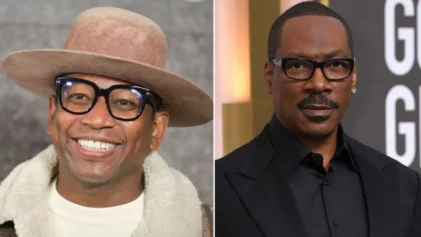
Deadline reports that Wesley Snipes will join Eddie Murphy and Arsenio Hall in the film, which is the follow-up to the beloved 1988 classic “Coming to America.”
Murphy will reprise his role as Akeem for the sequel, who was the Prince of Zamunda, and right before he was going to finalize an arranged marriage, he set off to Queens, New York, for true love. Hall played his assistant Semmi, and he’ll be in the sequel as well.
In the new story, Murphy is set to be king of Zamunda but then finds out he has a son in Queens named Lavelle.
So he and Semmi go there to meet the street-savvy youngster to make him a prince, as Akeem’s dying father wishes, played by James Earl Jones.
Jones played Murphy’s father King Jaffe Joffer in the first film and will also be in the follow-up. Snipes, meanwhile, will play the “Coming 2 America” character of General Izzi, who rules one of Zamunda’s border nations.
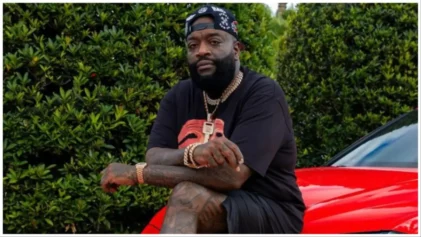
It’s also been reported that Paul Bates, who played Oha in the original film, has signed on for part two, and, perhaps surprisingly, the rapper Rick Ross will be in it too.
Excitement surrounding “Coming 2 America” began in January when news surfaced that Murphy signed on.
Then in April he was seen in a photo with Ruth E. Carter, the veteran costume designer who nabbed an Oscar for “Black Panther,” which only built more anticipation.
Snipes shared the news about his involvement Wednesday on Instagram, and people seemed to be thrilled about it.
“This is gonna be some legendary sh–,” one person wrote on Instagram.
“I don’t even go to the movies anymore but I’m going to see this for sure!” someone else promised.